Phase 2: Emergency Sinkhole Repair and Pipe Replacement
The next phase of the project focused on a sinkhole. The location presented several challenges, including proximity to an active transformer enclosure, the presence of high-risk utilities and the need for confined space entry. Intermittent rain added complexity by increasing the risk of runoff and site instability.
Crews removed trees and demolished portions of the brick enclosure surrounding the transformer to allow safe access. Temporary construction barriers were installed to secure the area. Excavation proceeded directly above the failure point, supported by a trench box system to protect workers.
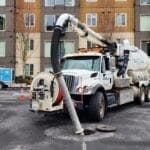
Hydro excavation exposed live power lines and the connection between the 96-inch pipe and the 18-inch line. The damaged pipe was found to be severely compromised and was removed in fragments. A new pipe section was installed and connection points were secured quickly in anticipation of incoming rain. The connection was reinforced with concrete bands and structural supports to ensure long-term stability.
Groundwater was managed through active pumping to maintain workable conditions. Backfilling was completed in controlled lifts to ensure proper compaction and structural integrity. Crews placed sand around exposed power lines and installed marking tape in accordance with utility requirements. Additional graded aggregate base was installed above the sand, along with a second layer of marking tape approximately 2.5 feet above the utilities.
Unusable material and stumps were removed, and clean fill was imported to restore the area. Crews then excavated and formed a footing for the brick enclosure, installed reinforcing steel and poured concrete. The transformer enclosure was rebuilt using brick and block construction to match existing architectural and visual aesthetics.
Phase 3: Systemwide Stabilization Through Geophysical Analysis and Grouting
Following the emergency repair, attention shifted to evaluating the broader system to prevent additional failures. A ground-penetrating radar study was conducted across approximately 550 feet of storm drain infrastructure beneath the parking lot. The study identified subsurface voids and weakened zones surrounding the pipe system.
Based on the findings, a targeted injection grouting plan was developed. Crews installed hollow steel rods at specific depths and injected a two-part grout mixture at controlled rates and pressures. The material expanded significantly upon injection, filling voids and stabilizing surrounding soils.
The grouting process was completed over nine days. Work was phased to limit disruption, with sections of the parking lot closed and reopened sequentially. Entrance access to the property was maintained through staged operations conducted over two days.
Phase 4: Structural Pipe Rehabilitation
To further strengthen the system, trenchless rehabilitation was performed using cured-in-place pipe lining. Minor excavation was required at one entry point. Otherwise, this repair method minimized disruption to facility operations. Four separate pipe runs were lined and steam-cured over four days, creating a continuous structural liner within the existing pipes.
This process restored structural integrity, improved hydraulic performance and extended the lifespan of the system. All joints were grouted to eliminate infiltration pathways and further reinforce the network.
Phase 5: Manhole Rehabilitation and Protective Coating
The final phase focused on restoring and protecting the large-diameter (96-inch) corrugated metal pipe that served as underground detention for the system. The metal pipe was cleaned and prepared before the application of a high-strength spray-cast liner. This coating sealed multiple defects due to deterioration over time and poor original workmanship. This now provides long-term protection against corrosion and structural degradation and an expected 50-year additional service life.
Results
The project stabilized the sinkhole, replaced the failed pipe and reinforced the broader stormwater system. Subsurface voids were eliminated, and the infrastructure was strengthened through a combination of excavation, grouting and trenchless rehabilitation. The phased approach allowed the property to remain operational throughout construction.
The system was tested shortly after completion during a significant rain event and performed as intended. The project demonstrated the importance of combining emergency response with long-term system rehabilitation to reduce risk and protect critical infrastructure.

 Regenerative Stormwater Conveyance Improves Highway Drainage in Kenosha, Wis.The Root-Pike Watershed Initiative Network Kenosha County, and others worked with AQUALIS to design and implement an innovative solution for stormwater control along Highway KR.
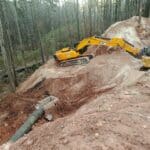 Sinkhole Leads to Stormwater System Repair in Durham, N.C.The tenant on this property noticed a depression that opened to the ground below and notified the property owners.