Digging In
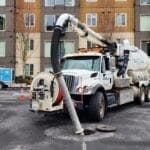
Before repairs started, the team had to remove the groundwater that would interfere with the repair. Crews installed a ring of well points, narrow borings that allow water to be pulled out of the ground. As the site was in an area with a high-water table, this, was a crucial step. As crews dug underground, they would hit the water that naturally occurs. That risked hydraulic heaving, where water pressure pushes soil upward and destabilizes the excavation, potentially exacerbating the current erosion and sinkhole. Removing this water before the dig reduced complications down the line. To keep the water out, pumps were installed to continually draw out any water during the repair, approximately a week in total. From there, they used hydro-excavation, a non-destructive digging method that uses pressurized water instead of mechanical bucket excavation. It exposed the pipe gently enough not to disturb the water main running right next to it. Since the pumps were already running, this was a logical shift that again simplified the process.
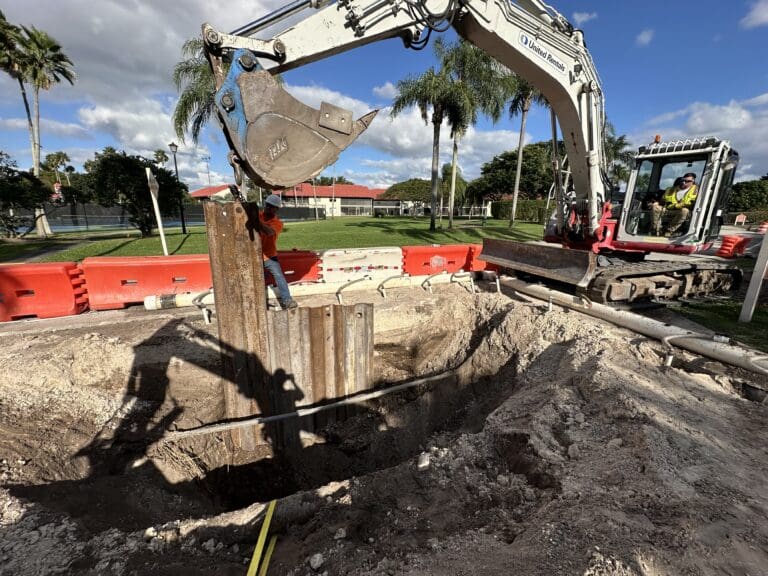
However, once ground was broken, the plan changed almost immediately, and the team adjusted without losing time. The trench box the crew had brought to shore up the walls of the excavation would not fit in the space available. Instead, the team engineered a custom shoring solution on-site: a wall of steel sheets along both sides of the trench, held apart with adjustable steel bars. The setup could be built in place around the water main and conduits instead of dropped in as one fixed-size piece.
What the Pipe Actually Showed
Once the pipe was fully uncovered, the damage did not match the original assumption. This was not decades of slow decay. It was a single, isolated impact: a break about 3 feet long and as much as 20 inches wide, caused by a drilling operation for unrelated utility work that had nothing to do with the storm system itself. The rest of the pipe was in good condition.
The difference in the root cause is crucial to properly remediating the site. A pipe failing from age usually needs a much bigger fix, often a full section replacement or a structural liner running well past the damage. A pipe with one isolated point of damage from an outside cause needs something else entirely. AQUALIS field crews are trained to confirm the actual cause before designing a repair, which is what let the team here match the fix to the real problem instead of overcorrecting damage that was not there.
The Fix
With water lines, overhead utilities and a roadway that needed to stay open all crowding the work zone, the crew built a custom wood form at the damaged section and poured a concrete collar around it to reinforce the pipe. The collar went in over the course of one day and cured for three days before the trench could be filled back in.
The trench was filled back in layer by layer with fresh material;, each layer compacted before the next went on. The steel sheet piling came out once everything had settled, and the road got new asphalt to match what was there before.
Results
A camera run through the pipe afterward confirmed the repair held and the rest of the system was sound. The team confirmed the actual cause before repairing it, so the fix matched the real damage instead of what the initial assessment expected, sparing the property unnecessary digging and downtime. That kind of attention to detail is standard practice for AQUALIS on every project. The road is open again, and underneath it, the pipe is doing exactly what it is supposed to do.

 Regenerative Stormwater Conveyance Improves Highway Drainage in Kenosha, Wis.The Root-Pike Watershed Initiative Network Kenosha County, and others worked with AQUALIS to design and implement an innovative solution for stormwater control along Highway KR.
 Sinkhole Leads to Stormwater System Repair in Durham, N.C.The tenant on this property noticed a depression that opened to the ground below and notified the property owners.