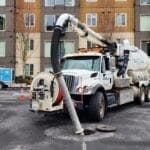
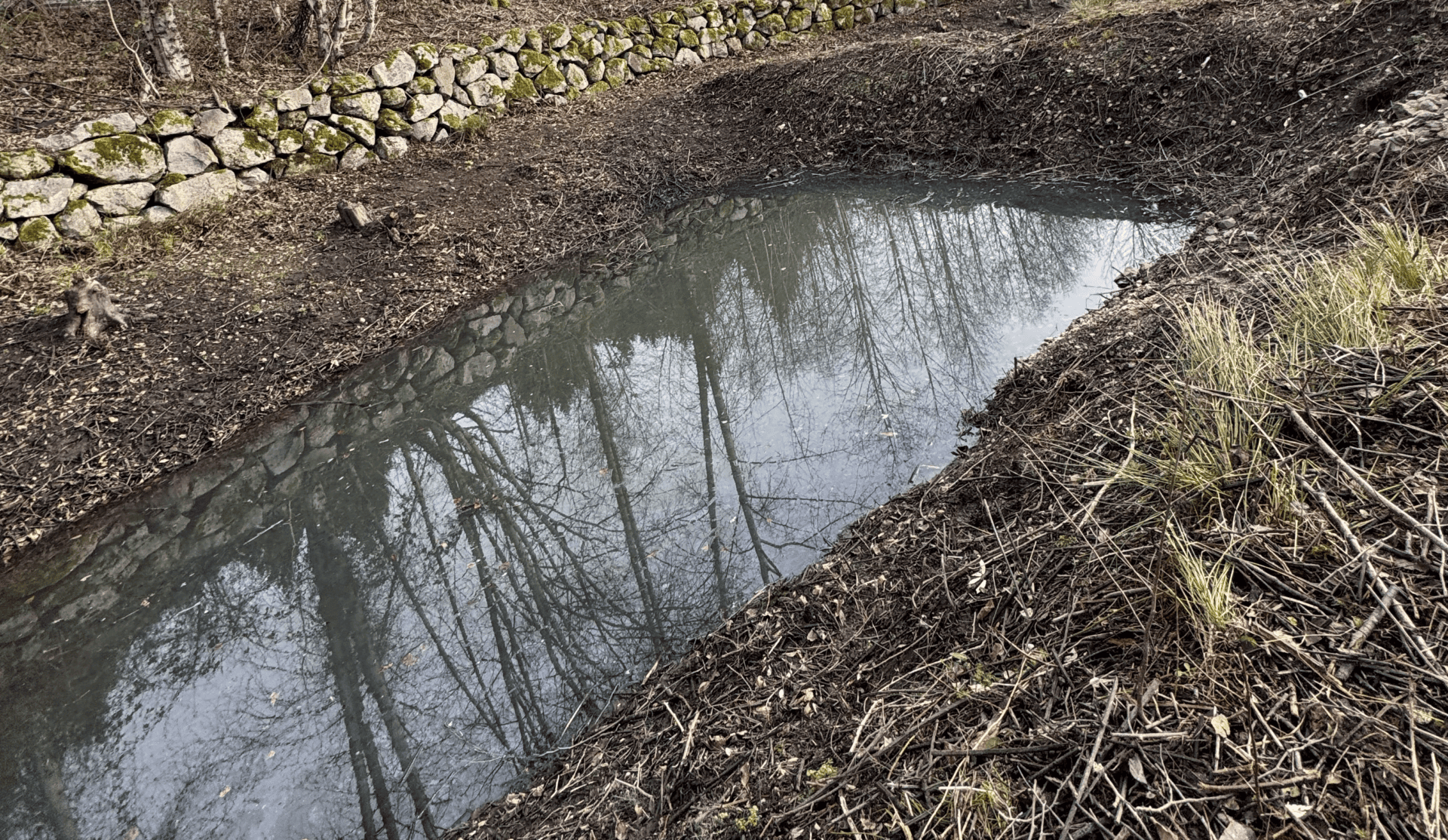
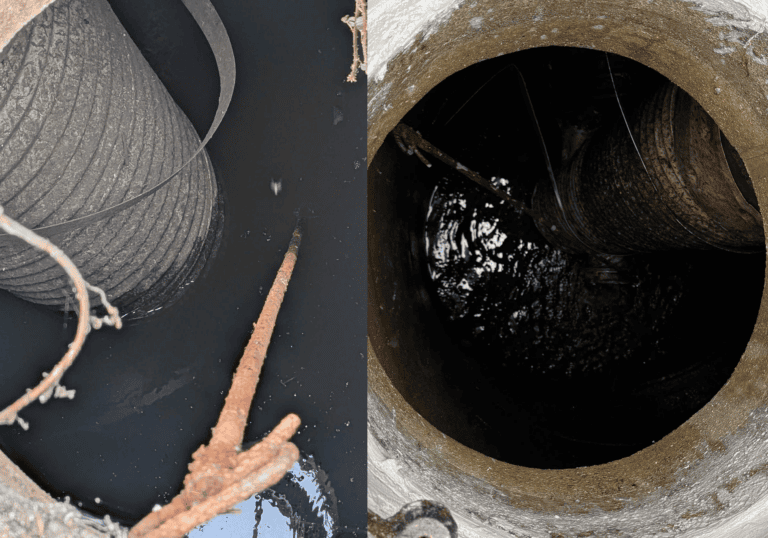
AQUALIS began by locating the buried manholes and clearing the drainage line. Crews used a vacuum and jetter truck to remove accumulated material and flush the pipe with high-pressure water. Clearing the line lowered water levels within the ponds and provided better access for the remaining work.
Crews removed invasive blackberry bushes and saplings from the pond banks and winched downed trees from the water. Trees and vegetation were chipped on site before being hauled off for disposal.
As clearing progressed, crews identified the overgrown hillside above the ponds as the drainage path feeding the system and shifted their focus uphill. They removed logs, sediment and debris that restricted the movement of stormwater. Wattles, rolls of natural fiber placed along the ground, were installed to help keep loose soil from washing downhill and entering the ponds during the work.
AQUALIS inspected the pond’s control structure, the concrete chamber that controls how quickly water leaves the pond. The structure was in good condition and did not require repairs.
After clearing was complete, crews repaired areas affected by beaver activity, seeded exposed soil and installed erosion control matting along the hillside. These erosion control measures help keep newly exposed soil in place while vegetation becomes established, reducing the potential for erosion and additional sediment buildup in the ponds.
AQUALIS also coordinated directly with the City of Bothell throughout the project to support the property owner’s compliance efforts.
Restored Flow and Improved Maintenance Access
The completed work satisfied the city’s maintenance order and restored access throughout the stormwater system. Pond banks were cleared and stabilized, and previously buried manholes are now accessible for future inspections and maintenance. Obstructions were also removed from the hillside drainage path.
With the drainage path open, stormwater once again moved down the hillside and into the ponds as designed. Soon after, water levels in the ponds began to rise, showing that stormwater from the hillside was reaching the system again.
With the system restored, the focus now shifts to keeping it that way. Routine stormwater inspections and vegetation management will help the pond stay accessible, functional and compliant long term.

 Regenerative Stormwater Conveyance Improves Highway Drainage in Kenosha, Wis.The Root-Pike Watershed Initiative Network Kenosha County, and others worked with AQUALIS to design and implement an innovative solution for stormwater control along Highway KR.
 Sinkhole Leads to Stormwater System Repair in Durham, N.C.The tenant on this property noticed a depression that opened to the ground below and notified the property owners.