Targeted Repairs and CIPP Lining
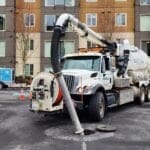
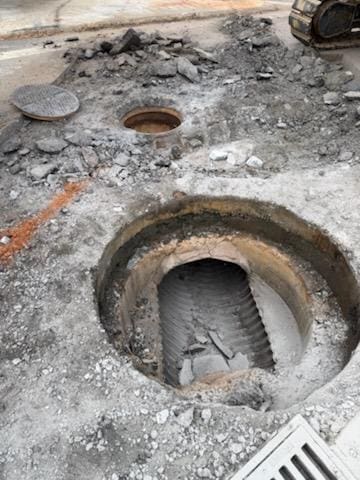
Restoring access. Crews excavated to expose the buried manhole, establishing an additional entry point into the system. High-pressure water jetting loosened accumulated sediment and debris, while vacuum equipment removed the material. Clearing the obstructions improved access for CCTV inspection and prepared the pipes for lining. A clean interior was essential to prevent debris from interfering with liner installation.
Evaluating the deformed section. Once cameras could reach the bollard-damaged pipe, AQUALIS assessed the extent of the deformation. The team determined the section remained sound enough to line in place, avoiding an additional excavation.
Replacing the failed sections. Crews excavated two locations and replaced the damaged pipe. The repairs closed the opening left by the deteriorated pipe wall and addressed the damaged area associated with the visible void. Excavated areas were backfilled and compacted to restore support around the repaired infrastructure.
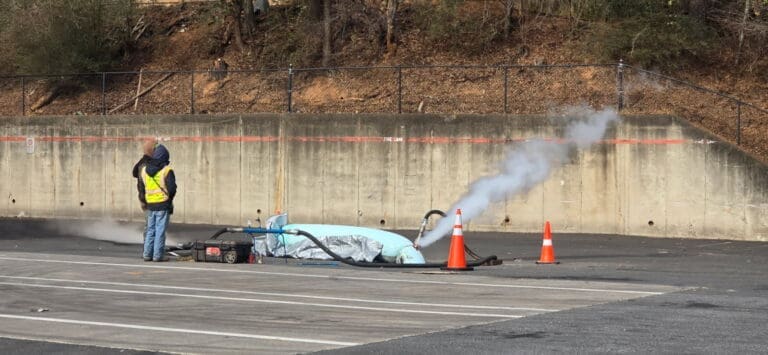
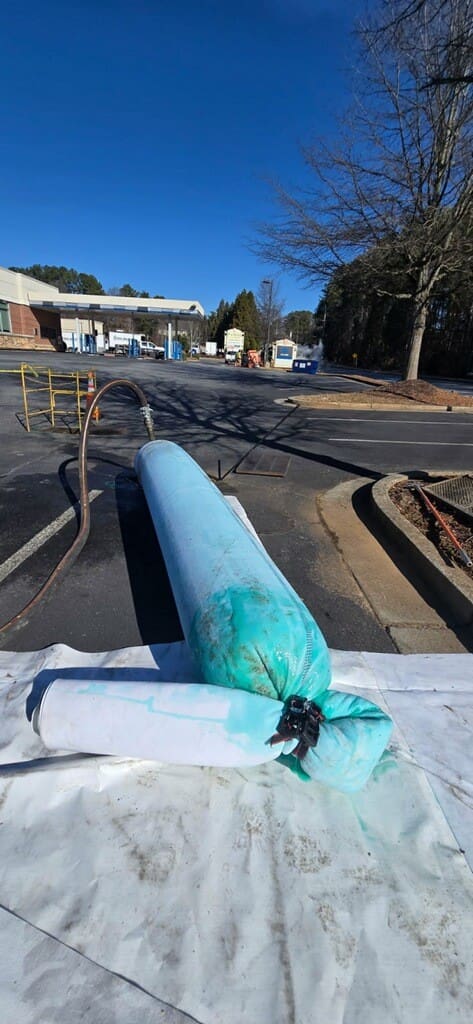
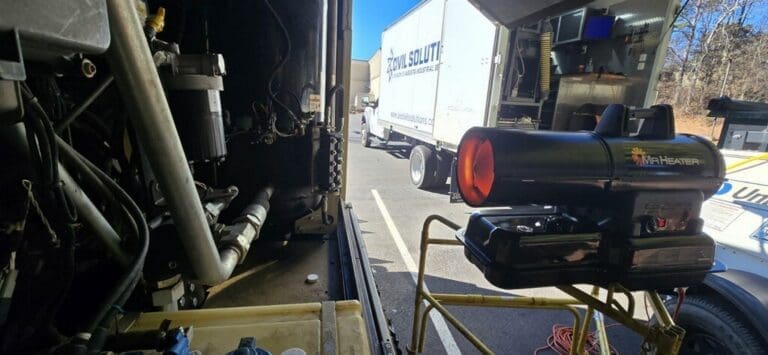
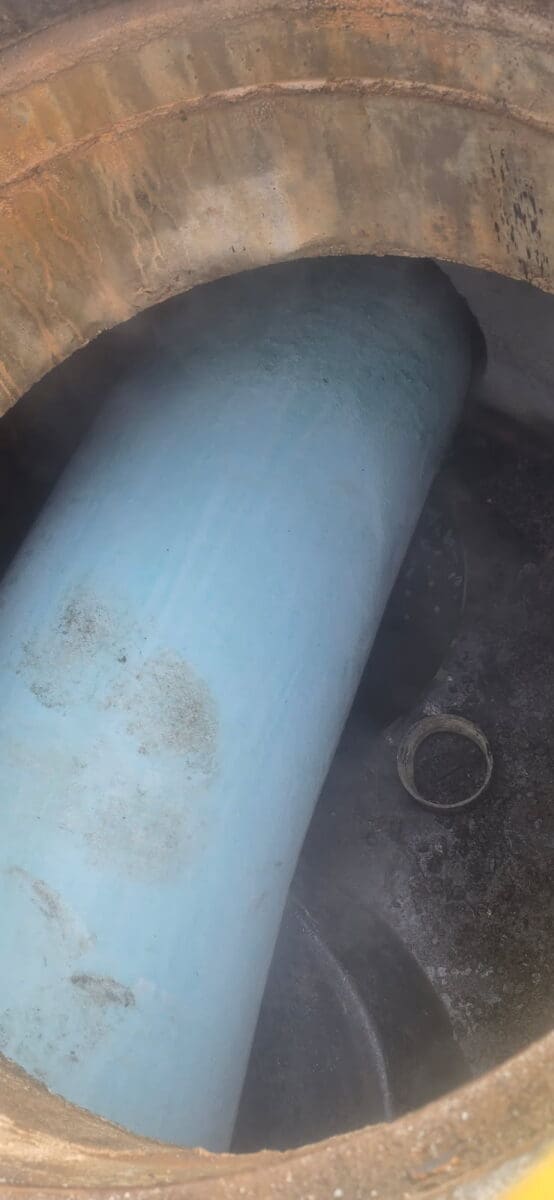
Lining the remaining network. With the structural repairs complete, AQUALIS installed approximately 1,500 feet of CIPP liner throughout the remaining network, including the deformed section. Crews inserted a flexible, resin-saturated liner into the existing pipes and cured it until it hardened into a continuous interior structure. The new liner reinforced the aging infrastructure and provided a corrosion-resistant interior without requiring excavation along the full length of the network.
Following installation, crews conducted post-repair CCTV inspections, restored disturbed surfaces and removed material collected during cleaning and excavation.
The Results
The completed rehabilitation restored the property’s underground stormwater network while preserving much of the existing developed surface. Excavation was concentrated at the failed sections and necessary access points, avoiding the widespread ground disturbance associated with replacing the entire network. Lining the bollard-damaged section in place eliminated one more dig.
The repaired pipes and continuous CIPP lining restored structural integrity and stormwater conveyance, addressing deterioration that could have contributed to further soil loss and ground settlement.
Problems like the ones at the Roswell property rarely start as emergencies. A small opening in a pipe wall can take years to become a void beneath the pavement. Pavement that dips near catch basins, water that pools after storms and sediment that keeps returning to inlets can all signal damage below. Catching those signs early can mean saving more of the existing system with repairs rather than replacements.
AQUALIS helps property teams evaluate aging stormwater infrastructure, address structural deficiencies and develop rehabilitation plans based on existing system conditions. Contact AQUALIS to discuss stormwater inspection, repair and rehabilitation options for your property.

 Regenerative Stormwater Conveyance Improves Highway Drainage in Kenosha, Wis.The Root-Pike Watershed Initiative Network Kenosha County, and others worked with AQUALIS to design and implement an innovative solution for stormwater control along Highway KR.
 Sinkhole Leads to Stormwater System Repair in Durham, N.C.The tenant on this property noticed a depression that opened to the ground below and notified the property owners.