

Last Updated 07/22/2026
Colorado’s Stormwater Permitting Program
The Colorado Water Quality Control Act (25-8-101 et seq., CRS 1973, as amended) established the Colorado Water Quality Control Commission (CWQCC) within the Colorado Department of Public Health and Environment (CDPHE) to develop water quality regulations and standards, classifications of state waters for designated uses, and water quality control regulations. The Act also established the Colorado Water Quality Control Division (CWQCD) to administer and enforce the Act and administer the discharge permit system, among other responsibilities. Violations of the Act are subject to significant monetary penalties, as well as criminal prosecution in some cases.
Colorado’s stormwater management regulations have been implemented in two phases and are included in Regulation No. 61 Colorado Discharge Permit System (CDPS) Regulations (CWQCC 2009). After the 1990 EPA “Phase I” stormwater regulation became effective, Colorado was required to develop a stormwater program that covered specific types of industries and storm sewer systems for municipalities with populations of more than 100,000. Phase I affected the City of Colorado Springs, Denver, Aurora, Lakewood, and the Colorado Department of Transportation (CDOT). Phase 1 requirements included inventory of stormwater outfalls, monitoring and development of municipal stormwater management requirements, as well as other requirements. Construction activities disturbing five or more acres of land were required to obtain construction stormwater discharge permits.
Phase II of Colorado’s stormwater program was finalized in March 2001, establishing additional stormwater permitting requirements. Two major changes included regulation of small municipalities (≥10,000 and <100,000 population) in urbanized areas and requiring construction permits for sites disturbing one acre or more. The Phase II regulation resulted in a large number of new permit holders including MS4 permits for El Paso County, City of Fountain, Town of Monument, and City of Manitou Springs. In addition, there are also non-standard MS4 permittees that include entities that are not cities or counties. Non-standard MS4 permittees include entities such as Academy School District 20, Widefield School District 3, Pikes Peak Community College, Harrison School District 2, Falcon School District 49, Cheyenne Mountain School District 12, University of Colorado at Colorado Springs, and Colorado Springs School District 11.
MS4 permit holders are required to develop, implement, and enforce a CDPS Stormwater Management Program designed to reduce the Stormwater Management and Planning Designed to reduced the discharge of pollutants from the MS4 to the maximum extent practicable, to protect water quality, and to satisfy the appropriate water quality requirements of the Colorado Water Quality Control Act (25-8-101 et seq., C.R.S.) and the Colorado Discharge Permit Regulations (Regulation 61). Non-standard MS4 permittees may elect to comply with their construction program and post-construction program requirements by following the requirements of the City’s or County’s construction and post-construction programs.
CDOT is required to comply with the requirement of the CDOT Colorado Municipal Separate Storm Sewer System (MS4) permit. CDOT’s MS4 permit authorizes discharges from the municipal storm sewer system within the permit area. The permit requires CDOT to use control measures to prevent or reduce the discharge of pollutants to state waters. The permit does this by requiring CDOT to comply with seven MS4 programs. CDOT has several different programs to make sure the amount of pollutants being discharged is reduced, as part of the permit that allows discharges from the roadway storm drain system. These include:
Construction Sites
The MS4 permit requires CDOT to implement a program to reduce or prevent the discharge of pollutants to the MS4 from covered construction activities. The requirements include assuring adequate design, implementation, and maintenance of Control Measures at CDOTs construction sites.
Learn More
Illicit Discharges
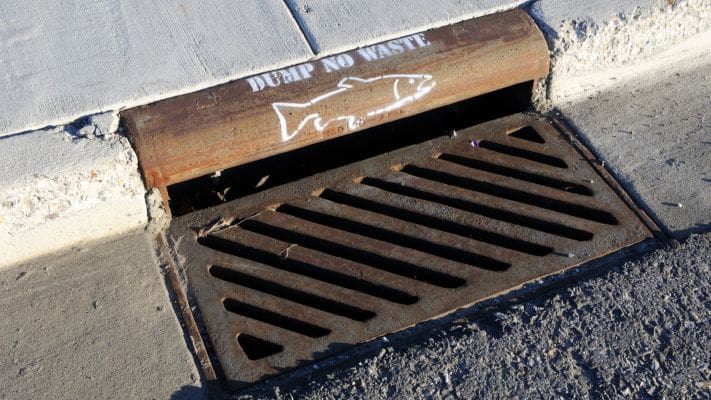
The Illicit Discharge Detection and Elimination (IDDE) Program requires CDOT implement a program to detect and remove (or advise the discharger to the MS4 to obtain a separate CDPS permit for) illicit discharges and improperly disposed materials into the MS4.
Industrial Facilities
CDOT requires all facilities that discharge stormwater into CDOT’s storm drain system to obtain a specific authorization. The program prioritizes education to promote minimization of pollutants in the stormwater that the facilities are contributing to the system.
Permanent Water Quality (PWQ)
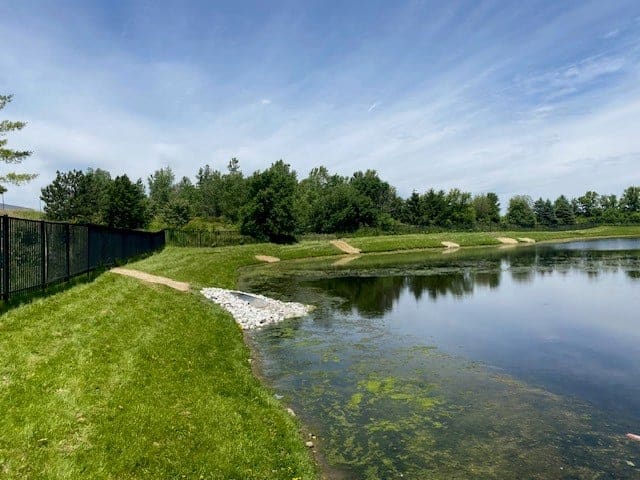
This program is required under CDOT’s Municipal Separate Storm Sewer System Permit MS4). Each CDOT Region is responsible for evaluating new construction and redevelopment sites in the CDOT MS4 permit area to determine if stormwater controls are required. These controls are referred to as Permanent Water Quality Control Measures (PWQ CM) or permanent Best Management Practices (BMP).
Pollution Prevention and Good Housekeeping
CDOT prioritizes minimization of pollutants in stormwater by developing runoff control plans for maintenance facilities, requiring the proper application of herbicides, pesticides and fertilizers, maintaining permanent BMPs, and operating public streets, roads, highways, and parking lots to promote both safety and stormwater quality protection.
Public Education and Outreach
CDOT must implement a public education program to promote behavior change by the public to reduce pollutants in discharges from the MS4. CDOT conducts a variety of outreach activities for employees and the public. Outreach activities include brochures, fact sheets, posters, newsletters, workshops, conferences, and this website.
View State Page
Frequently Asked Questions
Who is responsible for maintaining a structural BMP in Denver, the city or the property owner?
The facility owner, in almost every case. Denver’s design criteria specifically require long-term maintenance of structural BMPs to be provided by the facility owner, and BMPs have to be designed from the start to be readily maintainable with clearly specified long-term requirements, not retrofitted for maintenance after the fact.
Do I need to submit a maintenance plan before Denver approves my BMP design?
Yes. At the time you seek plan approval, you or your representative has to submit an operations and maintenance plan showing how the structural BMPs will function as intended. Denver’s Water Quality Management Plan and the regional District Manual provide the maintenance guidelines that plan should follow.
How does Denver decide who maintains a BMP, the city, a regional district, or the property owner?
It depends on ownership and location. Municipally owned BMPs are maintained by Denver, typically through its Wastewater Management Division. Regional drainage facilities outside Denver parks can fall to the Urban Drainage and Flood Control District when specific criteria are met. Privately owned BMPs are maintained by the property owner, HOA, or property manager, unless Denver has agreed in writing to maintain a private BMP itself, with fees assessed for that service.
How does Denver enforce BMP maintenance requirements?
Through its Colorado Discharge Permit System stormwater permit, backed by full-time staff who conduct inspections of permanent BMPs. Beyond routine inspection, the city can also enforce maintenance through legally binding agreements, permit obligations that specify BMP requirements directly, and municipal legislative or rulemaking action.
What should a legally binding stormwater maintenance agreement in Denver actually include?
Several elements the city’s plan recommends: general assurances covering operation conditions, easements, and inspection requirements; a warranty period during which the original developer stays responsible before long-term maintenance transfers; proof that whoever takes on long-term responsibility actually has the legal authority and funding ability to do it; clear allocation of responsibility across phased projects; and defined remedies if an inspection finds the facility isn’t being properly maintained.
Why does Denver's plan single out homeowners associations as a maintenance concern?
Because both Denver’s internal staff and outside reviewers identified private facility maintenance, particularly HOA-owned BMPs, as a top priority concern. A common gap is that HOAs and other private owners often don’t fully understand what maintenance a BMP actually requires, which is part of why the city pushes for maintenance plans submitted during development review rather than left informal.
Does Denver regulate pesticide use tied to vegetated BMPs?
Yes. Mayor’s Executive Order 121 establishes specific requirements for pesticide use citywide, and Denver’s stormwater guidance strongly advocates Integrated Pest Management practices to reduce pesticide and herbicide use on BMPs with a vegetation component, like bioretention areas or vegetated swales.
Is water quality monitoring required as part of BMP maintenance in Denver?
Not strictly required, but strongly encouraged. Denver’s plan notes that while monitoring isn’t typically a mandatory part of a maintenance agreement, it’s an effective tool for confirming a BMP is actually functioning as designed, and guidance for that kind of monitoring is available through the International Stormwater BMP Database.
How can AQUALIS help my property stay compliant with Denver's stormwater maintenance requirements?
AQUALIS helps Denver property owners and HOAs prepare the operations and maintenance plans required at plan approval, maintain structural BMPs to the standard the city’s CDPS permit enforces, and put legally binding maintenance agreements in place that meet the city’s recommended elements.
The information on this page is provided for general informational purposes only and is not legal advice. Regulations change frequently — AQUALIS makes no warranty as to the accuracy or completeness of this content, and any reliance on it is at your own risk. Consult a qualified professional or your local regulatory authority to confirm requirements applicable to your specific property.