
Stormwater infrastructure is one of the most regulated and least visible systems on a commercial property. Most of it operates unnoticed until a drainage failure, tenant complaint or notice of violation forces attention onto the system. When that happens, the speed and cost of resolution often come down to one thing: the records.
For many property owners and facility managers, the answer is complicated. Key records exist somewhere, but they may be scattered across vendors, incomplete or never fully transferred during a change in ownership or management. A complete stormwater file changes that. It supports faster troubleshooting, more accurate budgeting, smoother regulatory inspections and clearer answers when buyers, lenders or insurance carriers ask questions about the system.
Here is what a well-organized stormwater file typically includes.
Why stormwater documentation often goes missing
Stormwater systems are easy to overlook because they are easy to not see. The infrastructure rarely generates day-to-day work orders. It does not affect the tenant experience until something fails. It does not show up on most property tours.
Documentation tends to follow the same pattern. As-built plans get stored on a vendor’s server. Inspection reports live in an email thread with a contractor. Maintenance logs exist for some years and not others. The operations and maintenance manual was produced during original permitting and rarely traveled further than the developer.
Records also fragment over time. Vendors change. Property managers change. Ownership changes. Each transition is an opportunity for documentation to be partially handed off, lost or never requested in the first place. By the time an owner needs to produce records, the chain of custody is often unclear.
The result is familiar to most property teams. When a regulator asks for inspection history, when a buyer requests records during due diligence or when a recurring drainage issue needs investigation, the file is harder to assemble than it should be.
The six documents at the core of most stormwater files
A complete stormwater file is not just about volume of paperwork. It is about whether the right documents are present, accessible and usable when they are needed. What counts as the right documents depends on the property, but the following six show up in nearly every well-managed file.
These are the six records that form the foundation.
1. As-built plans
As-built plans show how the system was actually constructed, including pipe layouts, structure locations, materials, elevations and drainage flow paths. They are the reference point for repairs, modifications and future inspections throughout the life of the system.
Without accurate as-builts, troubleshooting becomes slower and more expensive. Contractors often have to investigate underground conditions before repairs can even be scoped properly. Drainage connections, pipe routing and structure locations become educated guesses instead of known conditions.
As-built plans also help confirm whether the system as constructed matches the system originally permitted, which is not always the case.
2. Inspection reports
Inspection reports create a timeline of system condition over time. Individually, they document what was observed on a specific date. Together, they reveal recurring patterns that are easy to miss in isolation.
Repeated sediment buildup in the same forebay, recurring structural deterioration or persistent outlet erosion all point to larger maintenance or design issues that may require attention.
Inspection history is also one of the most useful budgeting tools available to a property team. It helps identify capital needs early, before they become emergency repairs.
3. Maintenance logs
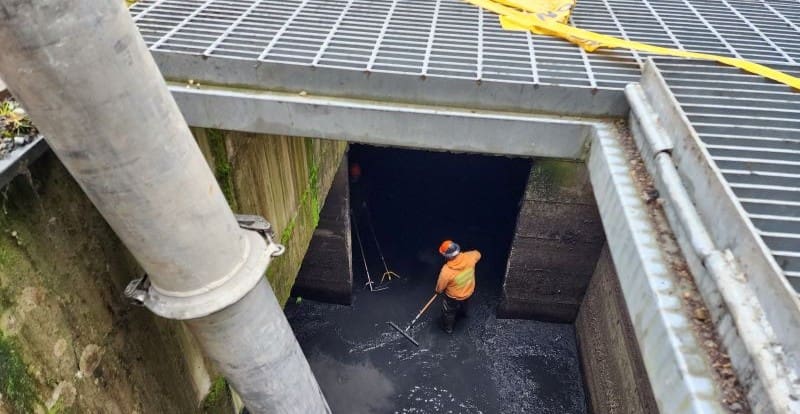
Maintenance logs document the routine work that keeps the system functional: debris removal, mowing, cleaning, vegetation management and structure pump-outs.
These records matter because regulators increasingly ask for proof that maintenance is being performed consistently, not just that inspections occurred. A clean inspection report carries less weight when there is no documentation showing how the system was maintained between visits.
Maintenance logs also support insurance reviews, internal budgeting and lender due diligence by demonstrating that the asset is being actively managed.
4. Repair records
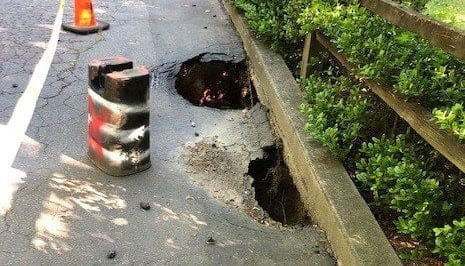
Repair records document corrective actions, material replacements and recurring problem areas across the system.
Over time, they help prevent the same issue from being diagnosed repeatedly and provide context for future contractors or property managers. They also make it easier to identify infrastructure that may require full replacement instead of repeated short-term repairs.
For owners managing multiple sites, repair history becomes especially valuable for comparing costs, identifying recurring asset failures and forecasting long-term capital needs.
5. Permits and approvals
Permits and approvals define the stormwater requirements the property must operate under. They document what was originally approved, what modifications have been authorized since construction and what ongoing obligations remain tied to the site. Permits are most often approved during construction but will provide context about the design choices made.
In many jurisdictions, post-construction stormwater permits include recorded maintenance agreements that transfer automatically with the property at sale. Those obligations remain enforceable whether or not the new owner reviewed the agreement during acquisition.
Owners who cannot locate these records often discover inspection schedules, reporting requirements or municipal access provisions after the property has been identified as out of compliance.
6. Operations and maintenance (O&M) manuals
The O&M manual explains how the system was designed to function and what maintenance activities are required to keep it operating properly.
It outlines inspection frequency, maintenance procedures and performance expectations established by the engineer of record. In many cases, it is the document regulators reference when evaluating whether a property is maintaining the system correctly.
Many owners and property managers are unaware the manual exists until they are asked to produce it during an inspection or compliance review.
Where the file proves its value
A complete stormwater file is most visible during the moments that matter: an ownership transition, a regulatory inspection, a drainage failure or a tenant escalation.
- During acquisitions and ownership transitions. Stormwater records are part of the asset, even if they rarely appear on standard due diligence checklists. Reviewing the file before closing tells a buyer what condition the system is in, what regulatory obligations transfer with the property and whether deferred maintenance is hiding inside an otherwise clean disclosure. Buyers who request the file early have negotiating leverage. Buyers who inherit the property without it absorb whatever the records would have shown.
- During regulatory inspections. Inspectors increasingly expect documentation alongside the physical condition of the system. Owners with complete files respond in days. Owners without them spend the deadline assembling records, often paying premium rates to mobilize contractors quickly.
- During recurring drainage issues. A pattern of standing water, erosion or pavement damage is much easier to diagnose with a full history in front of you. As-builts show how water is supposed to move. Inspection and repair records show what has been tried before.
- During financing, insurance and portfolio reviews. Lenders, insurance carriers and asset managers increasingly include stormwater documentation in their reviews. A complete file supports those conversations. An incomplete one raises questions that take time to answer.
How to start if your file is incomplete
For most properties, the first step is organizing what already exists. That typically means contacting previous property managers, current and former service vendors and the municipal stormwater office that issued the original permit. That process often reveals missing as-builts, inconsistent inspection history, expired permits and uncertainty about which O&M requirements still apply.
From there, the gaps can be filled in. Missing as-builts can sometimes be recovered through the original engineer of record, the municipality or a survey of the existing system. Inspection cadence can be set going forward, even if historical reports are limited. Maintenance and repair records can then be standardized so the file continues to grow consistently over time.
The goal is not a perfect historical record. It is a usable file that supports decisions, satisfies regulators and travels intact when the property changes hands.
As stormwater requirements continue to evolve across the country, the value of a complete file only grows. Property owners and facility managers who treat documentation as part of how they manage the asset, rather than as paperwork assembled during a crisis, are better positioned to protect long-term performance and value.
Owners who understand what is in their stormwater file respond more effectively to inspections, troubleshoot issues more efficiently and avoid uncovering infrastructure liabilities during a transaction or emergency.
If your documentation is incomplete, scattered across vendors or missing entirely, AQUALIS can help evaluate the file, identify gaps and organize records into a more usable long-term asset management tool.