

Last Updated 08/19/2026
Stormwater Code: Excerpts from Cary, North Carolina, Code of Ordinances and Land Development Ordinance
4.4.6 Watershed Protection Overlay
Purpose and Intent
The intent of the Watershed Protection Overlay is to ensure the availability of public water supplies at a safe and acceptable level of water quality for present and future residents of the Town and the surrounding region. Watershed protection measures allowed by this section include:
- Restriction of land uses allowed within water supply basins;
- Impervious area and density limitations; and
- Engineered stormwater control structures and the best management practices as listed in the Department of Environment and Natural Resources’ State Design Manual.
Engineered Stormwater Control Structures
1. Ownership and Design Requirements
Stormwater control structures shall be owned by a property owner’s association, or, for all properties except single-family residential developments, the owner of the property. All stormwater control structures shall be designed by either a North Carolina registered professional engineer or landscape architect, to the extent that the NC General Statutes allow. Other stormwater systems shall be designed by a North Carolina registered professional with qualifications appropriate for the type of system required; these registered professionals are defined as professional engineers and landscape architects, to the extent that the NC General Statutes allow and land surveyors, to the extent that the design represents incidental drainage within a subdivision, as provided in NC General Statutes.
2. Structures Required for High-Density Option
All development under the high-density option shall use engineered stormwater control structures as a primary treatment system. Engineered stormwater control structures shall be designed for specific pollutant removal according to modeling techniques approved by the North Carolina Department of Environment and Natural Resources. Specific requirements for these systems shall be in accordance with the Standard Engineering Details and Specifications Manual.
3. Ground Cover Required
In addition to the vegetative filters required in the Standard Engineering Details and Specifications Manual, all land areas outside of the engineered stormwater control structures shall be provided with a ground cover sufficient to restrain erosion within fifteen (15) days after any land disturbance. Upon completion of the stormwater control structure, a permanent ground cover shall be established and maintained as part of the maintenance plan described in Section 4.4.6(G)(9) below.
4. Legal Description Required
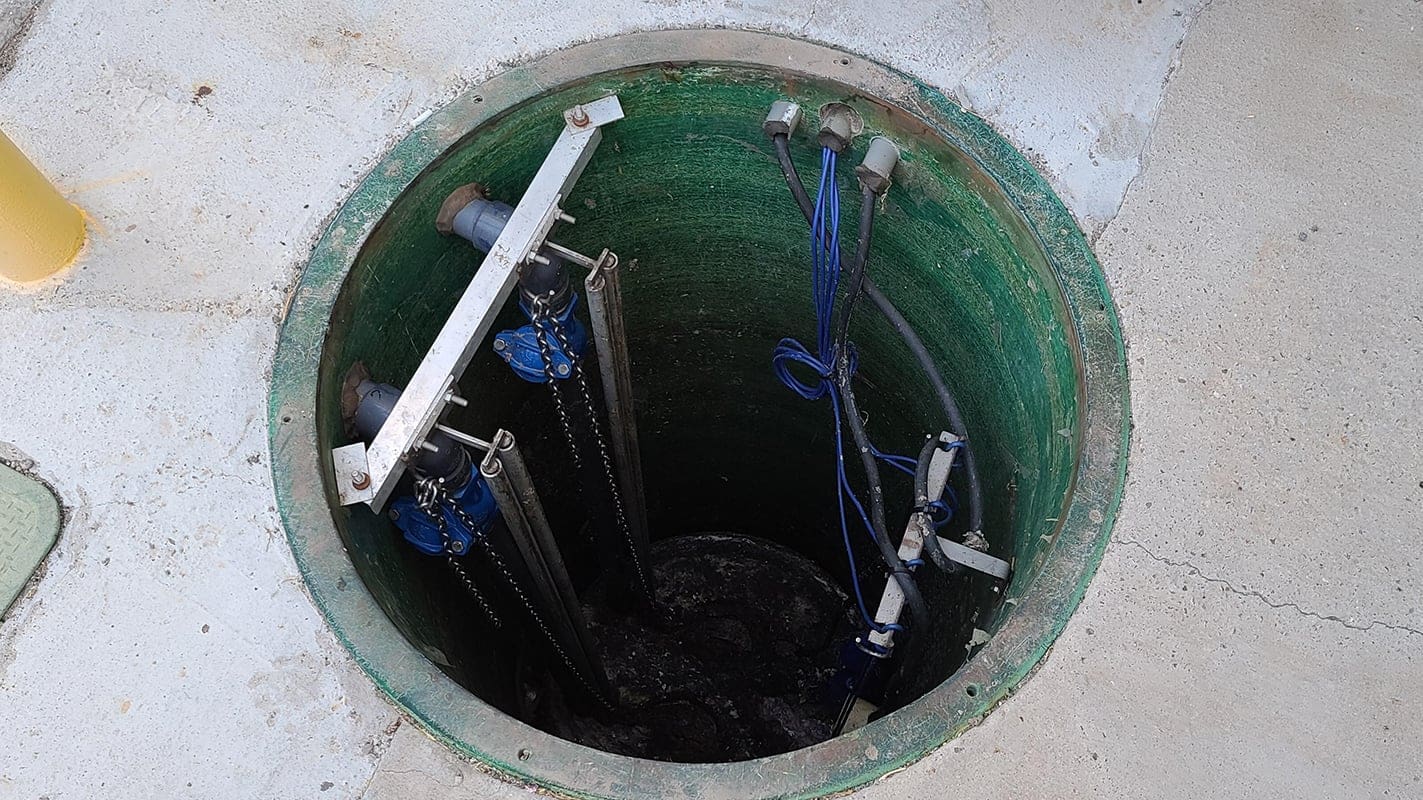
A legal description of the area containing the stormwater control structure shall be prepared and filed consistent with Section 4.4.6(G)(9) as a separate deed with the Wake County Register of Deeds along with any easements necessary for general access to the stormwater control structure. The deeded area shall include sufficient area to perform inspections, maintenance, repairs and reconstruction. The deeded area shall include, but is not limited to, detention ponds, vegetative filters, all pipes and water control structures, berms and dikes.
5. Computation of Total Built-Upon Area
Qualifying areas of the stormwater control structure may be considered pervious when computing total built-upon area. However, if the structure is used to compute the percentage built-upon area for one (1) site, it shall not be used to compute the built-upon area for any other site or area.
6. Wet Detention Ponds
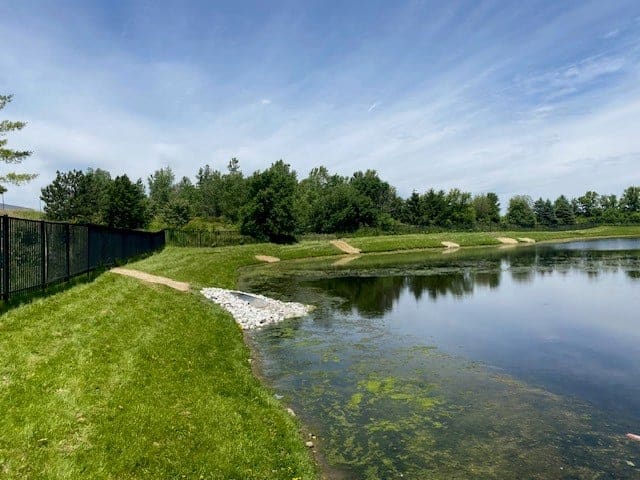
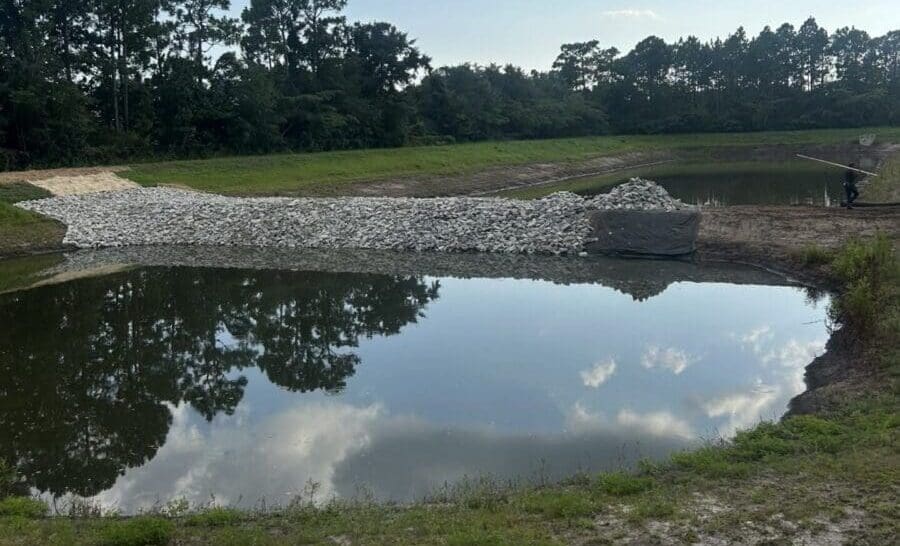
Wet detention ponds designed following the Standard Engineering Details and Specifications Manual, properly constructed, with all required financial assurances and maintenance agreements in place may be regarded as adequate to satisfy the impoundment requirements of the entire upstream contributory drainage basin.
7. Posting of Financial Security Required
All engineered stormwater control structures shall be conditioned on the posting of adequate financial assurance for the purpose of maintenance, repairs, or reconstruction necessary for adequate performance of the stormwater control structures. Financial assurance shall be in the form of the following:
a. Acceptable Forms of Security
Acceptable financial security shall be deposited with the Town to ensure that the engineered stormwater control structure is adequately maintained. The permit applicant shall deposit with the Town of Cary either cash or an evergreen letter of credit as financial security approved by the Town that is readily convertible into cash at face value. The cash or evergreen letter of credit shall be in an amount equal to fifteen (15) percent of the total cost of the stormwater control structure or the estimated cost of maintaining the stormwater control structure over a ten (10) year period, whichever is greater. The estimated cost of maintaining the stormwater control structure shall be consistent with the approved operation and maintenance plan or manual provided to the Town by the developer. The amount shall be computed by estimating the maintenance cost for twenty-five (25) years and multiplying this amount by two-fifths (2/5) or 0.4.
b. Operation and Maintenance Agreement
For all development built under the high density development option, the owner shall enter into a binding Operation and Maintenance Agreement between the Town and all persons having a freehold estate in the development. Said Agreement shall require the owning entity to inspect, maintain, repair and, if necessary, reconstruct the stormwater control structure in accordance with the operation and management plan or manual provided by the owner. The owner of the stormwater control structure shall file the Operation and Maintenance Agreement with the Wake County Register of Deeds.
c. Default Under the Cash or Evergreen Letter of Credit
Upon default of the owning entity to maintain, repair and, if necessary, reconstruct the stormwater control structure in accordance with the Operation and Maintenance Agreement, the Town shall obtain and use all or any portion of the financial security to make necessary improvements based on an engineering estimate. Such expenditure of funds shall only be made after exhausting all other reasonable remedies seeking the owning entity to comply with the terms and conditions of the Operation and Maintenance Agreement. The Town shall not return any of the unused deposited cash funds, which shall be retained for maintenance.
8. Inspections for Stormwater Control Structures
- The Stormwater Management Engineer shall inspect the stormwater control structure after the owning entity notifies the Stormwater Management Engineer that all construction-related work has been completed. At this inspection, the owning entity shall provide:
- The executed deed, related easements, operation and maintenance agreement and survey plat for the stormwater control structure ready for filing with the Wake County Register of Deeds;
- A certification sealed by a qualified professional stating that the stormwater control structure is complete and complies fully with the approved plans and specifications.
- Reproducible as built plans showing best management practices.
- The Stormwater Management Engineer shall review the documents submitted by the owning entity and the Town’s inspection report.
- If the Stormwater Management Engineer approves the inspection report, deed and easements, and accepts the certification, the owning entity shall file the Operation and Maintenance Agreement, deed and easements with the Wake County Register of Deeds and provide proof of recordation to the Stormwater Management Engineer. Upon receipt of proof of recordation, the Stormwater Management Engineer will issue a Certificate of Watershed Protection.
- If deficiencies are found, the Stormwater Management Engineer shall direct the owning entity to correct the deficiencies, make improvements and inspections and/or correct documents and resubmit proof of the corrections and/or improvements to the Stormwater Management Engineer.
- A Certificate of Occupancy shall not be issued for any building within the permitted development until the Town has approved the stormwater control structure, as provided in Section 4.4.6(G)(8)(b).
- The owner of each stormwater control structure shall submit a Maintenance Inspection Report to the Stormwater Management Engineer annually on the anniversary date of the Operation and Maintenance Agreement recording. A qualified professional, licensed in the state of North Carolina, must conduct the inspection. Records of inspection shall be maintained on forms approved or supplied by the North Carolina Division of Environmental Management and shall be provided to the Stormwater Management Engineer in a timely manner.
- In the event the annual inspection reveals the need for corrective action or improvements, the Stormwater Management Engineer shall notify the owning entity of the needed improvements and the date by which the corrective action is to be completed. All improvements shall be made consistent with the plans and specifications of the stormwater control structure and the operation and maintenance plan or manual as provided by section 4.4.6(G)(7)(b). After all corrective actions have been taken, the qualified professional shall re-inspect the stormwater control structure and certify to the town that the appropriate corrective actions have been taken.
- Appeals of any order, requirement, decision or determination made by the Stormwater Management Engineer may be made to and decided by the Town Council.
9. Maintenance and Upkeep
- An operation and maintenance plan or manual shall be provided by the developer for each stormwater control structure, indicating what operation and maintenance actions are needed, what specific quantitative criteria will be used for determining when those actions are to be taken and who is responsible for those actions. The plan shall clearly indicate the steps that will be taken for restoring a stormwater control structure to design specifications if a failure occurs.
- Landscaping and grounds management shall be the responsibility of the owning entity. However, vegetation shall not be established or allowed to mature to the extent that the integrity of the control structure is diminished or threatened, or to the extent of interfering with any easement or access to the stormwater control structure.
- Except for general landscaping and grounds management, the owning entity shall notify the Stormwater Management Engineer prior to any repair or reconstruction of the stormwater control structure. All improvements shall be made consistent with the approved plans and specifications of the stormwater control structure and the operation and maintenance plan or manual. After all repairs have been completed, the owning entity shall engage the services of a qualified professional, licensed in the state of North Carolina, to inspect said improvements and to issue a report to the Stormwater Management Engineer. The owning entity shall perform all additions, changes, or modifications noted in the inspection report supplied by the qualified professional in a timely manner.
- The Stormwater Management Engineer retains the right to perform inspections, deemed necessary by the Stormwater Management Engineer, on any stormwater control structure.
- Amendments to the plans and specifications of the stormwater control structure and/or the operation and maintenance plan or manual shall be approved by the Stormwater Management Engineer. Proposed changes shall be prepared by a qualified professional.
- If the Stormwater Management Engineer approves the proposed changes, the owning entity of the stormwater control structure shall file sealed copies of the revisions with the Office of the Stormwater Management Engineer.
- If the Stormwater Management Engineer disapproves the changes, the proposal may be revised and resubmitted to the Town Council as a new proposal. If the proposal has not been revised and is essentially the same as that already reviewed, it shall be returned to the applicant.
- If the Town Council or Stormwater Management Engineer finds that the operation and maintenance plan or manual is inadequate for any reason, the Stormwater Management Engineer shall notify the owning entity of any required changes and the owning entity shall prepare and file copies of the revised agreement first with the Wake County Register of Deeds. The owning entity shall then file a copy certified by the Register of Deeds with the Office of the Stormwater Management Engineer.
7.3 STORMWATER MANAGEMENT
7.3.1 Purpose and Definitions
- This section is intended to protect water quality for present and future residents of the Town and surrounding regions by limiting the amount of pollutants, including but not limited to nitrogen and phosphorus, in stormwater runoff. Specific objectives include: control of nitrogen and phosphorus export from development, control of peak stormwater runoff, and the use of best management practices.
7.3.4 Allowable Best Management Practices (BMPs)
Neuse River buffers and Jordan Lake Buffers required by the Division of Water Resources may not be used for compliance with nitrogen reduction requirements; however, additional fifty (50)-foot buffers (including locally required buffers) may be used as nitrogen control BMPs. All BMPs shall meet the standards of the most current version of the North Carolina Department of Environment and Natural Resources Best Management Practices Manual (“BMP Manual”). If specifications or guidelines of the BMP Manual are more restrictive or apply a higher standard than other laws or regulations, that fact shall not prevent application of the specifications or guidelines in the BMP Manual. If the standards, specifications, guidelines, policies, criteria, or other information in the BMP Manual are amended subsequent to the submittal of an application for approval pursuant to this section 7.3 but prior to approval, the new information shall control and shall be utilized in reviewing the application and in implementing this section 7.3 with regard to the application. Whenever an applicant proposes to utilize a practice or practices not designed and constructed in accordance with the criteria and specifications in the BMP Manual, the applicant shall have the burden of demonstrating that the practice(s) will satisfy the minimum water quality and quantity performance standards of this section 7.3. The applicant may be required to provide the documentation, calculations, and examples necessary to determine whether such an affirmative showing is made.
If more than one BMP is installed in series on a development, then the removal rate shall be determined through serial rather than additive calculations. For example, if a wet detention pond discharges through a UTB, then the removal rate shall be estimated to be forty-seven and five-tenths (47.5) percent. The pond removes twenty-five (25) percent of the nitrogen and discharges seventy-five (75) percent into the buffer. The buffer then removes thirty (30) percent of the nitrogen discharged from the pond, which is twenty-two and five-tenths (22.5) percent. The sum of twenty- five (25) and twenty-two and five-tenths (22.5) is forty-seven and five-tenths (47.5). The removal rate is not twenty-five (25) percent plus thirty (30) percent.
7.3.5 Maintenance of Best Management Practices
All best management practices that are implemented to achieve nitrogen or phosphorus reduction and flow attenuation will require complete legal documentation and a maintenance plan and must comply with all requirements of Section 4.4.6(G), Engineered Stormwater Control Structures.
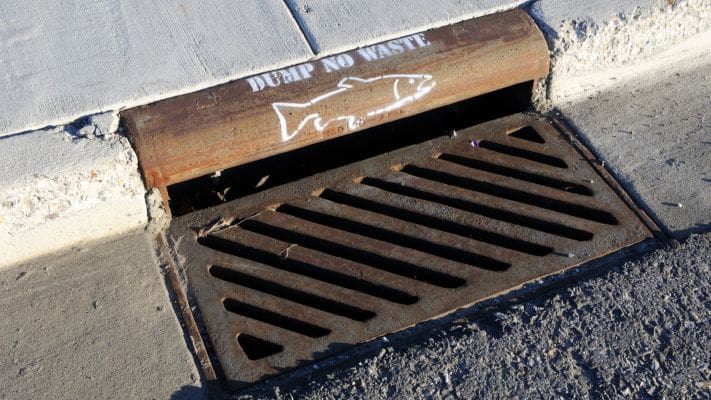
7.3.6 Illegal Discharges to the Storm Sewer System
A. Purpose
- To regulate the contribution of pollutants to the MS4 by stormwater discharges by any user
- To prohibit illicit connections and discharges to the MS4
- To establish legal authority to carry out all inspection, surveillance, monitoring, and enforcement procedures necessary to ensure compliance with this ordinance
B. Applicability
This ordinance shall apply to all water entering the storm drain system generated on any developed and undeveloped lands unless explicitly exempted by the Town of Cary.
C. Responsibility for Administration
The Town Manager shall administer, implement, and enforce the provisions of this ordinance. Any powers granted or duties imposed upon the Town Manager may be delegated in writing by the Town Manager to persons or entities acting in the beneficial interest of or in the employ of the Town.
D. Compatibility With Other Regulations
This ordinance is not intended to modify or repeal any other ordinance, rule, regulation, or other provision of law. The requirements of this ordinance are in addition to the requirements of any other ordinance, rule, regulation, or other provision of law, and where any provision of this ordinance imposes restrictions different from those imposed by any other ordinance, rule, regulation, or other provision of law, whichever provision is more restrictive or imposes higher protective standards for human health or the environment shall control.
E. Severability
The provisions of this ordinance are hereby declared to be severable. If any provision, clause, sentence, or paragraph of this ordinance or the application thereof to any person, establishment, or circumstances shall be held invalid, such invalidity shall not affect the other provisions or application of this ordinance.
F. Ultimate Responsibility
The standards set forth herein and promulgated pursuant to this ordinance are minimum standards; therefore this ordinance does not intend or imply that compliance by any person will ensure that there will be no contamination, pollution, or unauthorized discharge of pollutants.
G. Discharge Prohibitions
- Prohibition of Illegal Discharges
No person shall throw, drain, or otherwise discharge, cause, or allow others under its control to throw, drain, or otherwise discharge into the MS4 any pollutants or waters containing any pollutants, other than stormwater. The commencement, conduct or continuance of any illegal discharge to the storm drain system is prohibited except as described as follows:- The following discharges are exempt from discharge prohibitions established by this ordinance: water line flushing, landscape irrigation, diverted stream flows, rising ground waters, uncontaminated ground water infiltration, uncontaminated pumped ground water, discharges from potable water sources, foundation drains, air conditioning condensation, irrigation water, springs, water from crawl space pumps, footing drains, lawn watering, individual residential car washing, flows from riparian habitats and wetlands, dechlorinated swimming pool discharges, and street wash water.
- Discharges or flow from firefighting, and other discharges specified in writing by the Town Manager or his/her designee as being necessary to protect public health and safety.
- Discharges associated with dye testing; however, this activity requires a verbal notification to the Town Manager or his/her designee prior to the time of the test.
- The prohibition shall not apply to any non-stormwater discharge permitted under an NPDES permit, waiver, or waste discharge order issued to the discharger and administered under the authority of the United States Environmental Protection Agency (EPA), provided that the discharger is in full compliance with all requirements of the permit, waiver, or order and other applicable laws and regulations, and provided that written approval has been granted for any discharge to the storm drain system.
- Prohibition of Illicit Connections
- The construction, use, maintenance or continued existence of illicit connections to the storm drain system is prohibited.
- This prohibition expressly includes, without limitation, illicit connections made in the past, regardless of whether the connection was permissible under law or practices applicable or prevailing at the time of connection.
- A person is considered to be in violation of this ordinance if the person connects a line conveying sewage to the MS4, or allows such a connection to continue.
- Improper connections in violation of this ordinance must be disconnected and redirected, if necessary, to an approved on-site wastewater management system or the sanitary sewer system upon approval of the Town Manager.
- Any drain or conveyance that has not been documented in plans, maps or equivalent, and which may be connected to the storm sewer system, shall be located by the owner or occupant of that property upon receipt of written notice of violation from the Town Manager requiring that such locating be completed. Such notice will specify a reasonable time period within which the location of the drain or conveyance is to be determined, that the drain or conveyance be identified as a storm sewer, sanitary sewer or other, and that the outfall location or point of connection to the storm sewer system, sanitary sewer system or other discharge point be identified. Results of these investigations are to be documented and provided to the Town Manager.
H. Watercourse Protection
Every person owning property through which a watercourse passes, or such person’s lessee, shall keep and maintain that part of the watercourse within the property free of trash, debris, excessive vegetation, and other obstacles that would pollute, contaminate, or significantly retard the flow of water through the watercourse. In addition, the owner or lessee shall maintain existing privately owned structures within or adjacent to a watercourse, so that such structures will not become a hazard to the use, function, or physical integrity of the watercourse.
I. Industrial or Construction Activity Discharges
- Submission of Notice of Intent to the Town of Cary
- Any person subject to an industrial or construction activity NPDES stormwater discharge permit shall comply with all provisions of such permit. Proof of compliance with said permit may be required in a form acceptable to the Town Manager prior to the allowing of discharges to the MS4.
- The operator of a facility, including construction sites, required to have an NPDES permit to discharge stormwater associated with industrial activity shall submit a copy of the Notice of Intent (NOI) to the Town Manager at the same time the operator submits the original Notice of Intent to the EPA as applicable.
- The copy of the Notice of Intent may be delivered to the Town Manager either in person or by mailing it to: Notice of Intent to Discharge Stormwater Services Manager, 316 N. Academy Street, Cary, NC 27513.
- A person commits an offense if the person operates a facility that is discharging stormwater associated with industrial activity without having submitted a copy of the Notice of Intent to do so to the Town Manager.
J. Compliance Monitoring
- Right of Entry: Inspection and Sampling
The Town Manager shall be permitted to enter and inspect facilities subject to regulation under this ordinance as often as may be necessary to determine compliance with this ordinance.- If a discharger has security measures in force which require proper identification and clearance before entry into its premises, the discharger shall make the necessary arrangements to allow access to representatives of the Town of Cary.
- Facility operators shall allow the Town Manager ready access to all parts of the premises for the purposes of inspection, sampling, examination and copying of records that must be kept under the conditions of an NPDES permit to discharge stormwater, and the performance of any additional duties as defined by state and federal law.
- The Town Manager shall have the right to set up on any permitted facility such devices as are necessary in the opinion of the Town Manager to conduct monitoring and/or sampling of the facility’s stormwater discharge. The monitoring and/or sampling of the facility’s stormwater shall be at the facility’s expense.
- The Town of Cary has the right to require the discharger to install monitoring equipment as necessary. The facility’s sampling and monitoring equipment shall be maintained at all times in a safe and proper operating condition by the discharger at its own expense. All devices used to measure stormwater flow and quality shall be calibrated to ensure their accuracy.
- Any temporary or permanent obstruction to safe and easy access to the facility to be inspected and/or sampled shall be promptly removed by the operator at the written or oral request of the Town Manager and shall not be replaced. The costs of clearing such access shall be borne by the operator.
- Unreasonable delays in allowing the Town of Cary access to a permitted facility is a violation of a stormwater discharge permit and of this ordinance. A person who is the operator of a facility with an NPDES permit to discharge stormwater associated with industrial activity commits an offense if the person denies the Town of Cary reasonable access to the permitted facility for the purpose of conducting any activity authorized or required by this ordinance.
- Search Warrants
If the Town Manager has been refused access to any part of the premises from which stormwater is discharged, and he/she is able to demonstrate probable cause to believe that there may be a violation of this ordinance, or that there is a need to inspect and/or sample as part of a routine inspection and sampling program designed to verify compliance with this ordinance or any order issued hereunder, or to protect the overall public health, safety, and welfare of the community, then the Town Manager may seek issuance of a search warrant.
K. Requirement to Prevent, Control, and Reduce Stormwater Pollutants by the Use of Best Management Practices
The Town of Cary will adopt requirements identifying Best Management Practices (BMPs) for any activity, operation, or facility which may cause or contribute to pollution or contamination of stormwater, the storm drain system, or waters of the United States. The owner or operator of such activity, operation, or facility shall provide, at their own expense, reasonable protection from accidental discharge of prohibited materials or other wastes into the municipal storm drain system or watercourses through the use of these structural and non-structural BMPs. Further, any person responsible for a property or premises that is, or may be, the source of an illicit discharge, may be required to implement, at said person’s expense, additional structural and non-structural BMPs to prevent the further discharge of pollutants to the MS4.
Compliance with all terms and conditions of a valid NPDES permit authorizing the discharge of storm water associated with industrial activity, to the extent practicable, shall be deemed in compliance with the provisions of this section. These BMPs shall be part of a Stormwater Management Plan (SWMP) as necessary for compliance with requirements of the NPDES permit.
L. Notification of Spills
Notwithstanding other requirements of law, as soon as any person responsible for a facility or operation, or responsible for emergency response for a facility or operation has information of any known or suspected release of materials which are resulting or may result in illegal discharges or pollutants discharging into storm water, the storm drain system, or waters of the United States, said person shall take all necessary steps to ensure the discovery, containment, and cleanup of such release. In the event of such a release of hazardous materials said person shall immediately notify emergency response agencies of the occurrence via emergency dispatch services. In the event of a release of non- hazardous materials, said person shall notify the Town Manager in person or by phone or facsimile no later than the next business day. Notifications in person or by phone shall be confirmed by written notice addressed and mailed to the Town Manager within two business days of the phone notice. If the discharge of prohibited materials emanates from a commercial or industrial establishment, the owner or operator of such establishment shall also retain an on-site written record of the discharge and the actions taken to prevent its recurrence. Such records shall be retained for at least five (5) years. Failure to provide notification of a release as provided above is a violation of this ordinance.
M. Violations, Enforcement, and Penalties
1. Violations
It shall be unlawful for any person to violate any provision or fail to comply with any of the requirements of this ordinance. Any person who has violated or continues to violate the provisions of this ordinance, may be subject to the enforcement actions outlined in this section or may be restrained by injunction or otherwise abated in a manner provided by law.
In the event the violation constitutes an immediate danger to public health or public safety, the Town Manager is authorized to enter upon the subject private property, without giving prior notice, to take any and all measures necessary to abate the violation and/or restore the property. Town Manager is authorized to seek costs of the abatement as outlined in Section (P).
2. Warning Notice
When the Town Manager finds that any person has violated, or continues to violate, any provision of this ordinance, or any order issued hereunder, the Town Manager may serve upon that person a written Warning Notice, specifying the particular violation believed to have occurred and requesting the discharger to immediately investigate the matter and to seek a resolution whereby any offending discharge will cease. Investigation and/or resolution of the matter in response to the Warning Notice in no way relieves the alleged violator of liability for any violations occurring before or after receipt of the Warning Notice. Nothing in this subsection shall limit the authority of the Town of Cary to take any action, including emergency action or any other enforcement action, without first issuing a Warning Notice.
3. Notice of Violation
Whenever the Town Manager finds that a person has violated a prohibition or failed to meet a requirement of this ordinance, the Town Manager may order compliance by written notice of violation to the responsible person. The Notice of Violation shall contain:
- The name and address of the alleged violator;
- The address when available or a description of the building, structure or land upon which the violation is occurring, or has occurred;
- A statement specifying the nature of the violation;
- A description of the remedial measures necessary to restore compliance with this ordinance and a time schedule for the completion of such remedial action;
- A statement of the penalty or penalties that shall or may be assessed against the person to whom the notice of violation is directed;
- A statement that the determination of violation may be appealed to the Stormwater Services Manager by filing a written notice of appeal within thirty (30) days of service of notice of violation; and
- A statement specifying that, should the violator fail to restore compliance within the established time schedule, the work will be done by a designated governmental agency or a contractor and the expense thereof shall be charged to the violator. Such notice may require without limitation:
- The performance of monitoring, analyses, and reporting;
- The elimination of illicit connections or discharges;
- That violating discharges, practices, or operations shall cease and desist;
- The abatement or remediation of storm water pollution or contamination hazards and the restoration of any affected property
- Payment of a fine to cover administrative and remediation costs; and
- The implementation of source control or treatment BMPs.
4. Compensatory Action
In lieu of enforcement proceedings, penalties, and remedies authorized by this ordinance, the Town of Cary may impose upon a violator alternative compensatory actions, such as storm drain stenciling, attendance at compliance workshops, creek cleanup, etc.
7.3.5 Town of Cary NPDES Phase II Post Construction Runoff Controls
- Low Density Projects, having no more than two (2) dwelling units per acre or no more than twenty-four (24) percent impervious surface area for all residential and non-residential development, shall transport stormwater runoff by vegetated conveyances to the maximum extent practicable.
- High Density Projects, having more than two (2) dwelling units per acre or more than twenty- four (24) percent impervious surface area for all residential and non-residential development, shall implement stormwater control measures that comply with each of the following standards:
- The stormwater control measures shall control and treat the difference between the pre-development and post- development conditions for the one (1) year twenty-four (24) hour storm. Runoff volume drawdown shall be a minimum of twenty-four (24) hours, but not more than one hundred twenty (120) hours.
- Engineered stormwater control structures shall be designed to achieve a minimum of eighty-five (85) percent average annual removal for Total Suspended Solids (TSS).
7.3.8 Variance
To the extent any state or federal law or regulations requires the Town to establish a variance procedure for any requirement of this section 7.3, excluding section 7.3.6, the variance procedure established in Section 4.4.6(I) of the LDO shall be utilized. The provisions of section 7.3.6 shall not be subject to this requirement.
11.3.5 Activities Inconsistent with Conditions of Plan Approval or Permit
It shall be a violation of this Ordinance to engage in any development, use of land, construction, remodeling, or other activity contrary to the terms and conditions of any plan approval, permit, or other form of authorization required to engage in such an activity.
11.6.1 Notice of Violation Procedure
Except as otherwise provided, the following notice procedure shall be used to enforce the provisions of this Ordinance. The notice of violation and assessment procedure for violations of the soil erosion and sedimentation control provisions in Section 7.4 of this Ordinance are set forth in Section 11.4.4.
- Notice Required Before Penalty
No penalty shall be assessed pursuant to this chapter unless and until the person alleged to be in violation has been notified of the violation in accordance with this section, with the exception of a violation of a stop work order, illegal placement of a temporary sign or violation of the soil erosion and sedimentation control provisions in Section 7.4. In the case of stop work orders, violations shall subject the violator to immediate imposition of a penalty. In the case of an illegal temporary sign, the Director shall be authorized to remove such sign immediately without notice. - Notice of Violation and Opportunity to Cure
Whenever the Director has reasonable cause to believe that a person is violating any of the provisions of this Ordinance or any plan, order, or condition which has been approved, issued, or imposed pursuant to this Ordinance, the Director shall notify that person of the violation. - Written Notice
Such notice of violation shall be in writing and shall be served by personal delivery or by certified or registered mail, return receipt requested. A copy of the notice may also be sent by regular mail. Service shall be deemed sufficient if the registered or certified mail is unclaimed or refused, and the regular mail is not returned by the post office within ten (10) days after the mailing. - Content of Written Notice
The notice of violation shall describe the violation, shall identify the provision or provisions of this Ordinance that are being violated, shall specify what actions must be taken to correct the violation (including an order to stop any and all work which violates this Ordinance), shall direct the person to correct the violation within a specified reasonable time period (beginning on the date such notice is received), and shall warn that more severe measures (such as a civil penalty or criminal prosecution) may be assessed or brought against the person if he or she fails to take appropriate action to cure or correct the violation. If the violator cannot be ascertained, then the notice of violation shall be sent to the record owner of the land on which the violation occurs. - Extension of Time to Cure
Upon receipt of a written request from the alleged violator or the property owner for an extension of time to cure or correct the violation, the Director may grant a single extension of time, not to exceed a period of thirty (30) days, in which the alleged violator may cure or correct the violation before the Director issues a citation pursuant to Section 11.6.2. Such extension of time shall not be granted unless the alleged violator or the property owner can demonstrate to the Director that the violation cannot be cured or corrected within the time period specified in the notice of violation because the labor or materials needed to take appropriate action are unavailable due to circumstances beyond the control of the alleged violator or the property owner. - Corrective Action Taken
If the violation is cured or corrected within the time period specified in the notice of violation, or extension of time granted in Section 11.6.1(E), then the Town shall take no further action against the person.
View State Page
Frequently Asked Questions
Who owns and is responsible for a stormwater control structure in Cary?
The property owner must own the stormwater control structure, except for single-family residential developments, which may use a property owner association instead. That owner carries the ongoing legal and maintenance responsibility for the structure.
What is an Operation and Maintenance Agreement, and do I need one in Cary?
For high-density developments, yes. It’s a binding agreement with the town that must be filed with the Wake County Register of Deeds. It works alongside an operation and maintenance plan or manual that spells out what maintenance actions are needed and what quantitative criteria will be used to judge whether the facility is performing correctly.
Do I need to post financial security for stormwater maintenance in Cary?
Yes. Owners must post adequate financial assurance for maintenance, repairs, or reconstruction, in the form of cash or an evergreen letter of credit.
What happens if I receive a Notice of Violation from the Town of Cary?
A Notice of Violation (NOV) will specify the nature of the violation, what corrective actions are required, and the deadline to cure it. You may appeal any order or determination to the Town Council within 30 days of receiving the notice. If you cannot cure the violation within the specified timeframe, you may request a single extension of up to 30 days — but only if you can demonstrate the needed labor or materials are unavailable due to circumstances beyond your control. If the violation is fully corrected within the deadline, the Town takes no further action.
Do I need to submit an annual stormwater maintenance inspection report in Cary?
Yes. Owners must submit a Maintenance Inspection Report every year on the anniversary date of when the Operation and Maintenance Agreement was recorded. Inspections must be conducted by a qualified professional licensed in North Carolina, and records must be kept on forms approved or supplied by the state.
Can the Town of Cary inspect my property for stormwater compliance?
Yes. Under the NPDES program, the Town of Cary has the authority to inspect properties for noncompliance and issue a Notice of Violation (NOV) for any deficiency or infraction found on-site. The Stormwater Management Engineer also retains the right to perform inspections on any stormwater control structure whenever deemed necessary, and the Town Manager may enter private property without prior notice if an immediate danger to public health or safety exists.
What are my ongoing maintenance responsibilities as a property owner in Cary?
Property owners are responsible for maintaining all stormwater control facilities on their property. Specifically, you must: submit an annual Maintenance Inspection Report on the anniversary of your Operation and Maintenance Agreement recording; have inspections conducted by a qualified NC-licensed professional; keep landscaping and grounds managed so vegetation does not threaten the structural integrity of any stormwater control structure; and notify the Stormwater Management Engineer before making any repairs or reconstruction (except routine landscaping).
Who is qualified to inspect my stormwater control structure in Cary?
A qualified professional licensed in North Carolina, meaning a professional engineer, landscape architect, land surveyor, or another appropriately licensed professional depending on the type of system.
What happens if my annual stormwater inspection finds deficiencies in Cary?
The Stormwater Management Engineer notifies the owning entity of the needed improvements and sets a date by which corrective action must be completed. Once corrections are made, the qualified professional must re-inspect the structure and certify to the town that the appropriate corrective actions have been taken.
The information on this page is provided for general informational purposes only and is not legal advice. Regulations change frequently — AQUALIS makes no warranty as to the accuracy or completeness of this content, and any reliance on it is at your own risk. Consult a qualified professional or your local regulatory authority to confirm requirements applicable to your specific property.