


Last Updated 07/22/2026
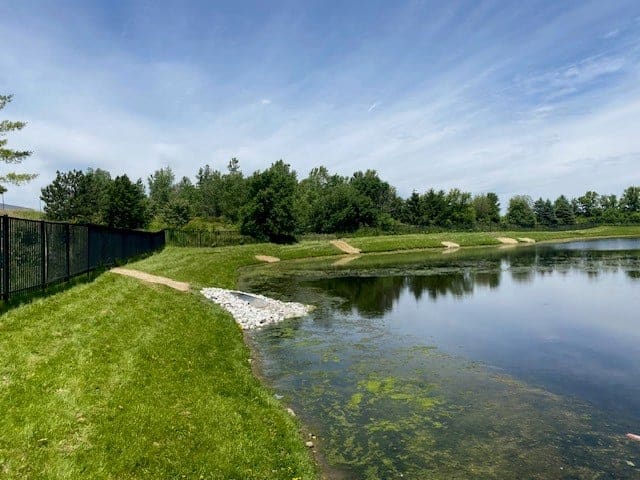
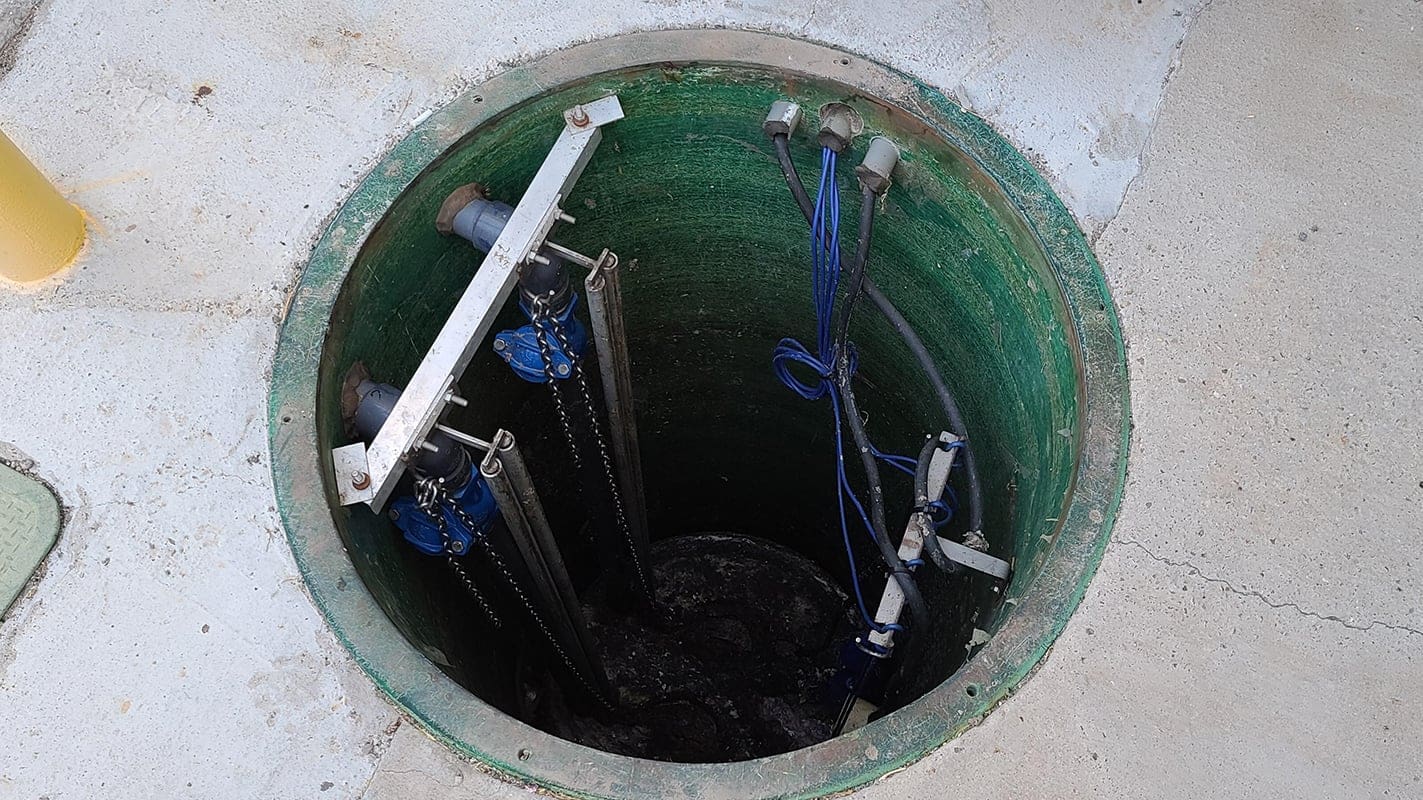
The City of Westminster has enacted a Stormwater Ordinance in order to establish minimum stormwater management requirements and controls to protect and safeguard the general health, safety, and welfare of the public residing in watersheds within this jurisdiction. The City of Westminster is the permitting authority for all land disturbing activities and requires the land owner to maintain all on-site stormwater control facilities and all open space areas (e.g. parks or “green” areas) required by the approved stormwater control plan. The City of Westminster will only provide construction permits to projects that establish a plan to manage stormwater runoff occurring during the construction process. The City of Westminster , under the NPDES program, also has the authority to inspect properties for noncompliance and can issue a notice of violation (NOV) for any deficiency or infraction onsite. Property owners are responsible for the maintenance of any stormwater facilities or practices located on the property. The City of Westminster has the authority to inspect stormwater facilities and practices in order to ascertain that they are properly maintained and functioning.
Excerpt from City of Westminster Municipal Code
Title VII – Health and Sanitation
Chapter 11 Stormwater Quality
8-11-2. – General Requirements.
(A) Any person who undertakes or causes to be undertaken any activity that involves disturbance of the surface of land shall ensure that soil erosion, sedimentation, increased pollutant loads and changed water flow characteristics resulting from the activity are controlled, so as to minimize pollution of receiving waters. The requirements of this Chapter are minimum standards and a person’s compliance with the same shall not relieve such person from the duty of enacting all measures necessary to minimize pollution of receiving waters.
(B) All temporary BMPs shall be installed before any land disturbance operations take place.
(C) Any land disturbances shall be conducted in such a manner to effectively reduce soil erosion and resulting sedimentation, and should not exceed the erosion expected to occur for the site in its totally undeveloped state.
(D) All persons engaged in land disturbances shall design, implement and maintain acceptable soil erosion and sedimentation control measures in conformance with the City’s Storm Drainage Design and Technical Criteria Manual, as amended, and the City’s Standards and Specifications for the Design and Construction of Public Improvements, as amended.
(E) All land disturbances shall be designed, constructed and completed in such a manner so that the exposed area of any disturbed land shall be limited to the shortest possible period of time.
(F) Sediment caused by accelerated soil erosion shall be removed from stormwater runoff water before it leaves the site of the land disturbance.
(G) Any temporary BMPs or stormwater treatment facilities designed and constructed for the conveyance of water around, through or from the land disturbance area shall be designed to limit the water flow to a non-erosive velocity as defined in the City’s Storm Drainage Design and Technical Criteria Manual, as amended, and the City’s Standards and Specifications for the Design and Construction of Public Improvements, as amended.
(3391; Ord. No. 3999 , § 2, 8-12-2019)
8-11-6. – Stormwater Management Plan.
(A) Every development, redevelopment or construction project that covers an area equal to or greater than one acre, or covers an area less than one acre if the site is part of a larger planned development requires the preparation of an SWMP to include temporary BMPs and stormwater treatment facilities designed to reduce the pollutant loading on the MS4. Any SWMP shall be prepared in accordance with the City’s Standards and Specifications for the Design and Construction of Public Improvements, as amended, and submitted to the City for its review and acceptance.
(B) Upon approval of a SWMP, the permittee is responsible for performing all inspections in compliance with the regulations of the State of Colorado Water Quality Control Division.
(C) Both during and after completion of every development, redevelopment or construction project that has received acceptance of an SWMP, the permittee shall be responsible for maintaining and repairing any and all temporary BMPs and stormwater treatment facilities provided for in the accepted SWMP.
(2335 3391 3659; Ord. No. 3999 , § 6, 8-12-2019)
8-11-7. – Maintenance Requirements.
(B) After final site stabilization has been achieved, the owner shall be responsible for ensuring that:
- Stormwater treatment facilities are maintained in perpetuity as shown on the approved ODP, construction plans and phase III drainage report; and
- When individual lots are sold, the owner discloses the stormwater runoff quality requirements of the SWMP to the purchaser prior to or at the time of closing.
(C) Should any permittee or owner fail to adequately maintain the temporary BMPs and/or stormwater treatment facilities or fail to remove the temporary BMPs, the City Manager may summarily cause the necessary work to be performed at the expense of such responsible party, and the cost of such abatement shall be a first and prior lien on the property as provided by Title I, Chapter 31, W.M.C., and may be assessed and collected pursuant to Section 8-4-5, W.M.C.
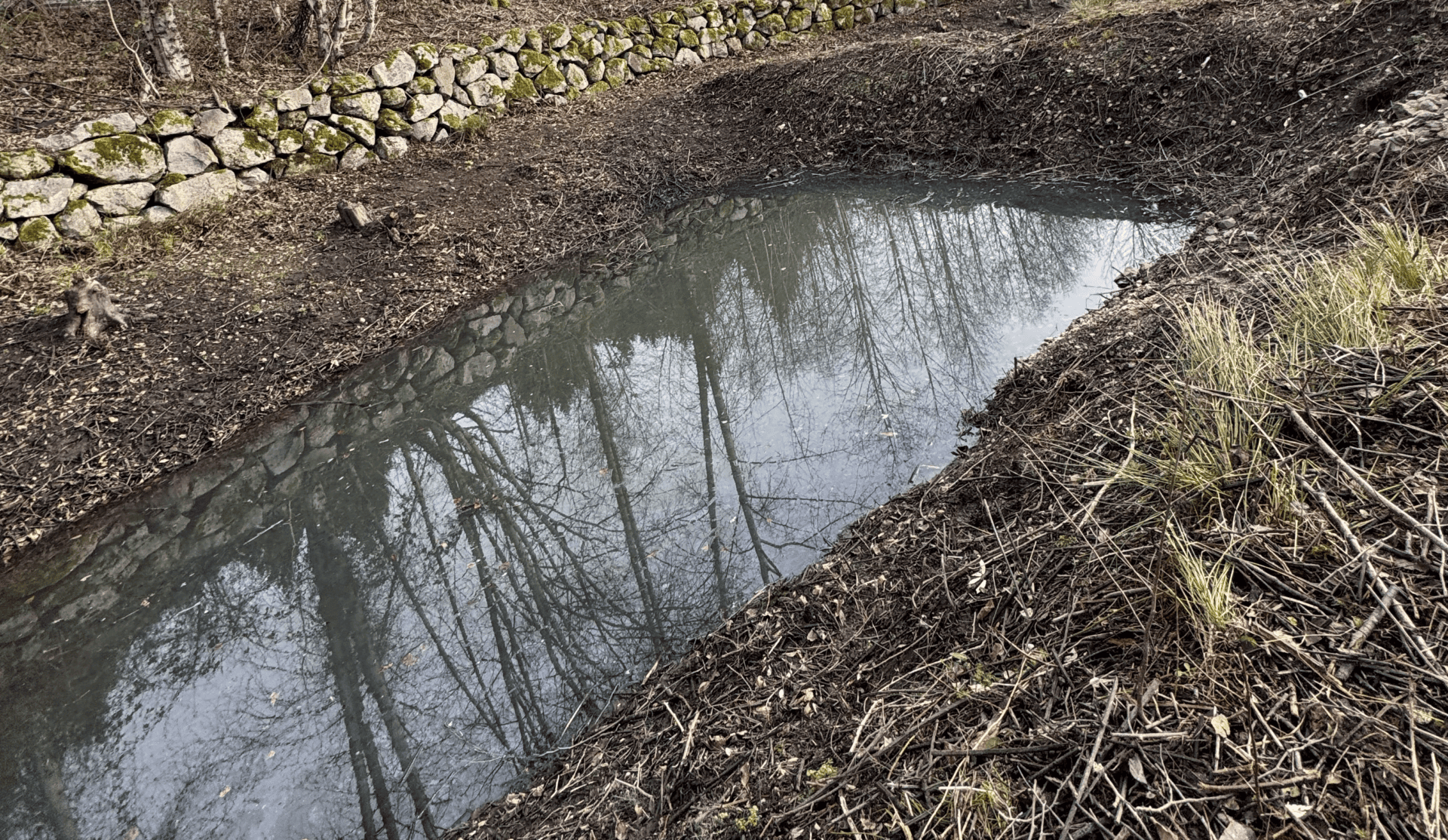
(D) Every owner through which a watercourse passes shall keep and maintain that part of the watercourse within the property free of trash, debris, excessive vegetation and other obstacles that would pollute, contaminate or significantly retard the flow of water through the watercourse. In addition, the owner shall maintain existing privately owned structures within or adjacent to a watercourse, so that such structures will not become a hazard to the use, function or physical integrity of the watercourse.
(3391 3564 3659; Ord. No. 3999 , § 7, 8-12-2019)
8-11-9. – Stormwater Quality Standards.
(A) Right of Entry:
- The City Inspector shall have the right to enter the property to determine compliance with any requirement imposed pursuant to this Chapter. The owner or permittee shall allow the City Inspector ready access to all parts of the premises for the purposes of inspection, whether announced or unannounced, sampling, records examination and copying, and the performance of any additional duties.
- If the City Inspector has been refused the right of entry to the property and is able to demonstrate probable cause that there may be a violation of any requirement imposed pursuant this Chapter, that there is a need to inspect and/or sample to verify compliance, or that protection of the overall public health, safety and welfare of the community is necessary, then the City Inspector may seek issuance of a search warrant from the municipal court.
(B) City Inspector: If a City Inspector determines that there is a violation of any requirement imposed pursuant to this Chapter, the City Inspector may, in writing, direct the permittee or owner on the site to remediate, repair or replace any temporary BMPs and stormwater treatment facilities that were required for the site, or require additional temporary BMPs be installed, if deemed necessary by the City Inspector. It shall be unlawful for any permittee or owner to fail to take all necessary measures to comply with such written directive.
(3391 3564 3683; Ord. No. 3999 , § 9, 8-12-2019)
8-11-10. – Administrative Enforcement Remedies
(A) Notification of Violation: When the City Manager finds that there is a violation of any requirement imposed pursuant to this Chapter, the City Manager may serve the person in violation a written or electronic notice of violation, which may require submission of a plan for the satisfactory correction and prevention thereof. Submission of this plan in no way relieves the person in violation of liability for any violations occurring before or after receipt of the notice of violation. Where the violation is an illicit discharge, the discharge must be immediately corrected. Nothing in this Section shall limit the authority of the City Manager to take any action, including emergency actions or any other enforcement action, without first issuing a notice of violation.
(B) Consent Orders: The City Manager may enter into consent orders, assurances of voluntary compliance or other similar document establishing an agreement with the person in violation of any requirement imposed pursuant to this Chapter. Such documents shall include specific action to be taken by the person in violation to correct the noncompliance within a time period specified by the document. Such documents shall have the same force and effect as the administrative orders issued pursuant to Subsections 8-11-10(D) and 8-11-10(F), W.M.C., and shall be judicially enforceable.
(C) Show Cause Hearing: If there is a violation of any requirement imposed pursuant to this Chapter, the City Manager may order the person in violation to appear before the City Manager and show cause why the proposed enforcement action should not be taken. Notice shall be served to the person in violation specifying the time and place for the meeting, the proposed enforcement action, the reasons for such action and a request that the person in violation show cause why the proposed enforcement action should not be taken. The notice of the meeting shall be served personally or by registered or certified mail (return receipt requested) at least 14 days prior to the hearing. A show cause hearing shall not be a bar against, or prerequisite for, taking any other action against the person in violation.
(D) Compliance Orders: When the City Manager finds that a person is in violation of any requirement imposed pursuant to this Chapter, the City Manager may issue an order to the person in violation, directing that person come into compliance within a specified time. If the person does not come into compliance within the time provided, storm sewer service may be discontinued. Compliance orders also may contain other requirements to address the noncompliance, including additional self-monitoring and BMPs designed to minimize the amount of pollutants discharged to the MS4. Issuance of a compliance order shall not be a bar against, or a prerequisite for, taking any other action against the person in violation.
(E) Suspension and Revocation of Permit: The City may suspend or revoke a land disturbance permit for violation of any requirement imposed pursuant to this Chapter and for misrepresentations made by a permittee.
(F) Cease and Desist Orders: When the City Manager finds that a violation of any requirement imposed pursuant to this Chapter has occurred or that past violations are likely to recur, the City Manager may issue an order directing the person in violation to cease and desist such violations and to:
- Immediately comply with all requirements; and
- Take such appropriate remedial or preventive action as may be needed to properly address a continuing or threatened violation, including halting operations and/or terminating the discharge. Issuance of a cease and desist order shall not be a bar against, or a prerequisite for, taking any other action against the person in violation.
(G) Administrative Citations:
- When the City Manager finds that a violation of any requirement imposed pursuant to this Chapter has occurred, the City Manager may fine the person in violation in an amount not to exceed $1,000.00 per violation, per day.
- Unpaid charges, fines and penalties shall be assessed and accrue interest in accordance with the provisions of Chapter 8 of Title I, W.M.C., entitled “penalties and interest,” as amended. The City may also collect unpaid fines and interest by placing a demand on the financial guarantee provided with the land disturbance permit.
- The person in violation desiring to appeal such fines must file a written request within ten days of the date the notice of violation was sent by the City for the City Manager to reconsider the fine, along with full payment of the fine amount. The written request shall be made in writing and contain the following information:
- The reasons the fine is objectionable, incorrect or illegal;
- The name, address and telephone number of the appellant;
- If the person in violation is to be represented by another person, the name, address and telephone number of the said representative; and
- The signature of the appellant.
- If requested by the appellant, the City Manager may, but is not required to, convene a hearing on the appeal. In the event the appeal is successful, the payment or a portion thereof, shall be returned to the appellant. The City Manager may add the costs of preparing administrative enforcement actions, such as notices, orders and other incidental expenses associated with the appeal, to the fine amount.
- Issuance of an administrative fine shall not be a bar against, or a prerequisite for, taking any other action against the person in violation.
(H) Emergency Suspensions: The City Manager may immediately suspend a discharge, after informal notice to the person in violation, whenever such suspension is necessary to stop an actual or threatened discharge, which reasonably appears to present, or cause an imminent or substantial endangerment to the health, safety or welfare of the public, or which presents, or may present, an endangerment to the environment.
- Any person notified of a suspension of its discharge shall immediately stop or eliminate its contribution. In the event of a failure to immediately comply voluntarily with the suspension order, the City Manager may take such steps as deemed necessary, including immediate severance of the storm sewer connection, to prevent or minimize damage to the receiving waters or endangerment to any individuals. The City Manager may allow the person in violation to recommence its discharge when the person in violation has demonstrated to the satisfaction of the City Manager that the period of endangerment has passed.
- A person that is responsible, in whole or in part, for any discharge presenting imminent endangerment shall submit a detailed written statement, describing the causes of the harmful contribution and the measures taken to prevent any future occurrence, to the City Manager prior to the date of any show cause or termination hearing under Subsection 8-11-10(C), W.M.C.
(I) Nothing in this Section shall be interpreted as requiring a hearing prior to any emergency suspension under this Section.
(3391 3659 3683; Ord. No. 3999 , § 10, 8-12-2019)
View State Page
Frequently Asked Questions
Which watershed does my Westminster property drain into?
It depends on your location relative to 92nd Avenue. Precipitation north of 92nd Avenue flows to Big Dry Creek, while precipitation south of that line flows to Little Dry Creek. Knowing which basin your property falls into matters if you’re ever coordinating with the city or the Mile High Flood District on a drainage issue.
Does Westminster treat stormwater before it reaches local waterways?
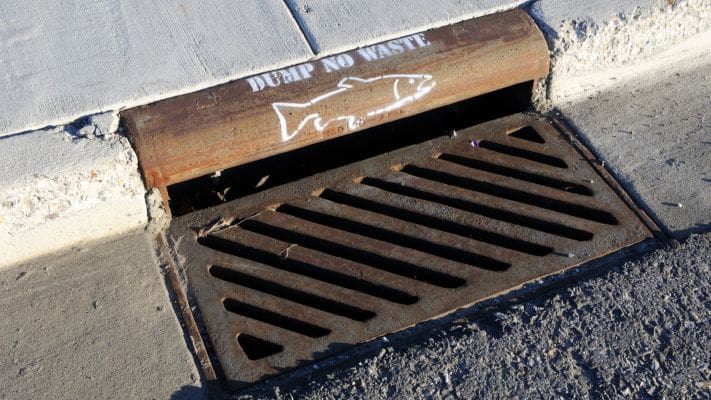
No, and that’s a key distinction from the sanitary sewer system. Sanitary sewer lines carry wastewater to a reclamation facility for treatment before release. The storm sewer system, by contrast, collects runoff from storms or irrigation and sends it directly to creeks, rivers, and lakes without any treatment step in between.
Does Westminster charge a stormwater fee, and what does it cover?
Yes. Single-family water bills include a $6 charge per water meter, and that fee funds stormwater infrastructure maintenance and construction, environmental compliance, flood control, facility inspections, construction site oversight, the city’s Hazardous Household Waste Program, and street sweeping. Commercial properties should confirm their specific fee structure with the city, since this rate applies to single-family billing.
What happens if I discharge swimming pool water into Westminster's storm drains without dechlorinating it first?
It’s illegal and carries a penalty of up to $1,000. Chlorinated water discharged into a storm drain or ditch flows directly to rivers and streams and can kill aquatic life, which is why the city requires dechlorination and several other conditions to be met before pool water can legally reach a storm drain.
How do I report an illicit discharge in Westminster?
Email the city’s Stormwater Hotline directly, or call 303-706-3367. That’s also the number to use if you spot someone draining a pool into the street and detect chlorine in the runoff, since the city treats that as an active compliance issue rather than something to simply document after the fact.
Why does Westminster care about fertilizer and pesticide runoff specifically?
Because storm drains connect directly to Big Dry Creek, Little Dry Creek, and Standley Lake without treatment, and nutrient-heavy runoff from fertilizers and pesticides feeds excess algae growth. That algae depletes oxygen in the water as it decays, which threatens fish and other aquatic life and can even pose a risk to human and pet health.
Does Westminster limit de-icing chemical use in winter?
The city encourages it, though this reads more as guidance than a hard mandate in the source material. Excess salt and ice melt chemicals wash into waterways as snow melts, and the city recommends waterway-safe alternatives or minimizing use by clearing snow and ice before applying any product.
How can AQUALIS help my property stay compliant with Westminster's stormwater program?
AQUALIS helps Westminster property owners manage stormwater discharge practices, respond to illicit discharge concerns before they escalate to a hotline report, and navigate the fee structure and inspection expectations tied to the city’s stormwater program.
The information on this page is provided for general informational purposes only and is not legal advice. Regulations change frequently — AQUALIS makes no warranty as to the accuracy or completeness of this content, and any reliance on it is at your own risk. Consult a qualified professional or your local regulatory authority to confirm requirements applicable to your specific property.