

Last Updated 08/17/2026
Louisville MSD: ARTICLE 6 POST-CONSTRUCTION BEST MANAGEMENT PRACTICES
SECTION 6.01 PURPOSE
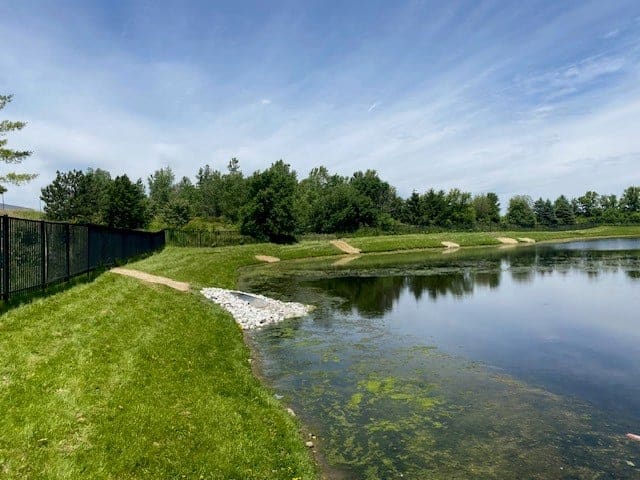
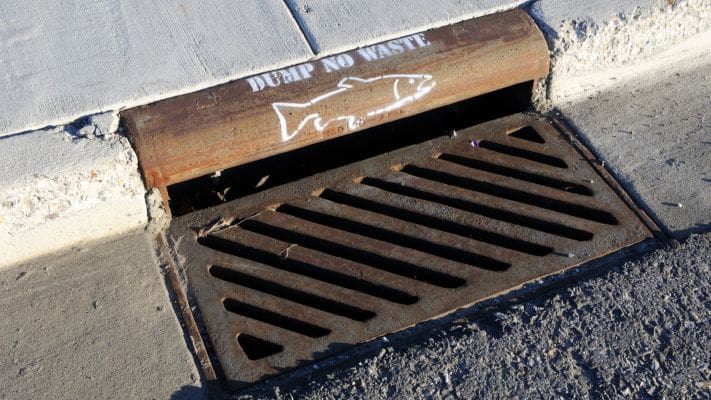
The purpose of this article is to define the requirements for development, as described in Section 6.02, for Post-Construction Best Management Practices (BMPs), including Green Management Practices (GMPs), users must meet the Stormwater Quality Event, as defined in the MSD Design Manual Chapter 18, to protect the general health, safety, and welfare of the citizens of Louisville and Jefferson County, by reducing the introduction of potentially harmful materials into the receiving waterways and Waters of the Commonwealth through the following:
- Compliance with all applicable State and Federal requirements for clean water, including limitations on the discharge of pollutants as set forth in the Kentucky Pollutant Discharge Elimination System (KPDES); and all applicable provisions of the Federal National Pollution Discharge Elimination System general permit for municipalities (Phase I and Phase II) and
- Definitive procedures in the area of Post-Construction Best Management Practices (BMPs) defined in this Article, MSD Design Manual, Standard Specifications and Standard Drawings, and supporting policy documents identified by MSD.
SECTION 6.02 APPLICABILITY
These regulations will apply to all development with a disturbed area equal to or greater than 1 acre, including projects less than one acre that are part of a larger common plan of development or a common scheme of development equal to or greater than one acre, located in the City of Louisville, Jefferson County, and the incorporated cities of Jefferson County.
SECTION 6.05 POST-CONSTRUCTION (LONG-TERM) BMP SELF-INSPECTIONS
Long-term self-inspections are to be the responsibility of the landowner or the person defined in the Stormwater Quality Maintenance Agreement to ensure that the BMPs are functioning according to permit and subsequent Stormwater Quality Maintenance Agreement and Post-Construction BMP Maintenance Plan requirements. Self-inspections must be performed and documented consistent with the requirements of the Kentucky Division of Water in KPDES MS4 permit KYS000001, and the requirements in this Article, the Design Manual, and supporting policy documents. The landowner or person defined in the Stormwater Quality Maintenance Agreement must utilize a QPCI to perform inspection activities and/or overseeing maintenance activities. The Qualified Post-Construction Inspector (QPCI) must be registered with MSD prior to performing inspection activities or overseeing maintenance
SECTION 6.07 MAINTENANCE AND INSPECTIONS
(a) Following release or acceptance of a project (and termination of the site disturbance permit), the property owner or third-party entity, such as a management group or homeowner’s association, will be responsible for maintaining the project site in a manner to prevent soil erosion and sedimentation and other long-term water quality issues in violation of this Article and the Stormwater Quality Maintenance agreement.
- The Permittee, or his or her designee, will be required to conduct continuing inspections of all Post-Construction BMP measures, and direct the appropriate persons to make any repairs or modifications necessary, within 30-days of the initial discovery of a control failure or violation, unless extenuating circumstances such as weather or complexity of repairs or modifications justify a longer time frame. At a minimum, inspections of long-term water quality or Post-Construction BMPs will occur annually or s otherwise identified in the Stormwater Quality Management Agreement.
- In addition, silt, debris or other pollutants accumulation upstream of Post-Construction BMPs will be removed when the Post-Construction BMP reaches the percentage of storage capacity established for the maintenance of that particular type of control in the MSD Design Manual, Standard Specifications and Standard Drawings.
- A copy of the Post-Construction BMP plan and records of all inspections, repairs, and modifications will be kept by the landowner or person identified in the Stormwater Quality Maintenance Agreement. All records of inspection will be in a form specified by MSD and will include the date and time of inspection, end the name and signature of the inspector. These records will be made available to MSD inspectors upon request.
- If the landowner or person identified in the Stormwater Quality Management Agreement chooses to use a third party QPCI for site inspections and monitoring, the landowner or person identified in he Stormwater Quality Management Agreement will sign a statement giving the QPCI full authority to inspect the site and to require necessary measures to maintain compliance. The name, address, and phone number of the QPCI will submitted to MSD. Copies of Post-Construction BMP inspection logs will be signed and dated by the QPCI and/or property owner and may be maintained off site, but available within 5-days of request, hard copy or electronic, by MSD.
ARTICLE 6.10 STORMWATER QUALITY MAINTENANCE AGREEMENT
- An executed Stormwater Quality Maintenance Agreement must be submitted with permit application.
- Stormwater Quality Maintenance Agreements will include a maintenance plan for all stormwater quality BMPs that require more than general maintenance (e.g., periodic mowing). MSD will withhold land disturbance permit approval until responsible parties sign the Agreement and required exhibits/plans are stamped by a Professional Engineer licensed in the Commonwealth of Kentucky.
- The plan will be developed to ensure that the post-construction BMP(s) is (are) kept functional. The Stormwater Quality Maintenance Agreement will specify minimum operation and maintenance requirements and intervals to be performed by the property owner.
- The plan will address schedules for inspections and techniques for operation and maintenance including vegetation clearing or mowing and removing accumulated trash, debris, sediment pollutants and other forms of pollution.
- The agreement will be noted on the record plats with the appropriate notation on the particular lot(s).
- The agreement will be recorded with Jefferson County Clerk to be included with property ownership title documents and will be binding on the Land Owner, its administrators, executors, assigns, heirs, and any other successors in interest.
- The standard for the Stormwater Quality Maintenance Agreement will be provided in the MSD Design Manual, Standard Specifications, and Standard Drawings.
- When a Post-Construction BMP serves more than one (1) parcel, an owners’ association or binding contract for the purpose of operation and maintenance is required. The owners association will be responsible for operation and maintenance as directed by this article.
MSD Stormwater Drainage Regulations
SECTION 6.05 POST-CONSTRUCTION (LONG-TERM) BMP SELF-INSPECTIONS
Long-term self-inspections are to be the responsibility of the landowner or the person defined in the Stormwater Quality Maintenance Agreement to ensure that the BMPs are functioning according to permit and subsequent Stormwater Quality Maintenance Agreement and Post-Construction BMP Maintenance Plan requirements. Self-inspections must be performed and documented consistent with the requirements of the Kentucky Division of Water in KPDES MS4 permit KYS000001, and the requirements in this Article, the Design Manual, and supporting policy documents. The landowner or person defined in the Stormwater Quality Maintenance Agreement must utilize a QPCI to perform inspection activities and/or overseeing maintenance activities. The QPCI must be registered with MSD prior to performing inspection activities or overseeing maintenance.
(a) A QPCI must meet the following requirements.
(1) QPCIs must be experienced and knowledgeable in the following for Post Construction BMPs: operational standards for Post-Construction BMPs; causes and failures of Post-Construction BMPs; and maintenance practices for Post Construction BMPs consistent with the MSD Design Manual; and successful completion of the MSD sanctioned training course and passing the applicable test; or,
(2) Successful completion of alternative MSD approved training course and passing an applicable test.
(b) All MSD inspectors will be required to attend a MSD-sponsored or approved training course(s) and pass related tests. Each inspector will be required to achieve qualification through this course to conduct site inspections, issue violations, negotiate on-site compliance, and refer violations for formal enforcement actions. This qualification will be valid for a period of three years, upon which the inspector must be re-qualified.
(c) All MSD plan reviewers are required to attend a MSD-sponsored or approved training course. Each plan reviewer will be required to qualify through this course to conduct plan reviews, pre-construction site meetings, and permit negotiations. This qualification will be valid for a period of three years, upon which the plan reviewer must be re-qualification.
(d) The QPCI registrations will be valid for a period of not more than three years. MSD may extend this period; however, continuing education will be required for maintenance of the QPCI. MSD, in its discretion, may provide incentives for the use of a QPCI.
(e) Registrations may be revoked by MSD for repeated violations of the provisions of this Article, activities that result in significant adverse impact or off-site degradation, or for willful disregard in implementing the intent of the qualification programs. MSD will appoint a hearing officer to hear appeals of revocation actions. A third party may bring action for revocation of a qualification. These actions will be presented to the MSD hearing officer for decisions. Any revocation action will be supported by documentation as deemed appropriate by the hearing officer. The hearing officer may establish penalty amounts up to $500 per occurrence depending on the nature of the offense. Revocation of qualifications will be for at least one year. Re-qualification will be based on attending the training courses. Re-qualification will only be allowed one time in a three-year period from the date of revocation.
(f) MSD will maintain a list of attendees to all training programs and provide confirmation of attendance.
(g) MSD may also, at its discretion, develop a separate course for qualified plan preparers.
SECTION 6.06 REVIEW STANDARDS AND CRITERIA
MSD will review all Post-Construction BMP plans for compliance with the following general standards and review criteria:
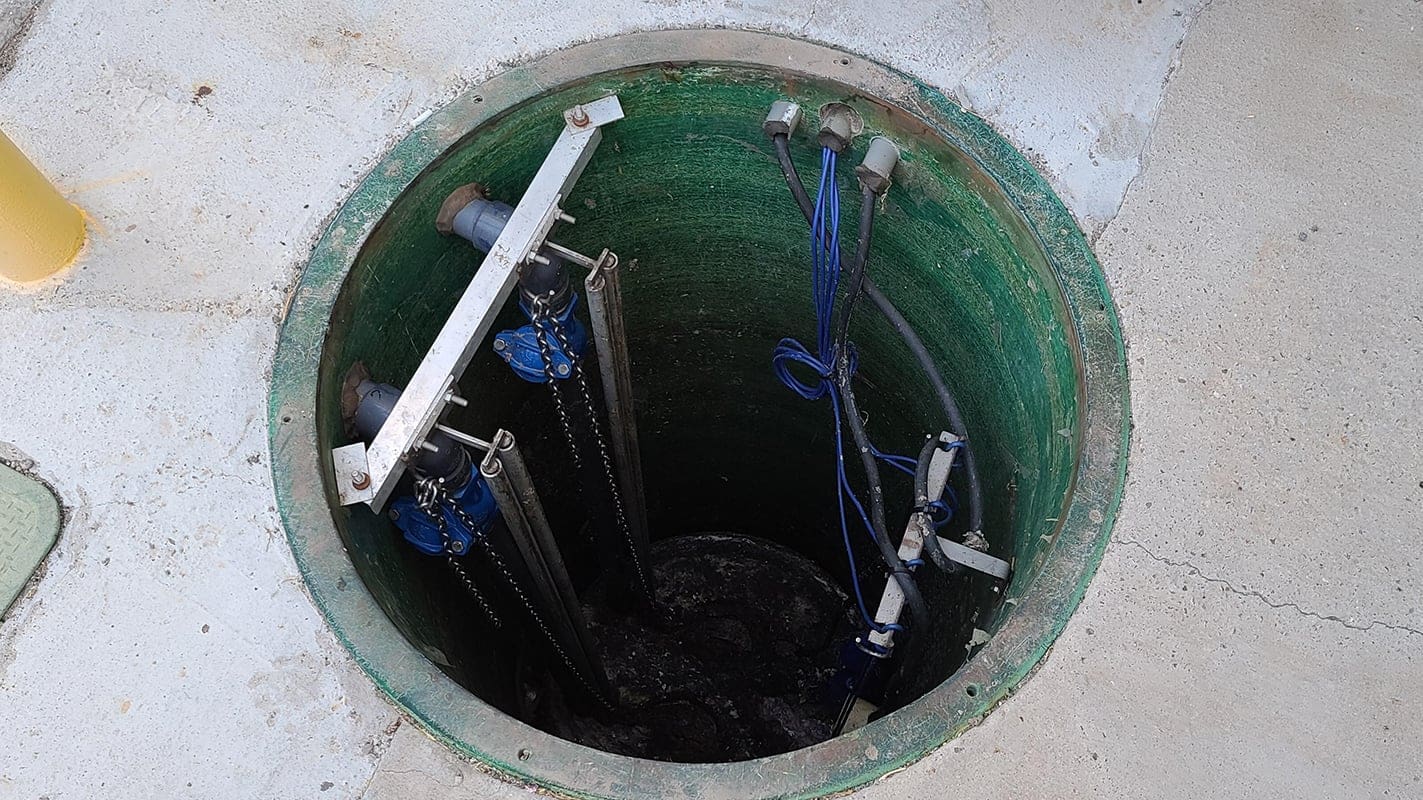
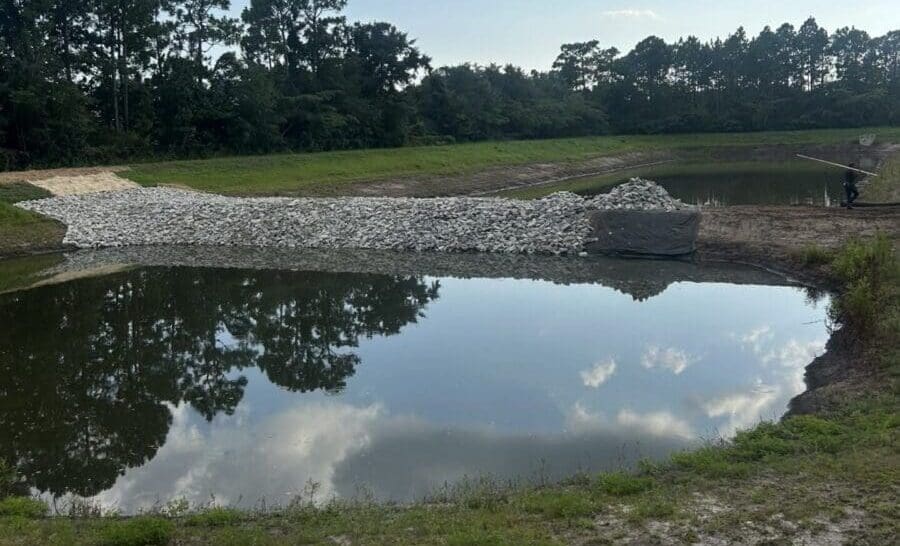
(a) Except where innovative or alternative management practices are approved pursuant to this Article, all Post-Construction BMPs will be designed and installed in accordance with the specifications contained in the MSD Design Manual, Standard Specifications and Standard Drawings, as it may be revised from time to time, which is hereby incorporated by reference into this Article. All permanent structural controls, including stormwater quality and drainage facilities such as channels, storm sewer inlets, detention basins, and other BMPs will be designed according to the standards set forth in the MSD Design Manual, Standard Specifications and Standard Drawings.
(b) To encourage the development and testing of Post-Construction BMPs, alternative management practices that are not included in the MSD Design Manual, Standard Specifications and Standard Drawings may be allowed upon review and approval of MSD.
(1) A Permittee seeking to use an alternative management practice will concurrently submit substantial evidence that the proposed measure will perform at least equivalent to a currently approved control contained in the MSD Design Manual, Standard Specifications, Standard Drawings, and conforms to current ASTM Standards. Evidence may include, but is not limited to, peer review by a panel of registered professional engineers and research results as reported in professional journals or other literature
(2) If MSD finds the control or practice has failed or is inadequate to contain target pollutants onsite or meet long-term Post Construction stormwater management objectives, the Permittee will remove and replace it with a control approved by MSD and found in the MSD Design Manual, Standard Specifications and Standard Drawings.
SECTION 6.07 MAINTENANCE AND INSPECTIONS
(a) Following release or acceptance of a project (and termination of the site disturbance permit), the property owner or third-party entity, such as a management group or homeowner’s association, will be responsible for maintaining the project site in a manner to prevent soil erosion and sedimentation and other long-term water quality issues in violation of this Article and the Stormwater Quality Maintenance Agreement.
(1) The Permittee, or his or her designee, will be required to conduct continuing inspections of all Post-Construction BMP measures, and direct the appropriate persons to make any repairs or modifications necessary, within 30-days of the initial discovery of a control failure or violation, unless extenuating circumstances such as weather or complexity of repairs or modifications justify a longer time frame. At a minimum, inspections of long-term water quality or Post-Construction BMPs will occur annually or as otherwise identified in the Stormwater Quality Management Agreement.
(2) In addition, silt, debris or other pollutants accumulation upstream of Post Construction BMPs will be removed when the Post-Construction BMP reaches the percentage of storage capacity established for the maintenance of that particular type of control in the MSD Design Manual, Standard Specifications and Standard Drawings.
(3) A copy of the Post-Construction BMP plan and records of all inspections, repairs, and modifications will be kept by the landowner or person identified in the Stormwater Quality Maintenance Agreement. All records of inspection will be in a form specified by MSD and will include the date and time of inspection, and the name and signature of the inspector. These records will be made available to MSD inspectors upon request.
(4) If the landowner or person identified in the Stormwater Quality Management Agreement chooses to use a third party QPCI for site inspections and monitoring, the landowner or person identified in the Stormwater Quality Management Agreement will sign a statement giving the QPCI full authority to inspect the site and to require necessary measures to maintain compliance. The name, address, and phone number of the QPCI will submitted to MSD. Copies of Post-Construction BMP inspection logs will be signed and dated by the QPCI and/or property owner and may be maintained off site, but available within 15-days of request, hard copy or electronic, by MSD.
SECTION 6.08 DRAINAGE REMEDIATION
In the event of adverse impacts or off-site degradation resulting from improper or inadequate controls or practice in violation of this Article, MSD will have the authority to take the following actions:
(a) Determine the extent of damage resulting from noncompliance with the plan or failure to maintain the practices required by the plan;
(b) Determine the impact and severity of the resulting adverse impacts or off-site degradation;
(c) Require and approve an agreement with the Permittee for correction and clean-up of the existing drainage and an agreement for prevention of future damage. The agreement may require:
(1) Cost incurred by MSD and other agencies, as a result of having to hire outside expertise, to determine the extent, impact and severity of damage and in remediating any such damage will be collected from the Permittee.
(2) Failure of the Permittee to implement the agreement according to its terms will constitute a violation of this Article, and subject the Permittee to all applicable enforcement actions and penalties.
View State Page
Frequently Asked Questions
Who has to sign off on a Louisville property's stormwater self-inspections?
Long-term BMP self-inspections have to be performed by a Qualified Post-Construction Inspector, registered with MSD before conducting any inspection or overseeing maintenance work. A QPCI has to demonstrate real expertise, covering operational standards, common causes of BMP failure, and MSD-consistent maintenance practices, then pass an MSD-sanctioned training course and test. That qualification stays valid for three years before requiring renewal, so a property relying on the same inspector needs to track that expiration alongside its own maintenance schedule.
How often does MSD require inspection of a property's stormwater BMPs?
At minimum, annually, though the specific interval can be set differently in the property’s own Stormwater Quality Maintenance Agreement. If an inspection turns up a control failure or violation, the responsible party has 30 days from discovery to make repairs, unless weather or the complexity of the fix genuinely justifies a longer timeline. Inspection records, including the date, time and inspector’s signature, have to be kept on file and made available to MSD on request.
What does a Stormwater Quality Maintenance Agreement actually require in Louisville?
It has to be executed and submitted with the permit application, and MSD won’t approve a land disturbance permit until the responsible parties have signed it and a licensed Kentucky professional engineer has stamped the required plans. The agreement spells out minimum operation and maintenance requirements, inspection schedules, and techniques like vegetation clearing and debris removal, and it gets recorded with the Jefferson County Clerk so it’s binding on the landowner and every successor in interest. When a BMP serves more than one parcel, an owners’ association or binding contract is required specifically to handle that shared maintenance obligation.
Can I use an alternative stormwater BMP that isn't in MSD's Design Manual?
Yes, but the burden of proof is on the applicant. A permittee proposing an alternative management practice has to submit substantial evidence, like peer review from registered professional engineers or published research, showing the practice performs at least as well as an approved control already in MSD’s manual. If MSD later determines the alternative practice has failed or can’t meet long-term water quality objectives, the permittee has to remove it and replace it with an approved control at their own cost.
What happens if a stormwater control failure causes drainage damage in Louisville?
MSD can determine the extent and severity of any resulting damage or off-site degradation and require the responsible party to sign an agreement covering both cleanup of the existing problem and prevention of future damage. That agreement can require the permittee to reimburse MSD for any outside expertise the district had to hire to assess the damage, and failing to follow through on the agreement’s terms is itself treated as a separate violation, opening the door to further enforcement and penalties.
The information on this page is provided for general informational purposes only and is not legal advice. Regulations change frequently — AQUALIS makes no warranty as to the accuracy or completeness of this content, and any reliance on it is at your own risk. Consult a qualified professional or your local regulatory authority to confirm requirements applicable to your specific property.