

Last Updated 08/05/2026
Charleston, SC Municipal Code
Chapter 27 Stormwater Management
Sec. 27-29. - Stormwater management standards and exemptions for redevelopment
(a) Other than projects with parcel areas less than one (1) acre or where more than eighty (80) percent of the existing building footprint shall remain undisturbed, one (1) of the following performance standards shall be implemented for the entire parcel in question as approved by the department of development services:
(1) Reduce the impervious cover on the site by at least twenty (20) percent, based on a comparison of existing impervious cover at the time of submittal of a construction activity application; or
(2) Achieve a ten-percent reduction in the twenty-four-hour volume of runoff generated from the site by a two-year storm event. Runoff calculations shall be based on a comparison of existing site conditions at the time of submittal of a construction activity application to the post-development site conditions. Confirm the post-development peak discharge rate does not exceed the pre-development peak discharge rate for the two-year storm event; or
(3) Reduce the post-development peak discharge rates by ten (10) percent of the existing peak discharge rates at the time of submittal of a construction activity application for the ten-year and the twenty-five-year twenty-four-hour storm events based on a comparison of existing ground cover at the time of submittal of a construction activity application to post-development site conditions. Confirm the twenty-four-hour post-development volume does not exceed the pre-development volume for the ten-year and the twenty-five-year twenty-four-hour storm events.
(b) The following land disturbing activities are exempt from the provisions of the article and the requirements of providing stormwater management measures. Even if exempt from this article, the following, as well as all land disturbing activity is not allowed to divert water to adjacent property to cause a nuisance and/or property damage and should comply with the intent of this article. These activities are also not exempt from implementing proper erosion and sediment control best management practices.
(1) Construction or improvement of a single-family residence (single family residence—separately built) or their accessory buildings, or mobile home, that is separately built and not part of multiple construction or a subdivision development approved under this article. If included in a land development plan, all land disturbing activities must follow the stormwater technical report and sediment and erosion control plan that has been approved for the construction activity.
(2) Minor land disturbing activities that do not disturb more than one-half (0.5) acre of land area that are (a) not part of a larger common plan and (b) do not increase total impervious cover by greater than ten percent of the existing impervious cover.
(3) Any maintenance or renovation of an existing structure or system not materially changing or affecting the rate, concentration or volume of stormwater runoff where the total proposed improvements do not (a) increase total impervious cover on the property and (b) where any repair, reconstruction, or improvement to an existing site and/or to and structures located on that site such that the cumulative costs of repairs, over a five (5) year period does not equal or exceed fifty (50) percent of the fair market value of the property and the structures located on that property.
Sec. 27-31. - Stormwater management protection.
Maintenance of the stormwater management system is critical for the achievement of its purpose of controlling stormwater runoff quantity and quality and the short-term and long-term public health, safety, and general welfare of the citizens of the city. The department of stormwater management shall develop procedures to provide reasonable assurances that maintenance activities are performed for both the city and privately maintained systems. The department of stormwater management shall also define procedures for transferring maintenance responsibilities to another person.
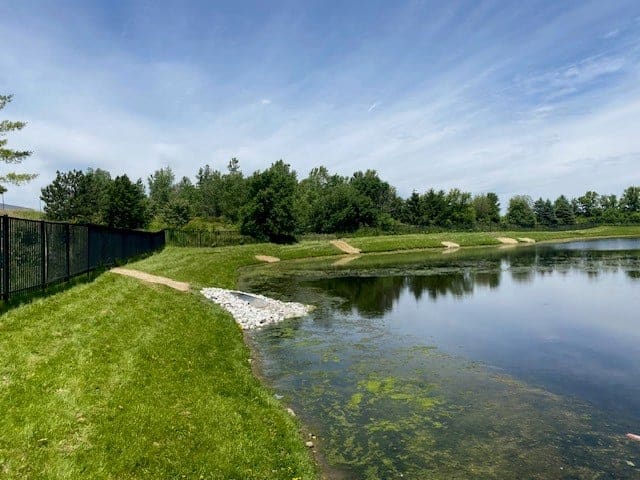
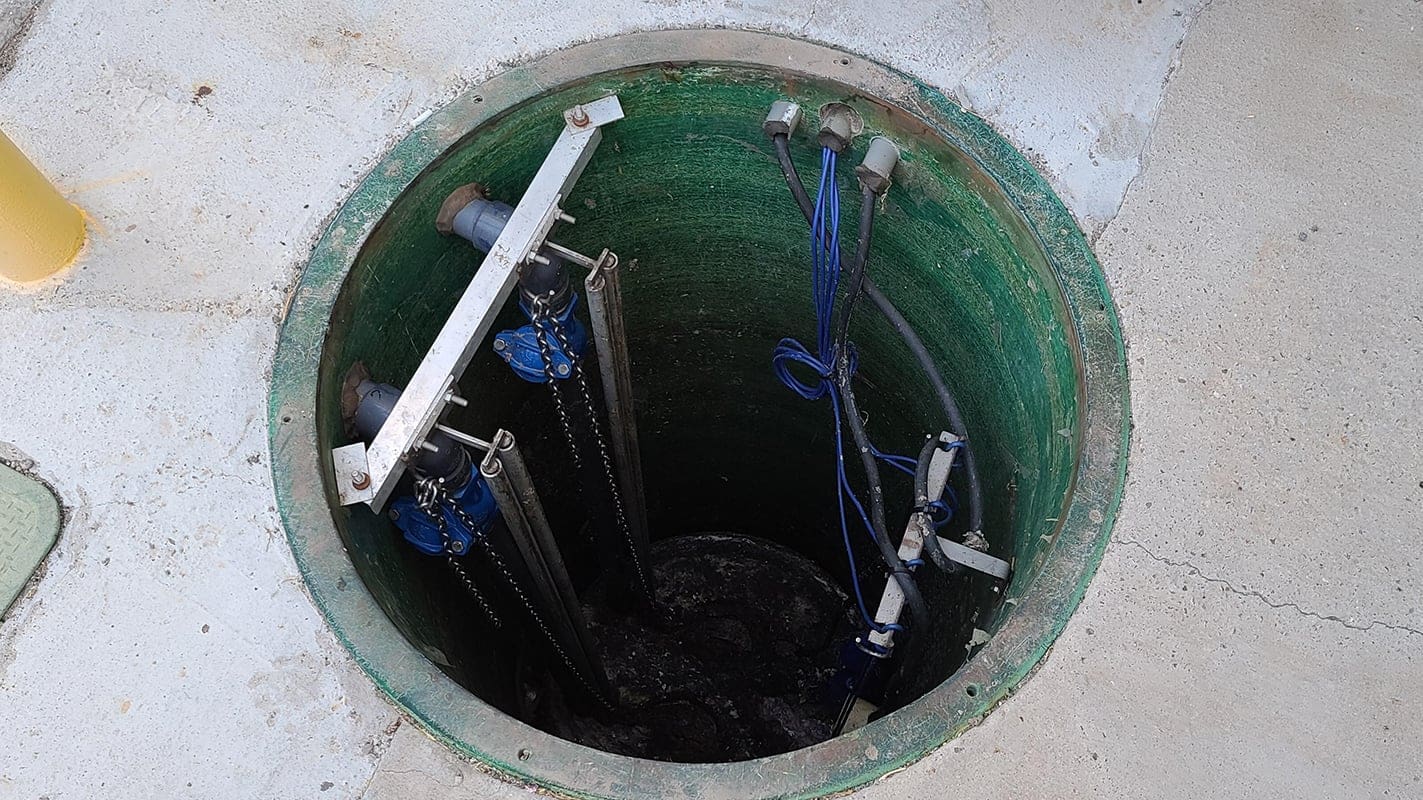
(a) Property owners shall be responsible for maintaining stormwater quantity and quality facilities and all conveyance structures located on their property. The minimum maintenance requirements shall be performed at necessary intervals, as determined by the director of stormwater management or his designee, during construction and for as long as a stormwater management system or component is in use.
(b) A property owner or operator may hire or contract others to perform necessary maintenance actions.
(c) The city shall own and maintain all drainage system components that are constructed under or collect stormwater runoff from a city-owned road.
(d) The city may in its sole discretion accept, limit, or decline ownership and maintenance of all or part of a stormwater system.
DIVISION 5. - MONITORING, INSPECTION, ENFORCEMENT, ABATEMENT, AND PENALTIES
Sec. 27-51. - Inspections.
(a) The department of stormwater management shall promulgate procedures for conducting site inspections.
(b) The director of stormwater management or his designee, bearing proper credentials and identification, may enter and inspect all properties for regular inspections, periodic investigations, monitoring, observation measurement, enforcement, sampling and testing, to effectuate the provisions of this article and the SWMP programs. Such inspections may be made at active construction, development, and re-development sites or at any stormwater management system or facility in perpetuity. The director of stormwater management or his designee shall duly notify the property owner or operator of said property or the representative on site and the inspection shall be conducted at reasonable times. Where the property owner or operator has security measures in force requiring proper identification and clearance before entry onto the premises, the person shall make necessary arrangements with the necessary parties so that, upon presentation of suitable identification, the director of stormwater management or his designee will be permitted to enter without delay for the purposes of performing such responsibilities identified above.
(c) Upon refusal by any property owner to permit an inspector to enter or continue an inspection, the inspector shall terminate the inspection or confine the inspection to areas concerning which no objection is raised. The director of stormwater management or his designee shall document the refusal and the grounds for such and promptly seek appropriate compulsory process.
(d) In the event that the director of stormwater management or his designee reasonably believes that a property is causing harm to the city’s stormwater management system or facility which is an imminent and substantial threat to human health or the environment, an inspection may take place at any time and without notice to the owner of the property or a representative on site. The inspector shall present proper credentials upon reasonable request by the property owner or operator.
(e) Inspection reports shall be maintained by the department of stormwater management in accordance with the law.
Sec. 27-52. - Enforcement.
(a) When the director of stormwater management or his designee finds that work done for construction activities, new development, and re-development fails to conform to the approved construction activity application, or that the work has not been done, the director of stormwater management or his designee may by written notice of violation (NOV), direct conformity to said approval(s). Actions may include:
(1)Issuing a written order to comply, to suspend work, or to revoke the approval issued;
(2) Seeking redress through legal action;
(3) Withholding the release of certificate of occupancy; and/or
(4) Withholding or revoking city permits related to the site.
The written NOV shall be provided to the owner, operator, or the person responsible for land disturbing activities stating the nature of the violation, the amount of time in which to correct deficiencies, the date on which an inspection will be made to make sure that corrective action has been performed, and the proposed penalty structure if corrective action is not taken by the inspection date.
(b) The director of stormwater management, his designee, or other authorized personnel may issue a stop work order if it is found that a construction activity, new development, or re-development is being conducted in violation of this article. The stop work order may allow or require correction of notice of violation (NOV) issues, but shall otherwise stop all other construction, new development, and re-development related activities. A stop work order may carry with it criminal penalties as well. Any person in violation of a stop work order is subject to payment of all fees and criminal fines prior to the lifting of the stop work order.
(c) When the director of stormwater management or his designee determines that an owner or operator has failed to maintain a stormwater management facility, a written NOV shall be provided to the owner or operator of such property stating the nature of the violation, the amount of time in which to correct deficiencies, the date on which an inspection will be made to make sure that corrective action has been performed, and the proposed penalty structure if corrective action is not taken by the inspection date.
(d) When the director of stormwater management or his designee determines that an owner or operator of any property is causing or partially causing flooding, erosion, or non-compliance with water quality standards or this article, upon providing valid proof of such impacts, the director of stormwater management or his designee can require owners to remove the proven impact in a concerted, prudent manner and restore the impacted property. A written NOV shall be provided to the owner or operator of such property stating the nature of the violation, the amount of time in which to correct deficiencies, the date on which an inspection will be made to make sure that corrective action has been performed, and the proposed penalty structure if corrective action is not taken by the inspection date.
(e) This article may be enforced by any remedy of law or equity that the city is authorized to pursue, to include the authorities and powers conferred to local governments by the General Assembly of South Carolina. The city may institute injunctive, mandamus or other appropriate action or proceedings at law or equity, including criminal conviction, for the enforcement of this article or to correct violations of this article, and any court of competent jurisdiction shall have the right to issue restraining orders, temporary or permanent injunctions, mandamus or other appropriate forms of remedy or relief.
Sec. 27-53. - Corrective action.
In the event a violation of this article has not been corrected within the applicable time period for correction stated on the NOV or if the violation poses an imminent threat to the health or safety of the general public or the environment, the city, or its agent, may enter upon the lot or parcel of land and correct the violation, and the costs incurred as a result of such action, including, but not limited to inspection, administration, labor, and equipment costs shall be collected from the property owner or the operator, or shall become a lien upon the property and shall be collected in the same manner as the city’s taxes are collected.
7.3.8 Variance
To the extent any state or federal law or regulations requires the Town to establish a variance procedure for any requirement of this section 7.3, excluding section 7.3.6, the variance procedure established in Section 4.4.6(I) of the LDO shall be utilized. The provisions of section 7.3.6 shall not be subject to this requirement.
View State Page
Frequently Asked Questions
Who is responsible for maintaining stormwater facilities in Charleston, South Carolina?
The property owner is responsible for maintaining stormwater quantity and quality facilities and all conveyance structures located on their property, both during construction and for as long as the system or component stays in use. The Director of Public Service determines the minimum maintenance requirements and how often they need to be performed. AQUALIS can help property owners in Charleston understand exactly what maintenance schedule applies to their facilities.
Can I hire someone else to maintain my stormwater system in Charleston?
Yes. As the property owner or operator, you’re allowed to hire or contract with others to perform the necessary maintenance actions on your stormwater facilities.
Can Charleston inspect my property's stormwater system after construction?
Yes, in perpetuity. The director of stormwater management or a designee can enter and inspect properties for regular inspections, investigations, monitoring, sampling, and testing, at active construction sites as well as any completed stormwater facility. Notice is generally given and inspections happen at reasonable times, though if your property has security measures, you’ll need to arrange access in advance so the inspector isn’t delayed.
What happens if my stormwater facility falls out of compliance in Charleston?
If the director determines a facility isn’t being maintained, you’ll receive a written notice of violation stating the problem, your deadline to fix it, and the date the city will re-inspect. If corrective action isn’t taken in time, the city can pursue several actions, including a stop work order, legal action, withholding your certificate of occupancy, or withholding other city permits. AQUALIS can help property owners resolve deficiencies before that deadline.
Can Charleston require me to fix flooding or erosion caused by my property?
Yes. If the director determines your property is causing or contributing to flooding, erosion, or a water quality violation, and provides valid proof, you can be required to remove the impact and restore the affected property. You’ll receive a written notice of violation with the details, your correction deadline, and the re-inspection date, same as with a maintenance violation.
What happens if I don't correct a stormwater violation in Charleston?
If a violation isn’t corrected within the deadline on your notice of violation, or if it poses an imminent threat to public health, safety, or the environment, the city can enter your property and correct it directly. The costs, including inspection, administration, labor, and equipment, are then collected from the property owner, or become a lien on the property collected the same way as city taxes.
The information on this page is provided for general informational purposes only and is not legal advice. Regulations change frequently — AQUALIS makes no warranty as to the accuracy or completeness of this content, and any reliance on it is at your own risk. Consult a qualified professional or your local regulatory authority to confirm requirements applicable to your specific property.