

Last Updated 08/17/2026
City of Wichita Stormwater Laws and Regulations
City of Wichita regulations are compliant with its Kansas Pollutant Discharge and Elimination System requirements for the city’s small municipal separate storm sewer system (MS4) permit, and with those of Sedgwick County.
Excerpt- Stormwater Management Program 2014-2019
Minimum Control Measure #5: Post-Construction Stormwater Management in New Development and Redevelopment
The permittee shall develop, implement, and enforce a program to address post-construction stormwater runoff from new development and redevelopment projects that disturb greater than or equal to one acre, including projects less than one acre that are part of a larger common plan of development or sale, that discharge into the MS4. The program must include the development and implementation, at a minimum, of the following:
- Strategies which include a combination of structural and/or non-structural BMPs,
- Measures to ensure adequate long-term operation and maintenance of BMPs,
- Site owner or operator name and telephone responsible to ensure adequate long-term operation maintenance of BMP’s,
- BMPs to prevent or minimize adverse water impacts.
Measurable Goal: The governing ordinance, Chapter 16.32 contains these requirements as reflected in the City of Wichita/Sedgwick County Stormwater Manual, which is available in hard copy and on the City website. Occasional revisions are made to the Manual, and the Manual is updated. Revisions and updates will be included in the Annual Report. The 9 number of BMPs implemented in a reporting year, and the number of completed bi-annual BMP inspections will be reported in the Annual Reports.
Excerpt- Wichita Code of Ordinances
16.32.070. Ditches and ponds
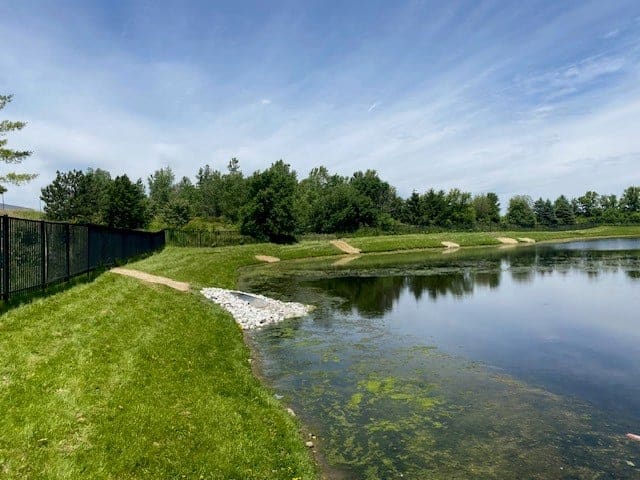
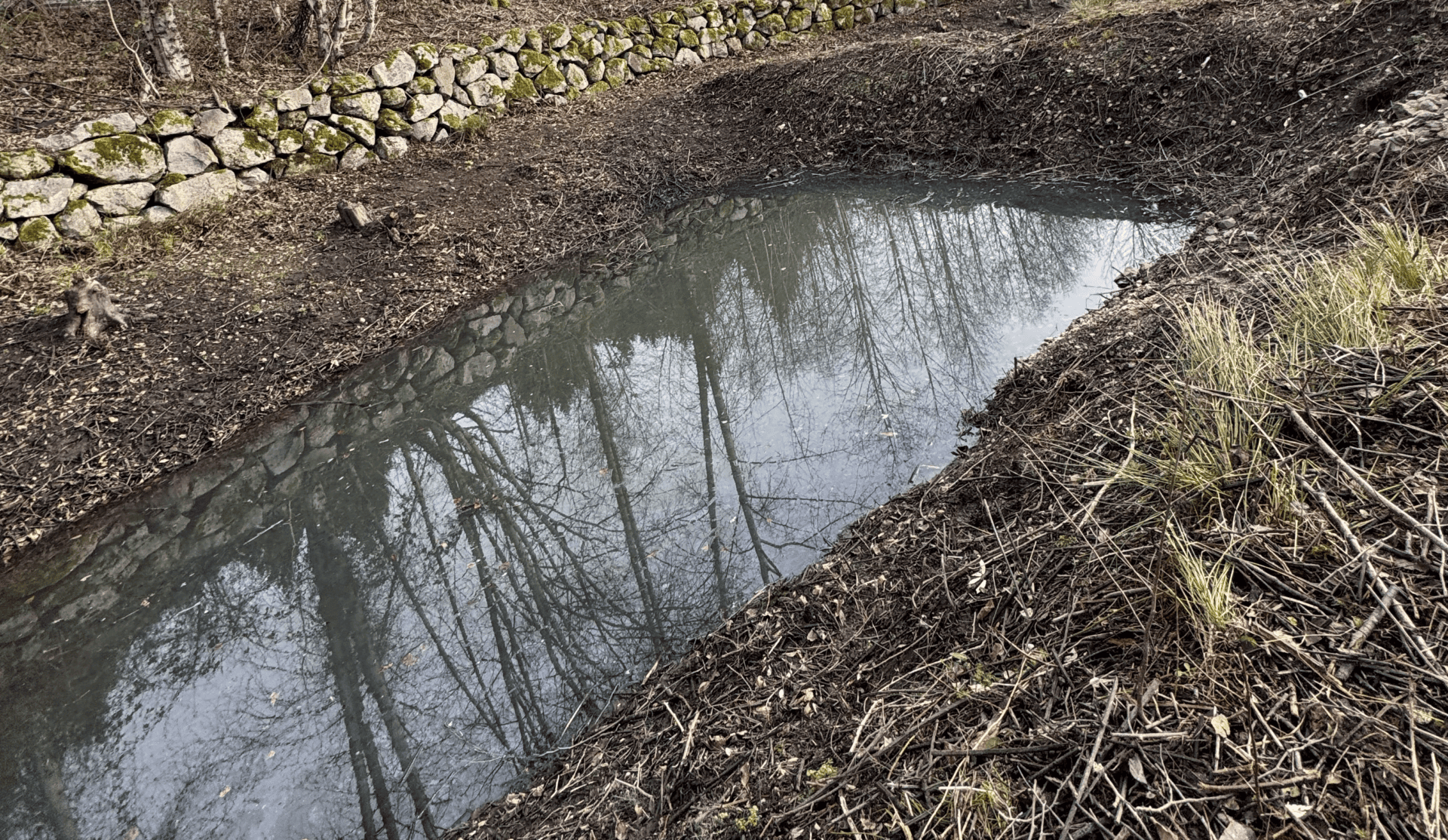
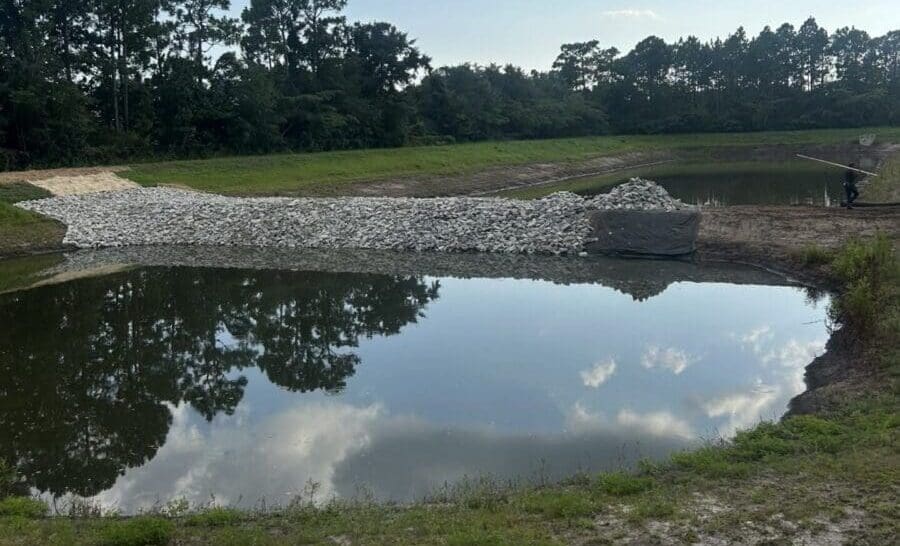
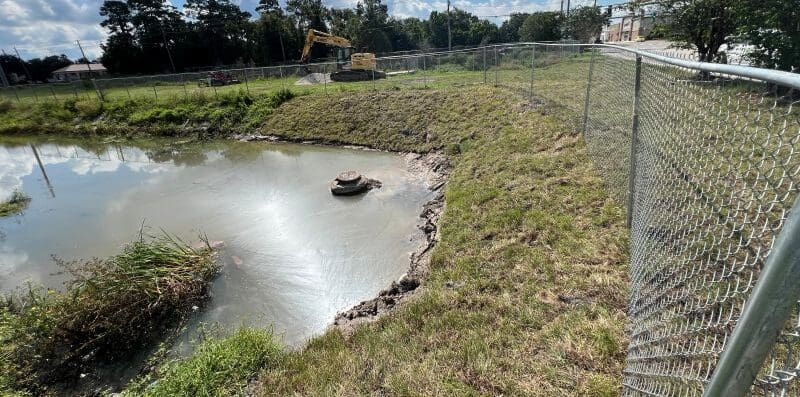
Duty to Maintain. The owner of any private drainage ditch or pond that empties into the city’s MS4 or the waters of the United States has a duty to use BMP’s on the ditches or pond to minimize the pollutant levels downstream. Such BMP’s include, but are not limited to, removing excessive build-up of silt, repairing bank erosion, maintaining vegetative cover, the cleaning of inlet and outlet works, and the like.
Inspection and Notice by City. The city will periodically inspect these privately owned ditches and ponds. Should conditions be found that cause the pollution of downstream receiving waters, the director shall so notify the owners, and state what actions are expected by the owners to remedy the problem.
Failure to Repair. Should the owners fail to make the necessary repair within one hundred twenty days after notice, the city is authorized to do the repairs at the expense of the owner. Should the owner fail to reimburse the city for the cost of the repairs upon demand, the city may assess the cost thereof to the owner and initiate any collection proceedings authorized by law.
16.32.096. Maintenance and inspection of storm water drainage paths and controls
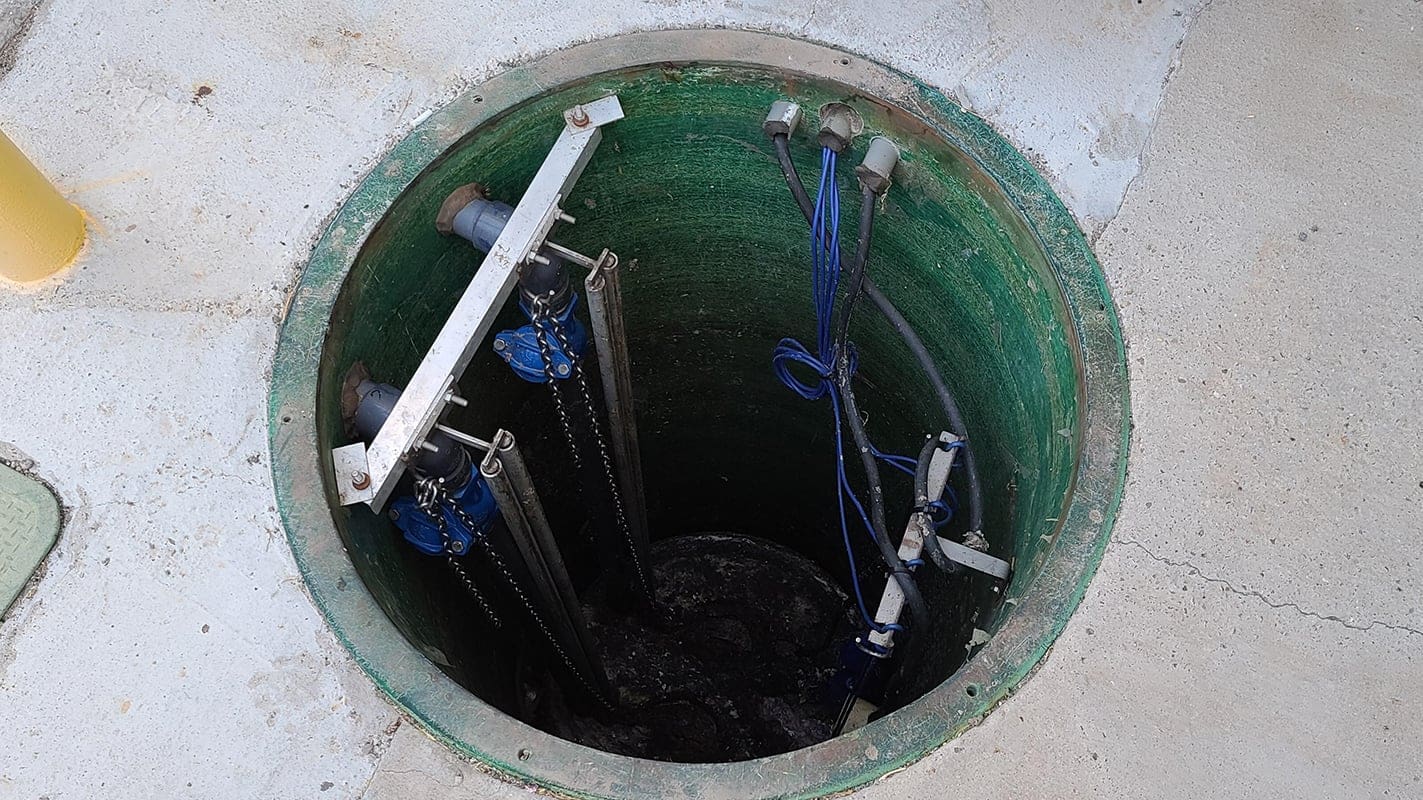
A. Duty to inspect and maintain storm water systems and controls. Property owners shall at all times properly maintain and shall at intervals in accordance with the Operations and Maintenance Plan inspect all storm water facilities, systems, conveyances, pipes, channels, ditches, swales, inlets, catchbasins, water quality volume credit areas, and other facilities and systems of storm water treatment and control (and related appurtenances) so that they operate at their full function. Maintenance and inspection of privately-owned storm water management facilities, systems, conveyances, pipes, channels, ditches, swales, inlets, catchbasins, water quality volume credit areas, and other facilities and systems of storm water treatment and control (and related appurtenances) shall be performed at the expense of the owner(s) of such facilities.
B. Duty to provide inspection reports. After construction of each storm water management facility on the property is complete, property owners shall provide to the Director on a bi-annual basis a completed and signed copy of the inspection report for each storm water management facility that is included with the Operations and Maintenance Plan for the property. The inspection report is due every two years no later than the date (month and day) of approval of the as-built plan for the property.
C. Duty to preserve approved grading designs. Re-grading an individual lot or lots, or portions of a lot or lots, in a manner that is in not accordance the approved master grading plan, such that the direction(s) of storm water runoff is altered from the direction that would occur under the approved master grading plan, shall be considered a violation of this chapter.
D. Duty to preserve existing drainage paths. Blockage of a channel, ditch, stream or any other drainage path or storm water system appurtenance that is located in a storm water easement or drainage easement shall be considered a violation of this chapter.
E. Pollutant removal for maintenance. The removal of pollutants, sediment and/or other debris for the purpose of maintenance of storm water management facilities shall be performed in accordance with all city, State, and Federal laws.
F. Inspection during grading or construction.
- During grading or construction, the property owner or his/her appointed designee shall conduct site inspections in accordance with the requirements stated in the Kansas General Permit for Storm Water Discharges from Construction Sites. The property owner will also ensure construction conformance with the approved drainage and construction plans. More stringent inspection requirements may be imposed as necessary for purposes of water quality protection and public safety and to pursue total conformance of the site with the approved plans.
- The following areas and items must be inspected throughout grading and construction to ensure that land disturbance activities do not cause adverse impacts to the performance of storm water management facilities and/or water quality volume reduction areas: all unstabilized areas that drain to a permanent storm water facility or water quality volume reduction area; temporary and permanent storm water management facilities; and, all erosion prevention and sediment control measures.
G. Inspection after construction. Once the site has been stabilized and construction has ceased, the property owner or his/her appointed designee shall conduct routine inspections for the storm water management facilities and water quality reduction areas, based on the guidance provided in the Operations and Maintenance Plan and the requirements of the “Restrictive Covenants for Storm Water Facilities” for the property, as set forth in section 16.32.095.H.2. of this ordinance.
H. Inspection records. Property owners shall make available upon request any self-inspection reports, monitoring/maintenance records, compliance evaluations, notices of intent, and any other records, reports, receipts, and other documents related to compliance with this chapter and with any related local, State or Federal permit.
I. Right-of-entry. The Director or his/her designee shall have the right to enter the premises of any person discharging storm water to the MS4 or to waters of the United States at any reasonable time to determine if the discharger is complying with all requirements of this chapter, and with any State or Federal discharge permit, limitation, or requirement. Dischargers shall allow the Director or his/her designee ready access to all parts of the premises for the purposes of inspection, sampling, records examination and copying, and for the performance of any additional duties. Failure of a property owner to allow entry onto a property for the purposes set forth in this section shall be cause for the issuance of a stop work order, withholding of a certificate of occupancy, and/or civil penalties and/or damage assessments in accordance with the enforcement provisions of this chapter.
J. Inspection and notice by City. The city may periodically inspect these privately owned storm water controls. If the facility is not operating as shown in the approved As-Built Drawing, or should conditions be found that cause or may cause the pollution of downstream receiving waters or the erosion of downstream channels or the flooding of adjacent or downstream properties, the Director may issue a notice of violation in accordance with the enforcement provisions stated in this chapter and shall notify the property owner(s) of the potential violation(s). The Director may order the property owner(s) to perform corrective actions as are necessary to facilitate the proper operation of these facilities for the purposes of flood prevention, downstream channel stabilization, water quality treatment and/or public safety, and/or to ensure compliance with jurisdictional regulatory conditions.
K. Failure to perform corrective actions. If property owner(s) fail to make the necessary corrective actions in the timeframe specified in the enforcement provisions of this chapter, the city is authorized to perform the corrective actions at the expense of the owner(s). If the owner(s) fail to reimburse the city for the corrective actions upon demand, the city may assess the cost of the corrective actions to the owner and initiate any collection proceedings authorized by law.
L. Access to adjacent properties. This ordinance does not authorize access by a property owner or site operator to private property adjacent to or downstream of the owner’s property. Arrangements concerning removal of sediment or pollutants on adjoining property must be settled by the owner or operator with the adjoining landowner.
16.32.100. Enforcement actions
A. The discharge of, or potential discharge of, any pollutant to the MS4 or waters of the United States and/or the failure to comply with the provisions of this chapter and/or the failure to comply with and directive, citation, or order issued under this chapter; are violations of this chapter for which enforcement action may be taken.
B. Prior to taking any enforcement action as specified in this section, a violator will be issued a notice of violation except when, in the opinion of the Director, an owner or contractor has repeatedly ignored the requirements of this chapter and has not made any reasonable intent to comply with these provisions. When issued, the notice of violation will detail the nature of the violation, actions to be taken to remedy the violation, actions to be taken to clean-up any pollutants, and any specific time periods within which to accomplish said actions. Failure to successfully comply with the notice of violation may result in enforcement action.
C. The enforcement actions to be taken under this chapter, as provided in Section 16.32.110 are as follows:
1. Criminal penalty. Any person violating any provision of this chapter is guilty of a misdemeanor and upon conviction thereof shall be punished by a fine of not more than one thousand dollars. Each and every day during which any violation of any provision of this chapter is committed, continue, or permitted is a separate violation.
2. Stop work order. Notwithstanding other penalties provided by this chapter, whenever the Director or OCI, or their designees, finds that any owner or contractor on a construction site has violated, or continues to violate, any provision of this chapter or any order issued thereunder, the Director or OCI may after reasonable notice to the owner or contractor issue a stop work order to the owner and contractors by posting such order at the construction site. Said order shall also be distributed to all city departments and divisions whose decisions may affect any activity at the site. Unless express written exception is made, the stop work order shall prohibit any further construction activity at building permit, grading permit, site development plan approval, or any other approval necessary to commence or to continue construction or to assume occupancy at the site. Issuance of a stop work order shall not be a bar against, or a prerequisite for, taking any other action against the violator. Failure to comply with the requirements of any stop work order is a violation of this chapter.
3. Administrative penalty process. When the Director finds that any person has violated or continues to violate the provisions set forth in this chapter, or the person’s NPDES permit or any order issued thereunder, the Director may issue an order for compliance to the person. Such orders may contain any requirements as might be reasonably necessary and appropriate to address noncompliance including, but not limited to, the installation of best management practices, additional self-monitoring, and/or disconnection from the MS4. The Director is empowered to enter into consent orders, assurances of voluntary compliance, or other similar documents establishing an agreement with any person responsible for noncompliance. Such orders shall include specific action to be taken by the person to correct the noncompliance within a time period specified by the order. Notwithstanding any other remedies or procedures available to the city, any person who is found to have violated any provision of this chapter, or any NPDES permit or any order issued under this chapter, may be assessed an administrative penalty as follows:
- The minimum administrative penalty for any violation shall be no less than $500.00 per day the violation is maintained and not more than $2,500.00 per day for each day the violation is maintained;
- Failure to obtain required NPDES permit: up to $2,500.00 per violation;
- Failure to prepare stormwater pollution prevention plan: up to $2,500.00 per violation;
- Failure to install best management practices: up to $2,500.00 per violation;
- Failure to maintain best management practices: up to $2,500.00 per violation;
- Failure to perform required sampling and testing or provide testing reports: up to $1,000.00 per violation.
- Commencement of construction without an approved drainage plan: up to $2,500.00 per day of noncompliance;
- Failure to comply with approved drainage plan: up to $2,500.00 per day of noncompliance;
- Failure to maintain storm water management facilities: up to $2,500.00 per day of noncompliance.
View State Page
Frequently Asked Questions
Who's responsible for maintaining a private drainage ditch or pond in Wichita?
The owner is, if it empties into the city’s MS4 or waters of the U.S., and that duty is specific: removing excessive silt buildup, repairing bank erosion, maintaining vegetative cover, and cleaning inlet and outlet works. If the city inspects and finds conditions causing pollution downstream, the director notifies the owner and specifies what corrective action is expected. Owners who don’t complete repairs within 120 days of that notice can have the city perform the work and bill them for it, with unpaid costs pursued through standard collection proceedings.
How often does Wichita require inspection reports for stormwater facilities?
Every two years. Once a stormwater management facility is built, the property owner has to submit a signed inspection report to the director on a bi-annual basis, tied to the anniversary of the as-built plan’s original approval date. That inspection has to follow the facility’s own Operations and Maintenance Plan, and records related to compliance, including self-inspection reports and monitoring logs, have to be made available to the city on request.
Can I regrade my Wichita property if it changes how stormwater drains?
Not without it counting as a violation. Re-grading a lot in a way that alters the direction of stormwater runoff from what the approved master grading plan calls for is treated as a code violation, and the same goes for blocking a channel, ditch or drainage path located within a storm water or drainage easement. Wichita’s ordinance is specific that this rule doesn’t grant a property owner access to adjacent land, so any sediment or drainage issue crossing into a neighboring property has to be settled directly with that landowner.
What can trigger a stop work order on a Wichita construction site?
Any ongoing violation of the stormwater chapter on an active construction site can bring a stop work order, issued after reasonable notice and posted directly at the site. Once issued, it prohibits further construction activity under the building permit, grading permit or site development approval, and it applies independently of any other enforcement action the city might also pursue. Refusing the director entry to inspect a property is itself grounds for a stop work order, on top of civil penalties.
How much can a stormwater violation cost in Wichita?
Administrative penalties run between $500 and $2,500 per day the violation continues, with specific caps for individual failures: up to $2,500 for not maintaining best management practices, up to $2,500 for noncompliance with an approved drainage plan, and up to $1,000 specifically for failing to complete required sampling or testing. Criminal violations are treated as a misdemeanor carrying a fine up to $1,000, and each day a violation persists counts as a separate offense under either enforcement track.
The information on this page is provided for general informational purposes only and is not legal advice. Regulations change frequently — AQUALIS makes no warranty as to the accuracy or completeness of this content, and any reliance on it is at your own risk. Consult a qualified professional or your local regulatory authority to confirm requirements applicable to your specific property.