
Last Updated 08/13/2026
EXCERPT- Indiana Administrative Code, October 2018
Article 15 – NPDES General Permit Rule Program
Rule 4. Standard Conditions for NPDES General Permit Rules
327 IAC 15-4-1 General conditions
(b) Any violation of this article constitutes a violation of the CWA and environmental management laws and is subject to enforcement under IC 13-30. A person who violates this article may be required to obtain an individual NPDES permit.
(c) In accordance with IC 13-30-4-1, any person who violates a rule or standard adopted by the board is subject to a civil penalty not to exceed twenty-five thousand dollars ($25,000) per day of such violation. Knowing, willful, or reckless violations of NPDES permit conditions are subject to criminal penalties under IC 13-30-10. If the conviction is for a violation committed after a first conviction of such person under this subsection, punishment shall be a fine of not more than fifty thousand dollars ($50,000) per day of violation, or by imprisonment for not more than two (2) years, or both. Except as provided in applicable general permit rule conditions on bypassing under section 2(c) of this rule, and upsets under section 2(d) of this rule, nothing in this article shall be construed to relieve persons in violation of it from civil or criminal penalties for noncompliance.
(d) Persons in violation of this article shall take all reasonable steps to minimize or correct any adverse impact on the environment resulting from their noncompliance.
(e) Persons regulated by this article shall furnish to the commissioner, within a reasonable time, any information which the commissioner may request to determine whether cause exists for revoking and reapproving or terminating the approval to discharge under this article or to determine compliance with this article. Those persons shall also furnish to the commissioner, upon request, copies of records required to be kept by this article.
327 IAC 15-4-2 Management requirements
Sec. 2. (a) Persons regulated by this article shall, at all times, maintain in good working order and efficiently operate all facilities and systems (and related appurtenances) for collection and treatment which are installed or used by the person and which are necessary for achieving compliance with the terms and conditions of this article.
Rule 5. Storm Water Run-Off Associated with Construction Activity
Lorem ipsum dolor sit amet, consectetur adipiscing elit. Ut elit tellus, luctus nec ullamcorper mattis, pulvinar dapibus leo.
327 IAC 15-5-1 Purpose
Sec. 1. The purpose of this rule is to establish requirements for storm water discharges from construction activities of one (1) acre or more to protect the public health, existing water uses, and aquatic biota.
NPDES Permit Application Requirements
Some of the things an applicant must do to comply with IDEM’s National Pollution Discharge Elimination System individual permit program include (but are not limited to):
- Submit a complete application, including Identification of Potentially Affected Parties (form available on the IDEM Forms page) which may be affected by the issuance of the permit;
- Pay a $50 NPDES application fee;
- List contaminants anticipated to be found in the waste water;
- Record and report sampling data as required by the permit; and,
- Pay an annual operation fee ranging from $1000 for a major permit, plus flow fees up to $34, 800 for discharges of more than 1 million gallons per day and $400 for a minor permit plus flow fees.
What to Expect
IDEM is allotted 270 days to review a new major individual NPDES permit application and 180 days to review an application for a new individual minor NPDES permit. Both major and minor draft permits are subject to a 30 day public notice period.
Changing Ownership / Transferring
An existing individual NPDES (National Pollutant Discharge Elimination System) permit may be transferred to a new owner. Under 327 IAC 5-2-6(c) [PDF], the current permittee (permit holder) must notify the IDEM Office of Water Quality (OWQ) at least 30 days in advance of the transfer. The current and new owners also must provide to OWQ a written agreement that lists the specific date for transferring responsibility for compliance with the conditions of the permit from the current permittee, to the new owner (transferee). In addition, the transferee must certify his or her intent to continue operations without making any changes to the facility or its processes that would significantly change the nature or quantities of pollutants discharged. If all these conditions are met, IDEM may simply transfer the permit to the transferee, who may continue to operate the facility under the existing permit.
However, if a facility wishing to transfer a NPDES permit to a new owner fails to notify IDEM at least 30 days in advance of the transfer, then under 327 IAC 5-2-16(c)(1), IDEM may not simply transfer the permit, but must instead modify and reissue the permit. The reissuance of the permit, in turn, requires that the permit be placed on public notice for 30 days, and may not be issued to the new owner until the completion of that 30-day public notice process. Hence, any operation of the facility by the transferee prior to the reissuance of the permit would constitute operating without a permit and therefore, be subject to enforcement action.
If, on the other hand, the transferee does intend to make changes that will alter the nature or quantities of pollutants to be discharged, then he or she must first submit an application seeking to modify the newly transferred permit to allow for such changes. The transferee will not be allowed to make the changes until the permit has been modified, or revoked and reissued, to address the changes to the nature and quantity of the discharge.
If only the name, but not the operator or ownership, of a company is to be changed, send a letter with the new company name and contact person to:
Indiana Department of Environmental Management
Office of Water Quality
100 North Senate Avenue IGCN 1255
Indianapolis, IN 46204-2251
Vegetated Swales
Maintenance
Vegetated swales require little maintenance if properly designed (see Table 2). Mowing is the most frequent activity needed in order to maintain channel conveyance.
Sand Filters
Maintenance
All sand filter systems should provide easy access for inspection and maintenance activities that will be performed to maintain the system. These systems should be inspected after every significant storm event (.5 inches or more). Trash and other debris that accumulate in the chamber should be removed a minimum of every six months or as needed if the drainage area contributes significantly to this problem.
Filters will typically begin to experience clogging every three to five years (Northern Virginia Regional Commission, 1992; U.S. EPA, 1999d). The filter media (sand) will need to be removed periodically. According to U.S. EPA the contaminated media removed from these systems does not appear to be toxic and is environmentally safe to be disposed of in a permitted landfill facility. However, as a precaution periodic testing of the material removed is recommended.
These systems will require regular inspection and maintenance. The operation life of the sand filter can be increased by:
- Inspecting the sand filter frequently to ensure operation.
- Stabilizing the contributing drainage area to reduce sediment loading.
- Removing leaves, debris, and grass clippings within the drainage area that is directed to the filter.
- Maintaining the capacity of the sand filter to enhance sedimentation and filtration.
Pervious Concrete Systems
Pervious concrete systems require additional maintenance as compared to conventional concrete. Failure of these systems can usually be attributed to poor design, poor construction, and/or poor maintenance.
During construction, the pervious concrete system should be inspected several times and design specifications should be stringently followed and enforced.
These systems should also be inspected several times during the first few months following completion of construction to ensure that the system was installed correctly and is functioning properly. Regularly scheduled inspection and maintenance can be performed thereafter. The following table lists several routine maintenance activities and identifies recommended inspection and maintenance frequencies.
Measures should also be taken to avoid paving or resealing the pervious concrete surface with nonporous materials. Several options include but are not limited to signage on or adjacent to the pervious concrete surface and maintenance guidelines. It is important that those involved with maintenance of a pervious concrete system understand that maintenance is critical to the success of this measure. A carefully worded maintenance agreement should be developed that provides specific guidance about how to conduct routine maintenance and how the surface should be repaved. Where practical, signs identifying the pervious concrete system should be posted on or adjacent to the site [e.g., Pervious Concrete Pavement Used on this Site – DO NOT Resurface with Nonporous Material or Film Forming Sealers.]
In addition to regularly scheduled maintenance, the life expectancy of pervious concrete systems can usually be increased by implementing a stringent sediment control plan, pretreating storm water runoff, and placing restrictions on use by heavy vehicles. In cold climates, limit the use of sand and gravel to prevent clogging and wear. Use of deicing agents should be minimized to protect ground water. If snow is to be removed by mechanical means, set the blade of the snow plow one to two inches above the surface of the pavement.
Porous Asphalt Systems
Maintenance
Porous asphalt systems require additional maintenance as compared to conventional asphalt. Failure of these systems can usually be attributed to poor design, poor construction, and/or poor maintenance.
During construction, the porous asphalt system should be inspected several times and design specifications should be stringently followed and enforced.
These systems should also be inspected several times during the first few months following completion of construction to ensure that the system was installed correctly and is functioning properly. Regularly scheduled inspection and maintenance can be performed thereafter. The following table lists several routine maintenance activities and identifies recommended inspection and maintenance frequencies.
Measures should also be taken to avoid paving or resealing the porous asphalt with nonporous materials. Several options include but are not limited to signage on or adjacent to the porous asphalt surface and maintenance guidelines.
It is important that those involved with maintenance of a porous asphalt system understand that maintenance is critical to the success of this measure. A carefully worded maintenance agreement should be developed that provides specific guidance about how to conduct routine maintenance and how the surface should be repaved. Where practicable, signs identifying the porous asphalt system should be posted on or adjacent to the site [e.g., Porous Asphalt Pavement Used on this Site DO NOT Resurface with Nonporous Material or Film Forming Sealers].
In addition to regularly scheduled maintenance, the life expectancy of porous asphalt systems can usually be increased by implementing a stringent sediment control plan, pretreating storm water runoff, and placing restrictions on use by heavy vehicles. In cold climates, limit the use of sand and gravel to prevent clogging and wear. Use of deicing agents should be minimized to protect ground water. If snow is to be removed by mechanical means, set the blade of the snow plow one to two inches above the surface of the pavement.
Porous Paver System
Maintenance
Maintenance of porous paver systems is relatively minimal but absolutely necessary to ensure efficient and proper operation of the system. Inspection of these systems should occur monthly for the first few months after installation. Inspection frequency can be extended once it is determined that the system is stable and functioning properly. Failure of these systems is often attributed to poor design, poor construction, heavy vehicular traffic, and poor maintenance.
Infiltration Trench
Maintenance
During the first year of installation, observation wells should be monitored after every significant storm event to ensure proper drainage of the trench. This measure can be monitored seasonally after the first year. To monitor the observation well, use a long stick or rod to check for standing water. Standing water in the well may indicate clogging of the trench. Recheck the well following several days of dry weather. It may be necessary to replace the pea gravel, stone in reservoir, and all or part of the geotextile fabric if the trench becomes clogged. Maintenance should also be performed on storm water measures within the drainage area of the trench to ensure sediment and other solids are removed before runoff enters the trench. Regular inspection and maintenance is critical to maintaining proper functioning of infiltration trenches.
Infiltration Basin
Maintenance
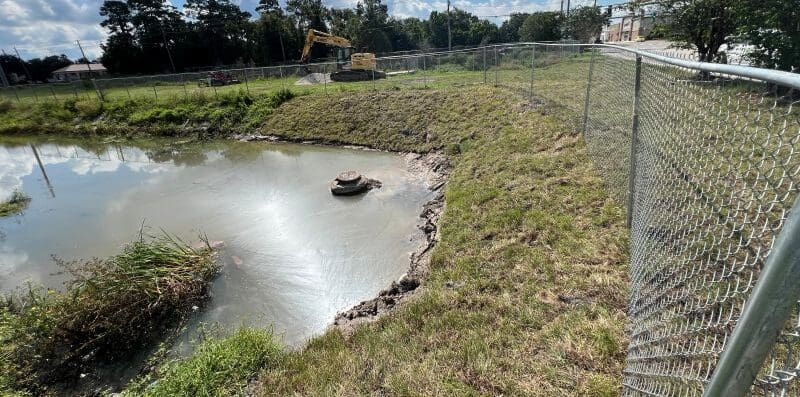
Maintenance of these measures is high and critical to performance. Appropriate steps must be taken to monitor and observe the operation of an infiltration basin. Poor maintenance will generally result in poor performance and high failure rates. Following are several maintenance tips and a suggested maintenance schedule for infiltration basins.
- The basin should be evaluated to assess performance. As a general rule, standing water should not remain in the basin for more than two to three days. If the infiltration rates exceed three days, the system may be failing. If there is an indication of failure an assessment of the system should be made by a professional and where appropriate corrective action initiated. Mosquitoes may also become problematic where water does not infiltrate and ponds.
- Sediment accumulation in the basin will require periodic maintenance. This maintenance activity should be completed as needed based on accumulation rates. Remove sediment from the basin under dry conditions and restore original cross section. This activity should be performed with machinery that will minimize the compaction of the soils.
- The infiltration capability of the basin will decrease over time. Periodic tilling and replanting will help restore infiltration rates.
- Mowing is a standard maintenance requirement for basins. The grass should be maintained at a height of at least three inches. The grass should be mowed when the surface of the basin is dry. This will avoid potential problems with compaction and rutting of the basin floor. Mowing under wet conditions may also cause the grass to mat.
- Fertilization may be necessary to maintain healthy vegetation. It is recommended that the application be based on a soil test and applied at the appropriate rate. The use of low phosphorus and slow release fertilizers should also be considered.
- The basin should not be used for parking or as a recreational facility.
Bioretention Systems
Maintenance
Bioretention systems require regular inspection and maintenance to ensure the system is functioning properly. The frequency interval for inspection and maintenance is much greater in the initial stages of establishing a bioretention system. As vegetation becomes established the inspection and maintenance interval can be extended.
Landscaping and maintenance are usually not any more intensive than traditional landscaping. Therefore, landscaping contractors can perform most maintenance activities.
Dry Extended Detention Basins
Maintenance
Maintenance activities vary between sites. Construction of a sediment forebay pond and micropool limit the amount of work needed to excavate excessive sediment deposits from the dry extended detention basin. Table 1 summarizes maintenance activities and their recommended frequency
Wet Detention Ponds
Maintenance
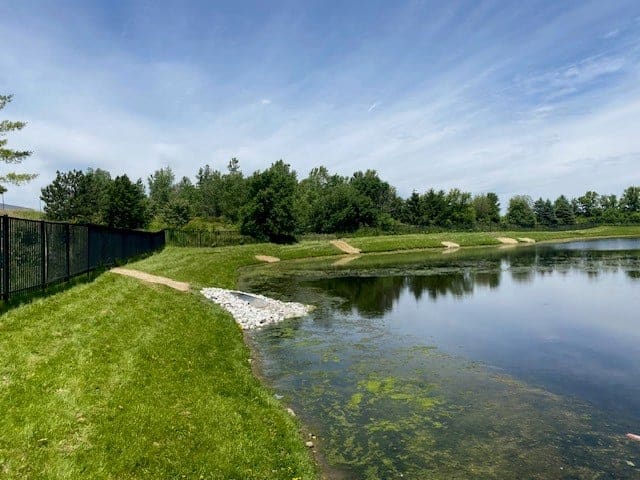
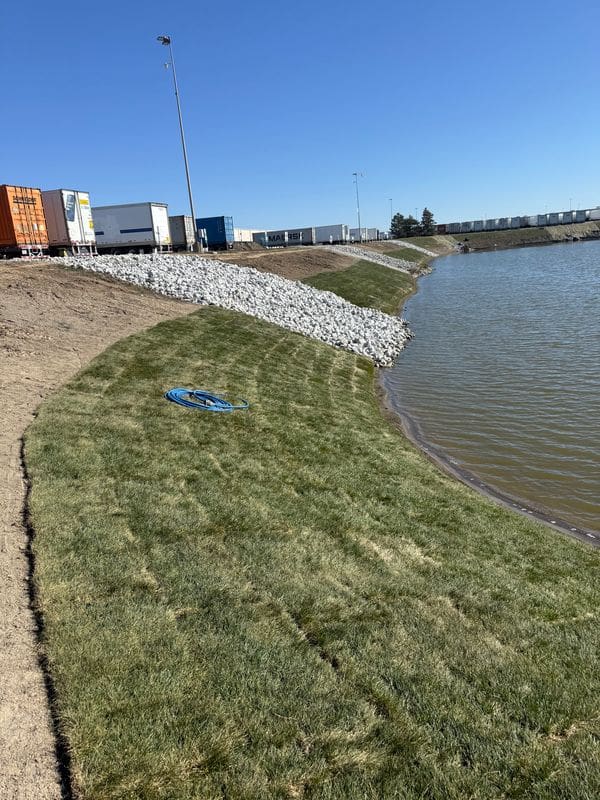
The performance of a wet detention pond is highly dependent on the maintenance of the pond. If the pond is not properly maintained, the ability of the pond to remove pollutants will decrease. There are several types of maintenance activities required for a traditional wet detention pond.
Sediment Forebay Ponds
Maintenance
Sediment forebay ponds are labor intensive. Depending on the amount of sediment that is present in the system, cleanout of the forebay pond can be as frequent as monthly or as infrequent as biannually. Cleanout should occur when sediment buildup is no more than 50 percent of the storage capacity of the forebay pond. Sediment forebay ponds should be located in areas that provide easy access for equipment to remove accumulated sediment. Disposal of the sediment must be considered and may include hauling and transportation to a separate site.
Constructed Stormwater Wetlands
Maintenance
Proper maintenance is necessary to keep a constructed storm water wetland functioning effectively. Table 4 lists maintenance criteria of constructed storm water wetlands and the interval with which they should be performed. Table 3 also provides several maintenance activities for each wetland type.
Gravity Oil-Grit Separators
Maintenance
- Inspect the unit on a regular basis (e.g., quarterly).
- Frequency of unit inspection and maintenance is dependent upon land use, climatological conditions, and gravity oil-grit separator design.
- Inadequate inspection and maintenance can result in the resuspension of accumulated solids which can cause pollutants to be flushed out of the unit.
- Remove accumulated sediment, oil, grease, and floatables using catch basin cleaning equipment (vacuum pumps) as needed.
- Oil, solids, and floatables removed from the unit must be disposed of according to local, state and federal regulations.
- Manufacturer specifications should be followed for any additional maintenance requirements.
Hydrodynamic Separators
Maintenance
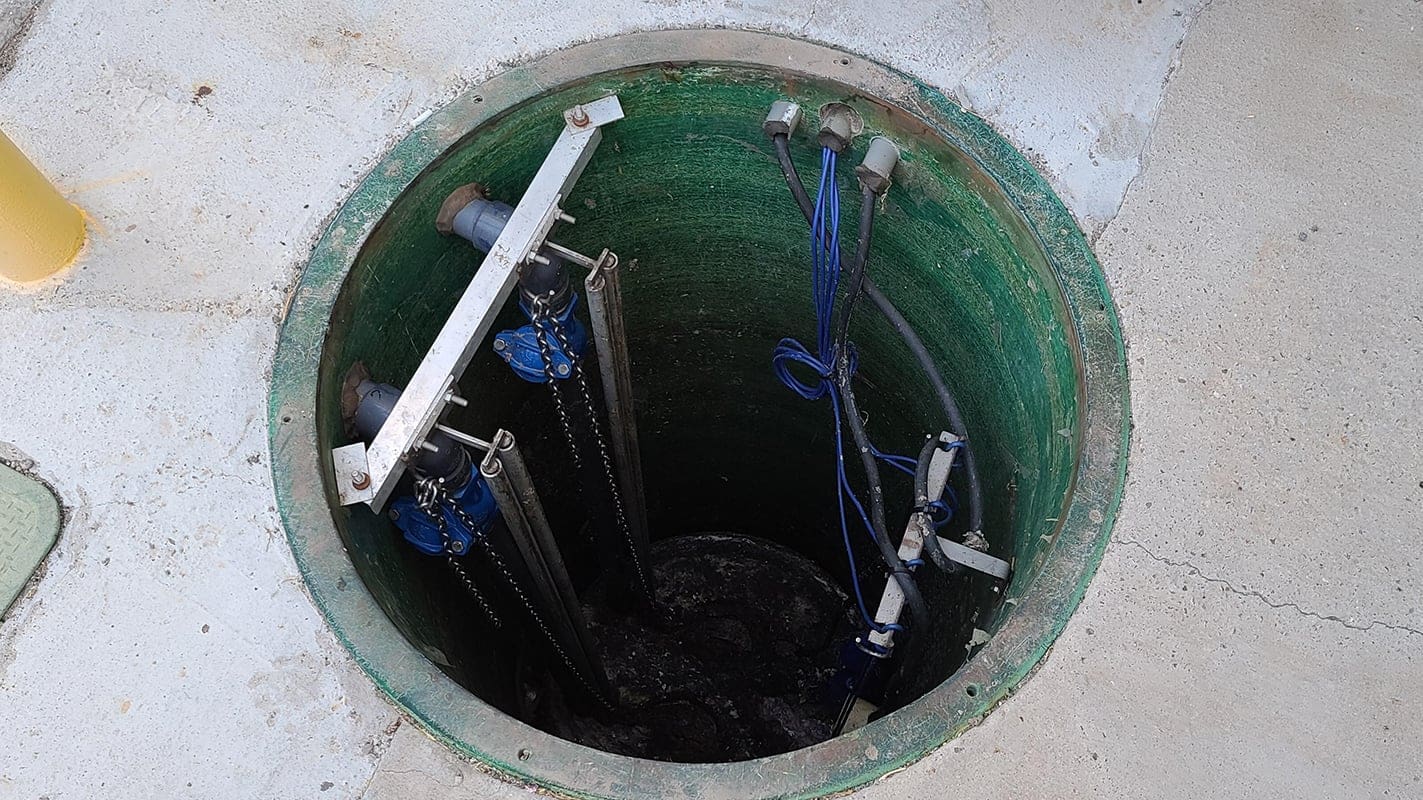
Frequent inspection and cleanout is critical for proper operation of hydrodynamic separators. Recommended inspection and maintenance schedules vary with each manufacturer, but in general hydrodynamic separator structures need to be inspected quarterly and cleaned out accordingly. Hydrodynamic separators should have easy, unobstructed access from the top of the structure to allow for inspection, cleanout, and maintenance. Maintenance typically involves using a vacuum truck to remove accumulated oil, floatables, and sediment. Polluted water and sediment removed from these devices should be properly handled and disposed of in accordance with local, state, and federal regulations.
Catch Basin Inserts with Treatment Medium
Maintenance
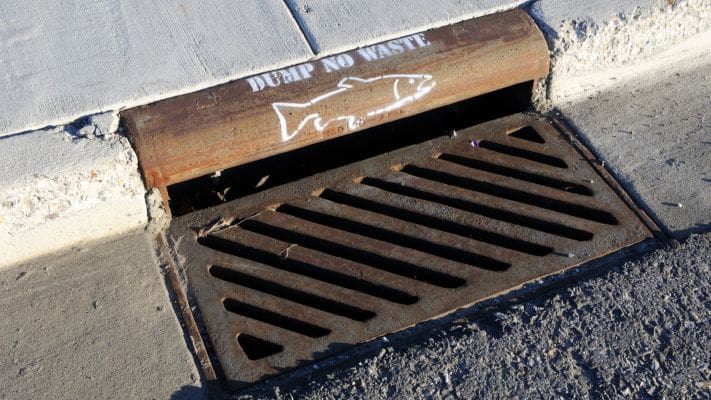
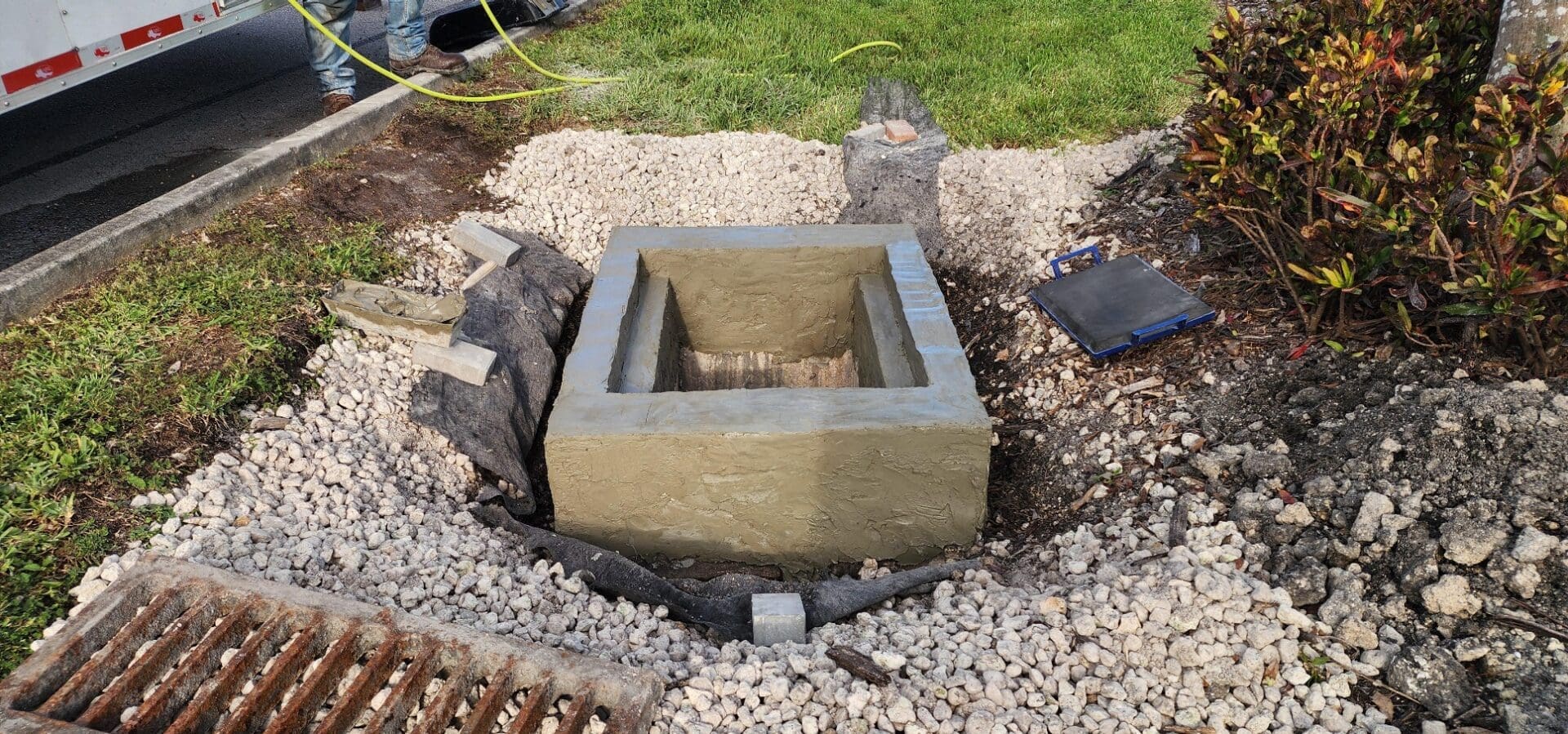
Storm drain inserts have small volumes and limited retention time to treat runoff. Storm drain inserts require frequent inspection and have very high maintenance requirements. To remain in working order requires cleaning or replacement of the treatment medium. The manufacturer will usually provide information on maintenance requirements for their product. If not properly maintained, they can become clogged, resulting in blocked flow and flooding of up-slope areas. Monitoring schedules should be on the order of at least once a month and after each one-half inch or greater storm event.
View State Page
Frequently Asked Questions
How much can an Indiana NPDES violation actually cost?
Civil penalties can run up to $25,000 per day of violation, and that’s before criminal exposure. Knowing, willful or reckless violations of NPDES permit conditions can bring criminal penalties, and a second conviction can carry a fine up to $50,000 per day, up to two years in prison, or both. Anyone found in violation also has to take all reasonable steps to minimize or correct the environmental impact, on top of whatever fine applies.
How often should a wet detention pond be inspected in Indiana?
The state’s Stormwater Quality Manual is direct about this one: a wet detention pond’s performance depends heavily on how well it’s maintained, and neglect directly reduces its ability to remove pollutants. Beyond routine mowing and sediment management, the manual recommends regular, ongoing maintenance rather than a fixed annual check, since a pond that’s fallen behind loses treatment capacity gradually rather than failing all at once.
What's the biggest maintenance mistake property owners make with infiltration basins in Indiana?
Letting standing water sit too long without investigating it. As a general rule, water shouldn’t remain in an infiltration basin for more than two to three days, and if infiltration takes longer than that, the system may already be failing and needs a professional assessment. Sediment accumulation and declining infiltration capacity over time are the underlying causes, and periodic tilling and replanting can help restore performance before a full rebuild becomes necessary.
Do porous pavement systems need more maintenance than regular pavement in Indiana?
Yes, noticeably more, and the state’s guidance treats maintenance as essential rather than optional. Both porous asphalt and pervious concrete systems most often fail from poor design, construction or maintenance rather than material defects, and resurfacing with nonporous material or film-forming sealers can permanently disable the system’s ability to infiltrate water. The manual recommends posted signage warning against resurfacing and a clearly written maintenance agreement spelling out exactly how routine upkeep and any future repaving should be handled.
How does Indiana handle transferring an NPDES permit to a new property owner?
The current permittee has to notify IDEM’s Office of Water Quality at least 30 days before the transfer, and both the current and new owner have to submit a written agreement specifying the exact date responsibility shifts. If that 30-day notice doesn’t happen, IDEM can’t simply transfer the permit and instead has to modify and reissue it, which triggers a full 30-day public notice period. Operating the facility as the new owner before that reissuance is complete counts as operating without a permit and opens the door to enforcement action, so timing this transfer correctly during a property sale really does matter.
What maintenance schedule applies to catch basin inserts and hydrodynamic separators in Indiana?
Both need frequent attention compared to other stormwater BMPs. Catch basin inserts with treatment media should be monitored at least monthly and after every storm producing a half inch of rain or more, since their small treatment volume clogs quickly and can cause upstream flooding if neglected. Hydrodynamic separators generally need quarterly inspection and cleanout, though the exact schedule varies by manufacturer, and maintenance typically involves a vacuum truck to remove accumulated oil, floatables and sediment.
The information on this page is provided for general informational purposes only and is not legal advice. Regulations change frequently — AQUALIS makes no warranty as to the accuracy or completeness of this content, and any reliance on it is at your own risk. Consult a qualified professional or your local regulatory authority to confirm requirements applicable to your specific property.