

Last Updated 08/12/2026
Excerpt from the Stormwater Management Plan
POST-CONSTRUCTION STORM WATER MANAGEMENT IN NEW DEVELOPMENT AND REDEVELOPMENT
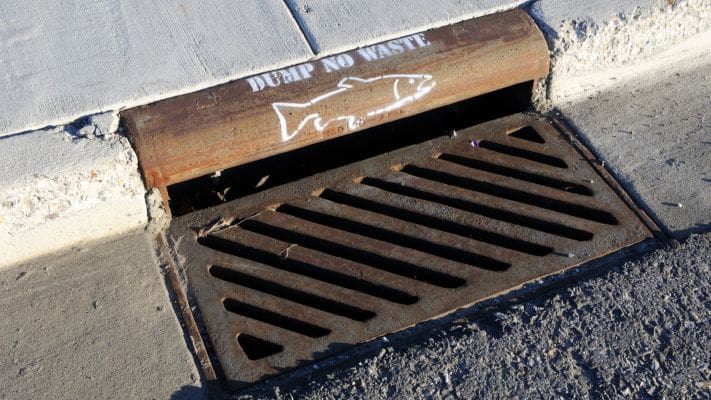
The City’s Storm water Management Ordinance sets forth strict requirements for post construction storm water management in new development and we are currently developing standards and requirements for redevelopment projects. The purpose of these requirements is to reduce the amount of pollutants discharged from private developments.
The following are the highlights of the ordinance requirements.
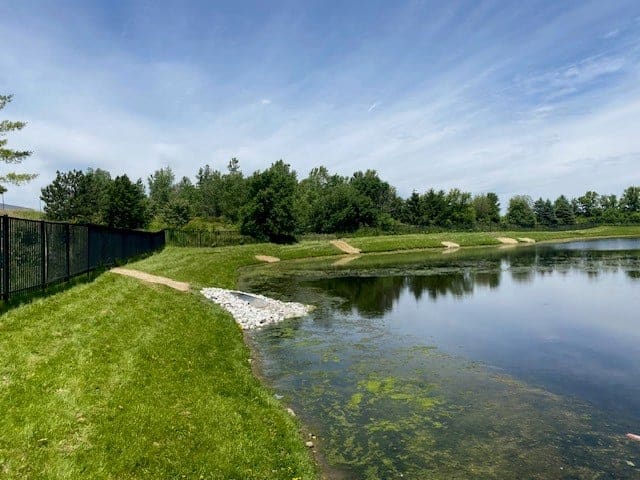
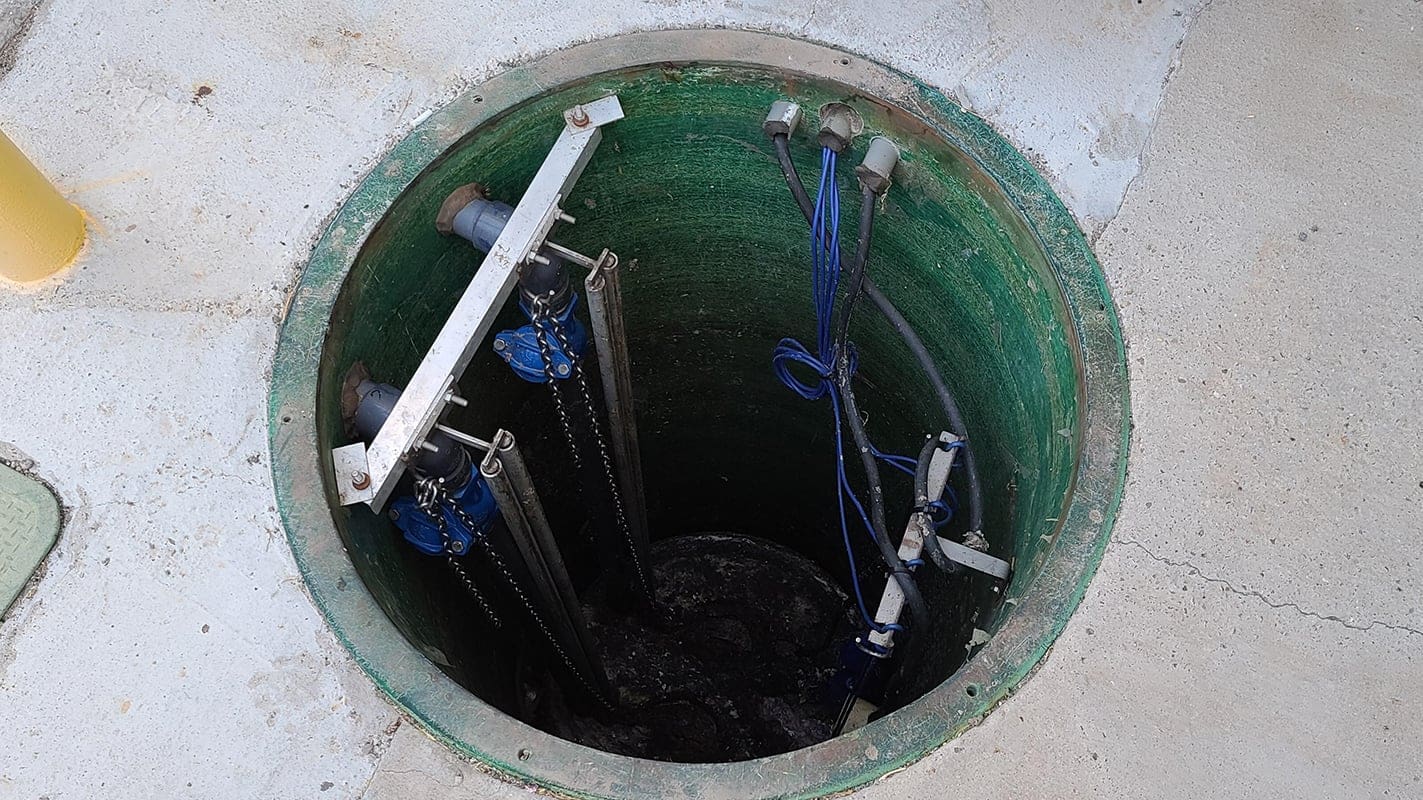
- All new development is required to retain storm water runoff on-site, treat the runoff with approved BMP’s and then discharge it to a shallow injection well.
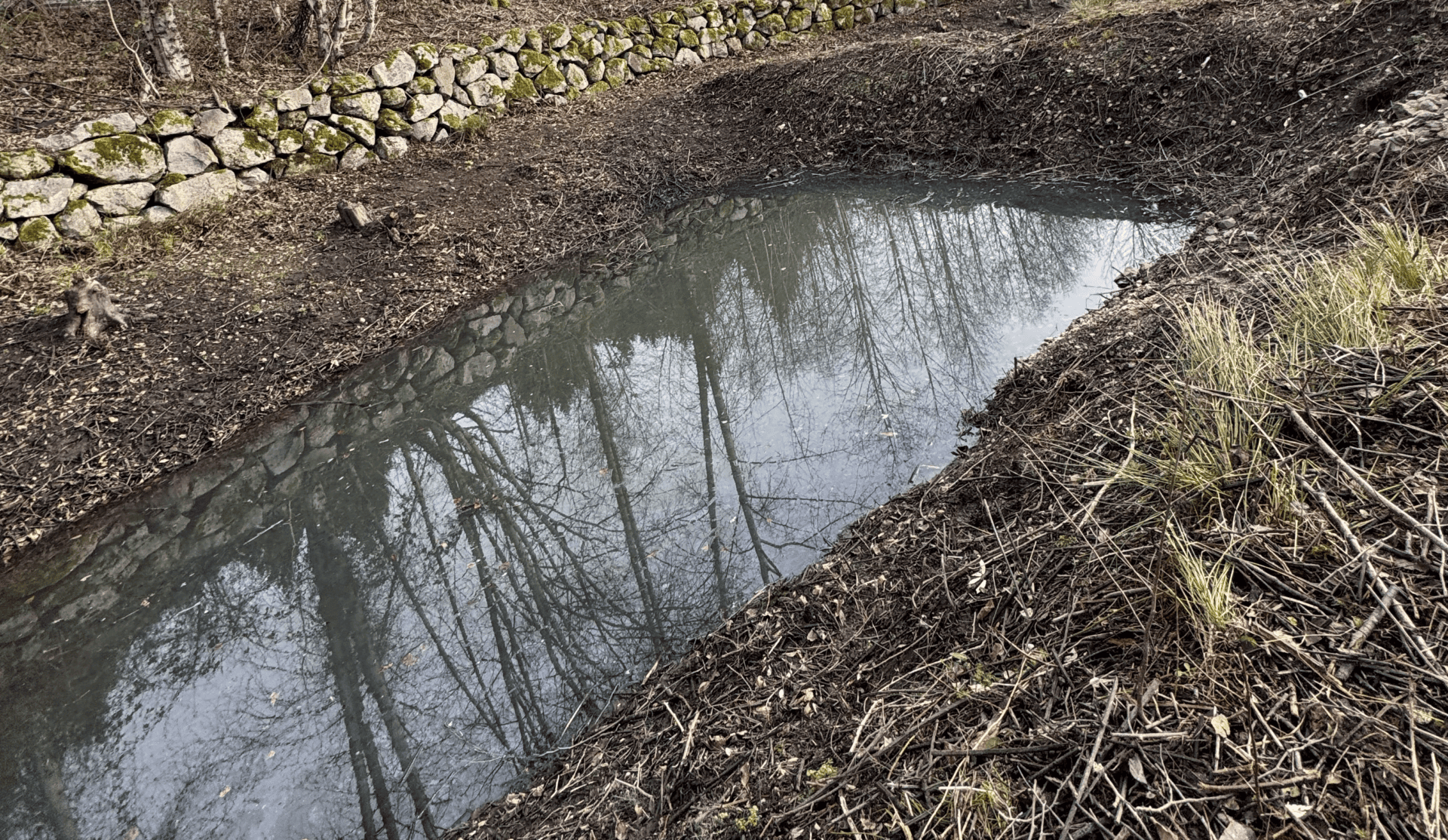
- Grassed swales are the only allowed treatment at this time. This is controlled by Idaho Department of Water Resources who has jurisdiction over shallow injection wells over the aquifer.
- Owners are required to operate and maintain their BMP’s.
- Each development is required to submit a storm water management plan for review and approval by the Engineering Department, prior to issuance of a building or site development permit.
- Prior to issuance of a Certificate of Occupancy, each development is inspected by the City and the Project Engineers are required to submit a letter of conformance to the plans and specifications.
The number of plan reviews, certificates of occupancy, existing connections removed, and impervious area removed, will be tracked and documented in the annual report.
Excerpt from the Coeur d’Alene City Code
13.30: Stormwater Management
13.30.040: Stormwater Management Plan
A. Stormwater Management Plan Required: Any activity regulated by this chapter shall require the development of a comprehensive stormwater management plan meeting the requirements of sections 13.30.050 and 13.30.060 of this chapter. Stormwater management plans shall be approved by a qualified, licensed professional and submitted to the city for review.
1. Exceptions:
a. Stormwater management plans for new single-family residential structures or additions to single-family residential structures are not required to be designed by a qualified, licensed professional unless required by the city under subsection A1b of this section.
b. The administrator may require that the stormwater management plan be signed by a registered civil engineer if he or she determines that off site drainage or adjacent property rights are affected by the plan.
B. General Plan Requirements: Each stormwater management plan must contain the following general elements:
1. The necessary maintenance system, including an acceptable plan for sustained functioning of the collection and treatment system. Unless the plan identifies another responsible party, the parties identified in section 13.30.100 of this chapter shall be responsible for maintenance of all elements of the stormwater collection and treatment system. Maintenance activities shall include (but not be limited to), watering, mowing and fertilizing of infiltration basins, sod renovation of infiltration basins (unless otherwise provided in this chapter), sediment and debris removal from detention basins, debris removal and cleaning of all inlets, piping, outlet structures, slope protection, etc.
2. The easements necessary to provide continued maintenance of the system.
3. Clearly identified stormwater facilities including, but not limited to, pipes, inlets, catch basins, infiltration basins, basins, and swales.
C. Required Stormwater Plan Elements
In addition to the general plan requirements required by subsection B of this section, stormwater management plans must contain the following parts:
1. Design Calculations: The plan shall present all pertinent calculations necessary to determine the required size of elements of the system. These elements include, but are not limited to, off site drainage onto the property, pre and post development runoff, infiltration basins, detention and/or retention facilities, pipes, swales, culverts, ditches, and catch basins.
2. Site Plan: The site plan shall include the following:
a. Property boundaries and all existing natural and manmade features and facilities within fifty feet (50′) of the site, including streets, utilities, easements, topography, structures, and drainage channels.
b. Final contours.
c. Location of all proposed improvements, including paving, structures, utilities, landscaped areas, flat work, and stormwater control facilities.
d. Proposed drainage patterns including ridgelines and tributary drainage areas.
e. Stormwater control facilities, including invert elevations, slopes, length, cross sections, and sizes. Construction details shall be shown for infiltration basins, and/or detention/retention/construction waste facilities.
f. Existing and proposed drainage/stormwater easements.
g. Location of all BMPs, temporary and permanent.
h. Final vegetation, landscape, and permanent stabilization measures.
3. Erosion, Sediment And Construction Site Waste Control Standards
The design, testing, installation, and maintenance of erosion, sediment and construction site waste controls shall be in accordance with city approved best management practices (BMPs). An erosion, sediment and construction waste control plan shall be submitted and approved prior to initiation of any site clearing, excavation, and grading or other development activity. Both temporary and permanent erosion, sediment and construction waste control measures shall be included. The plan shall represent the minimum requirements for the site. Additional measures may be required by the city in the event of unexpected storm occurrences, repair or maintenance of existing systems, or replacement of nonfunctioning systems.
a. The permit holder and owner of the property are responsible for maintenance and upkeep of both temporary and permanent erosion, sediment and construction waste control measures unless the erosion, sediment and construction waste control plan identifies another person or entity as the responsible party. (Ord. 3455, 2012)
13.30.050: Performance Standards
The following performance standards are applicable to all design, construction, implementation, and maintenance of stormwater management systems pursuant to this chapter:
A. All activities subject to the requirements of this chapter shall be carried out in a manner that ensures that runoff of storm or other natural surface waters shall not be accelerated, concentrated, or otherwise conveyed beyond the exterior property lines or project boundaries of the project in question. Existing and/or proposed off site public street drainage shall be detained separately from the on site drainage. All stormwater facilities and BMPs required for the project must be constructed within the project boundary or property lines.
1. Exceptions
Runoff of storm or other surface waters may be conveyed beyond the exterior property lines or project boundaries if:
a. Done in accordance with the provisions of a joint stormwater management agreement approved in writing by the city; or
b. The downstream property received drainage prior to development. In this case, flow may not be concentrated onto downstream properties where sheet flow previously existed. In no event will there be a measurable increase in the peak rate of runoff from the site after development when compared with the runoff rate in the undeveloped state for a 25-year storm.
c. Runoff may be conveyed beyond property lines onto public rights of way where necessary to obtain site access via driveways, curb cuts or other access points.
B. Erosion, sediment, or discharge of pollutants, resulting from construction activities, which enter onto public property or private property not controlled by the permit holder, shall be eliminated to the maximum extent practicable unless otherwise permitted or exempted under this chapter.
C. All construction activity commenced pursuant to an approved stormwater management plan or site development permit must at all times comply with the conditions of the plan or permit. The permit holder is responsible for ensuring their contractor(s), subcontractor(s), utility trenching subcontractor(s), and all other persons entering the site abide by the conditions of the permit. The permit holder’s signature or that of his authorized agent on the permit shall constitute an agreement by the permit holder to accept responsibility for meeting the conditions of the permit.
D. No construction activity shall take place without a valid stormwater management plan. If a permit has been suspended or revoked, or has expired, all work covered by the plan shall cease until a new plan is issued.
E. All necessary action shall be taken to minimize the depositing and tracking of mud, dirt, sand, gravel, rock or debris on or onto the public right of way. The owner of the site of the construction activity or the permit holder with respect to the construction site shall be responsible for any cleanup of the public rights of way or private property not under the permit holder’s control necessitated from any tracking or depositing of mud, dirt, sand, gravel, rock or debris, or shall reimburse the city for any expenses incurred by the city to effectuate the cleanup. At a minimum, all public rights of way shall be cleaned curb to curb on a weekly basis.
F. Construction ramps shall be constructed of material that will not erode or deteriorate under adverse conditions, and shall not be placed in a manner as to interfere with or block the passage of stormwater runoff.
G. No debris, dirt, aggregate or excavated materials, or construction supplies, shall be placed on the public right of way unless specifically permitted by the city in writing. In addition, public sidewalks shall not be removed, blocked, or otherwise rendered unusable by construction activity, equipment or materials, or portable toilets, unless a safe, usable alternate walkway, as approved by the city, is placed on the same side of the right of way by the contractor.
H. No owner or lessee of real property shall allow the property to be unoccupied, unused, vacant or undeveloped after the topsoil has been disturbed or the natural cover removed, unless control measures are undertaken to prevent mud, sand, dirt and gravel, or other material from migrating off site and entering the public right of way or a stormwater system.
I. All temporary erosion/sediment and construction waste control measures shall be removed after final site stabilization. Trapped sediment and other disturbed soil areas resulting from the removal of temporary measures shall be permanently stabilized within twenty one (21) days from removal of the temporary measures.
J. Channels which collect or concentrate stormwater shall be protected against erosion and contain energy dissipation measures to prevent erosion on adjoining lands. Existing unprotected channels shall be protected against further erosion in the course of site development. Any site development or construction shall preserve the existing stormwater management improvements.
K. Sediment resulting from erosion of disturbed soils shall be detained on site. Sediment shall either be stabilized on site or removed in an approved manner.
L. Any and all collected stormwater runoff shall be directed to infiltration basins or to an approved BMP. Permanent treatment of stormwater runoff shall be accomplished by directing all runoff to an infiltration basin or to an approved BMP.
1. Exceptions
Runoff may be discharged directly into dry wells or other overflow structures under the following circumstances:
a. When the increase in impervious surface, resulting from new construction or addition to existing structures, is less than three thousand (3,000) square feet.
b. Runoff from roofs.
M. When existing streets are widened or otherwise improved, runoff from the new impervious surface may be directed into existing storm drain facilities if the existing storm drain facility has sufficient capacity to accommodate the increased runoff. (Ord. 3455, 2012)
13.30.100: Maintenance Responsibility
A. Unless other provisions are made in the process of development review and approval, the owner of the property is responsible to maintain all stormwater system elements required for on site stormwater collection and treatment and the owner of the abutting property is responsible for maintaining infiltration basins contained within city rights of way or drainage easements for street drainage.
B. For infiltration basins contained within city rights of way or drainage easements the maintenance responsibility created by this section shall include mowing, and otherwise maintaining the grass or other approved vegetative cover in a healthy condition capable of meeting the retention and treatment requirements of this chapter. The city’s drainage system utility will renovate the infiltration basin upon expiration of its service life.
C. Any violation of these maintenance requirements shall constitute a violation of this chapter. (Ord. 3455, 2012)
View State Page
Frequently Asked Questions
Why does Coeur d'Alene only allow grassed swales for stormwater treatment?
Because the city sits over an aquifer, and all new development is required to retain runoff on-site, treat it through approved BMPs, and discharge it to a shallow injection well. Grassed swales are currently the only treatment method allowed before that discharge, and it’s not the city alone making that call: the Idaho Department of Water Resources holds jurisdiction over shallow injection wells above the aquifer, so this requirement traces back to state-level groundwater protection, not just local preference.
What does a Coeur d'Alene stormwater management plan need to include?
Every plan needs design calculations covering pre- and post-development runoff, a detailed site plan showing property boundaries, drainage patterns and every proposed stormwater facility, and a maintenance system describing how the collection and treatment system will keep functioning long-term. Erosion, sediment and construction waste controls also need their own approved plan before any site clearing or excavation begins. For most commercial projects, this plan has to be signed off by a licensed professional and approved by the city’s Engineering Department before a building or site development permit gets issued.
Can stormwater runoff leave my property boundary in Coeur d'Alene?
Generally, no. The city’s performance standards require that runoff not be accelerated, concentrated or otherwise conveyed beyond a project’s property lines, with stormwater facilities built entirely within the project boundary. There are narrow exceptions: a joint stormwater management agreement approved by the city, downstream property that already received sheet flow before development, or runoff directed to public rights of way specifically for driveway or curb cut access. Outside those cases, keeping water on-site is the baseline expectation.
Who's responsible for maintaining a stormwater infiltration basin in Coeur d'Alene?
It depends on where the basin sits. Property owners are responsible for everything required for on-site stormwater collection and treatment, while the owner of an abutting property maintains infiltration basins located within city rights of way or drainage easements for street drainage. That maintenance duty includes mowing and keeping vegetative cover healthy enough to meet the chapter’s retention and treatment standards, and any lapse in that upkeep is itself a violation under the city’s code.
What happens when a Coeur d'Alene infiltration basin reaches the end of its service life?
The city’s drainage system utility renovates infiltration basins located within public rights of way or drainage easements once their service life expires, distinguishing that public renovation responsibility from the day-to-day mowing and vegetation upkeep that stays with the property owner. It’s a useful distinction to understand upfront, since it means a basin’s long-term rebuild isn’t automatically the owner’s cost, even though its routine maintenance is.
Does Coeur d'Alene track construction site cleanup separately from stormwater compliance?
Yes, and it’s fairly specific. Contractors have to keep public rights of way clean of mud, dirt, sand, gravel, rock or debris tracked from a site, with curb-to-curb cleaning required at least weekly, and any property left disturbed or vacant after topsoil removal needs control measures to prevent material from migrating off-site. Temporary erosion and sediment controls also have to come out within a defined window after removal, with any newly disturbed area stabilized within 21 days. It’s a level of construction-phase housekeeping detail that goes beyond what many neighboring jurisdictions spell out.
The information on this page is provided for general informational purposes only and is not legal advice. Regulations change frequently — AQUALIS makes no warranty as to the accuracy or completeness of this content, and any reliance on it is at your own risk. Consult a qualified professional or your local regulatory authority to confirm requirements applicable to your specific property.