


Last Updated 08/17/2026
Stormwater Quality Projects Incentive Grant Program
The Stormwater Quality Projects Incentive Grant Program provides financial assistance for projects that improve water quality, reduce stormwater runoff and educate citizens about stormwater and water quality issues in our community.
Three types of grants are available:
- Infrastructure Grants provide funding for infrastructure projects that improve water quality, such as stream restoration, constructed wetlands, bio-retention, rain gardens, rainwater harvesting and pervious pavement installation Businesses, schools, churches and non-profits located in Fayette County that pay the Water Quality Management Fee are eligible to apply for these grants.
- Education Grants provide funding for projects such as development of stormwater-related curriculum for schools, publicity campaigns about water quality, workshops for the public and educational rain gardens. Businesses, schools, churches and non-profits located in Fayette County that pay the Water Quality Management Fee are eligible to apply for these grants.
- Neighborhood Grants provide funding for projects such as rain gardens, rain barrels, aeration systems for retention ponds, stream bank restoration, neighborhood workshops and other projects that help improve or manage stormwater through education and/or physical improvements. Fayette County neighborhood, community and homeowner associations incorporated with the Commonwealth of Kentucky that represent single family homeowners or farms are eligible to apply for these grants.
Excerpt from Stormwater Ordinance
DIVISION 2. – MAINTENANCE OF PRIVATELY OWNED STORMWATER CONTROLS
Sec. 16-87. – Stormwater control devices in residential areas.
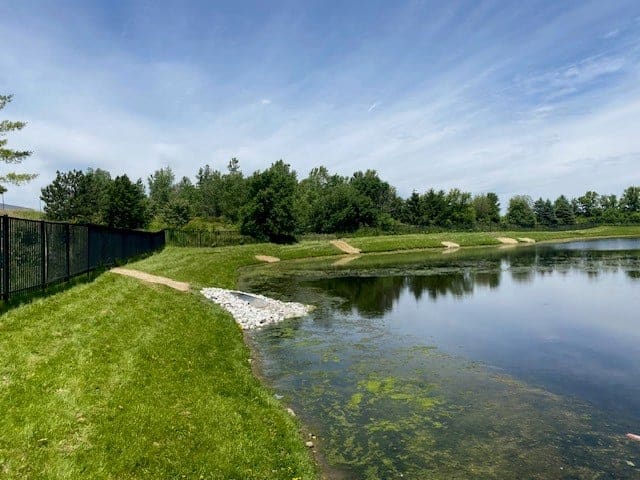
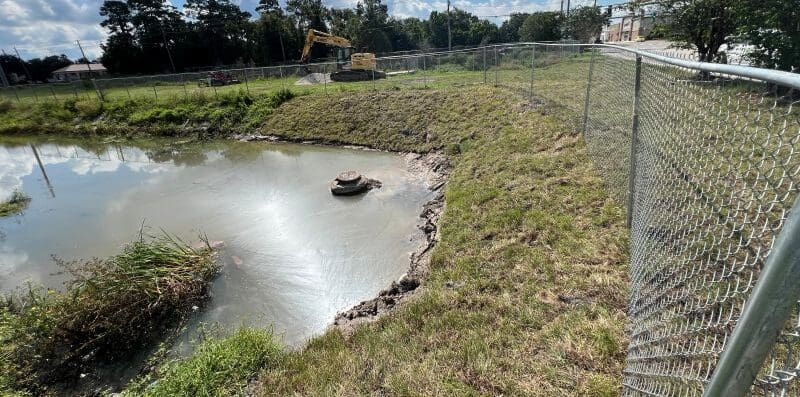
(a) In a residential area where a public easement for a stormwater control device exists, the private property owner is responsible for non-structural maintenance of any detention basin, detention pond, retention basin, retention pond or any other stormwater control device located on the owner’s property, including but not limited to mowing the area, including any embankment, removing algae and all debris that accumulates in the basin, including litter and tree limbs, sodding or seeding bare areas, including areas on the embankment, and taking care of any landscaped areas such as trees and shrubs.
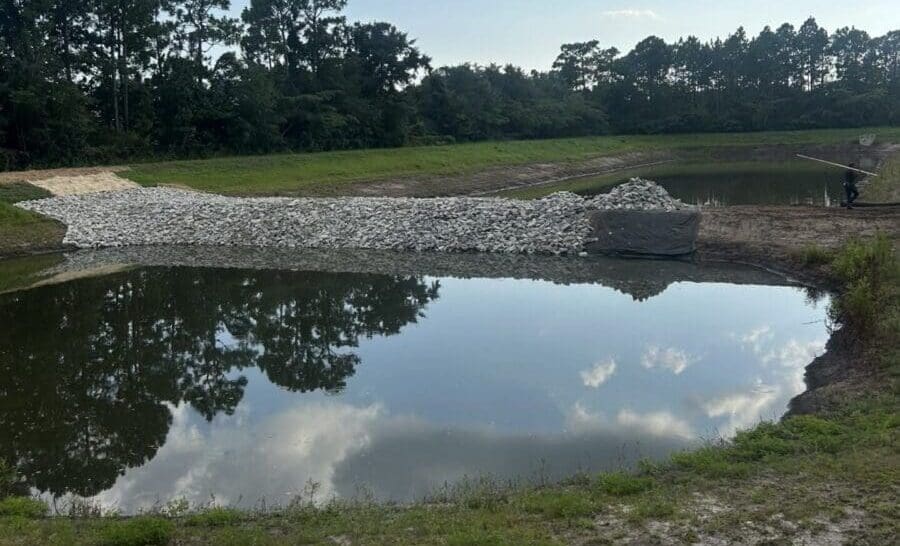
(b) In a residential area where a public easement for a stormwater control device exists, the urban county government is responsible for all structural repairs, maintaining the integrity of any embankment and the structural items in the embankment, including concrete, pipe, gabions, stone, spillways, headwalls, repairing eroded areas on the embankment that threaten the stability of the embankment, repairing paved ditches and inlet structures in the basin, removing excess silt that affects the functionality of the stormwater control device and removing large debris that obstructs any outlet pipes or spillways of any dam provided the above-described actions are necessary to maintain the stormwater detention function of the stormwater control device. The urban county government shall not undertake any action, including, but not limited to, replacement of a liner, to maintain the stormwater control device as a retention facility that permanently contains water.
(c) In a residential area where no public easement exists, the property owner is responsible for non-structural maintenance of any detention basin, detention pond, retention basin, retention pond or any other stormwater control device located on the owner’s property, including but not limited to mowing the area, including any embankment, removing algae and all debris that accumulates in the basin, including litter and tree limbs, sodding or seeding bare areas, including areas on the embankment, and taking care of any landscaped areas such as trees and shrubs and is also responsible for all structural repairs, maintaining the integrity of any embankment and the structural items in the embankment, including concrete, pipe, gabions, stone, spillways, headwalls, repairing eroded areas on the embankment that threaten the stability of the embankment, repairing paved ditches and inlet structures in the basin, removing excess silt that affects the functionality of the stormwater control device as directed by the urban county government, and removing large debris that obstructs any outlet pipes or spillways of any dam.
(d) No trees shall be planted on any dam structure associated with a stormwater control device.
(e) No structures or equipment including but not limited to, fences, gazebos, swimming pools, trampolines, or buildings shall be placed in a stormwater control device.
(f) No fill dirt shall be placed in a stormwater control device without prior approval by the director, division of water quality.
(g) The property owner is responsible for taking reasonable care to ensure that a stormwater control device does not contain conditions that are unsafe or that adversely affect water quality including, but not limited to, leaving tools or equipment or misusing pesticides and/or herbicides in the basin.
(h) The property owner shall ensure that no equipment, structures, materials, or substances are located in the easement that may adversely affect the performance of a stormwater control device in controlling stormwater quantity or that adversely affect water quality.
(i) Nothing herein shall preclude the urban county government from assuming responsibility to maintain any stormwater control device pursuant to contract, easement, or other legal arrangement.
(Ord. No. 36-2009, § 2, 3-26-09)
Sec. 16-88. – Stormwater controls in commercial and industrial areas.
(a) Maintenance and repair of retention and detention basins and other stormwater control devices located on property used for commercial or industrial purposes is the responsibility of the property owner and the manager of the property who shall ensure the facilities are operating as intended.
(b) The property owner and/or manager of the property may be notified in writing by the division of water quality of any problems or maintenance or repair concerns that must be addressed or corrected, such as removing debris from the basin, repairing eroded areas on the embankment, replacing a crushed pipe, or improving embankment stability.
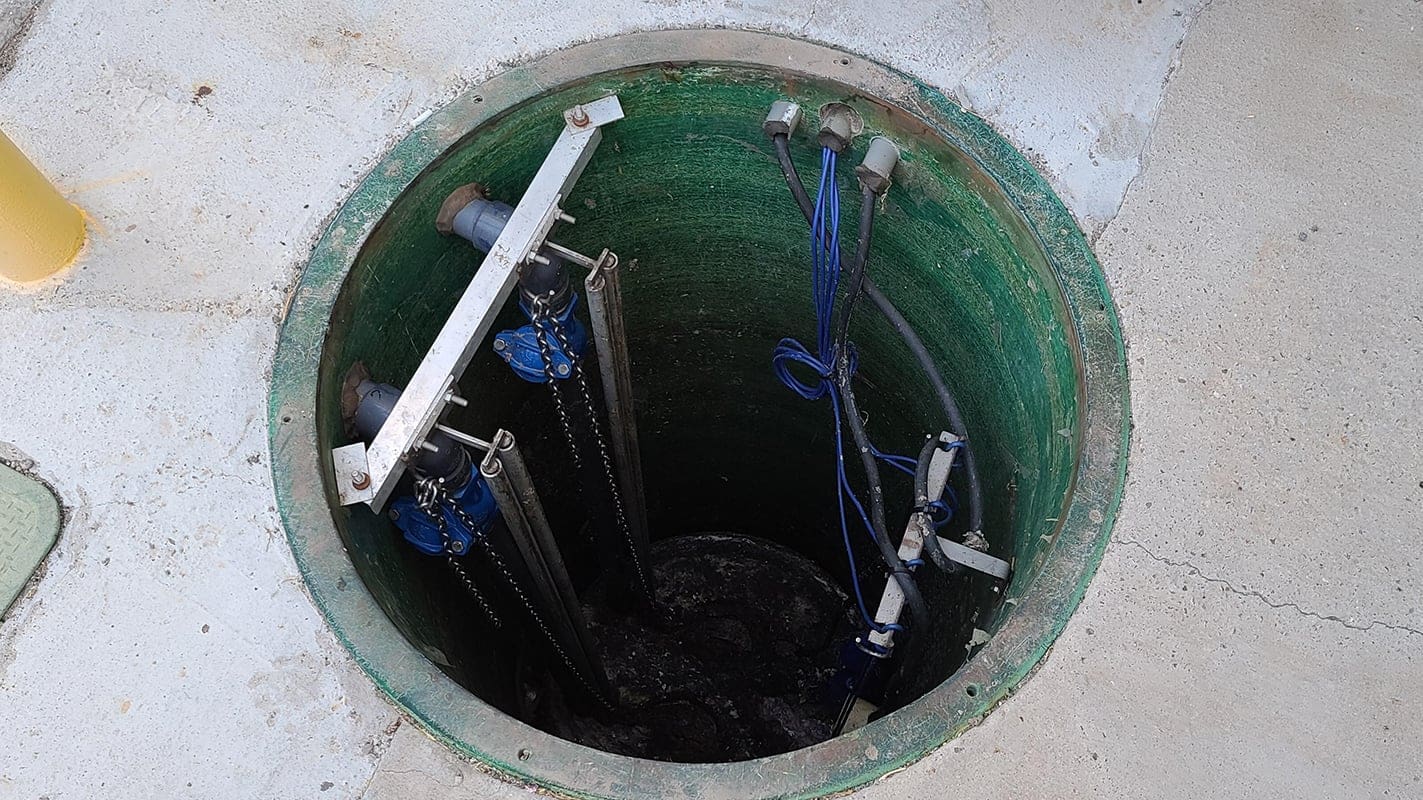
(c) On property where a stormwater control device is located fully or partially underground, the owner and manager of the property shall be responsible for causing an inspection of the facility to be performed annually and shall submit an annual inspection report to the division of water quality by January 31 of each year for the prior calendar year. The inspection report shall be prepared by a professional engineer licensed to practice in Kentucky and shall address the condition of the device for meeting its intended purpose.
(d) No trees shall be planted on any dam structure associated with a stormwater control device.
(e) No structures, including but not limited to, fences, gazebos, swimming pools, trampolines, or buildings shall be placed in a stormwater control device.
(f) No fill dirt shall be placed in a stormwater control device without prior approval by the director, division of water quality.
(g) The property owner or manager is responsible for taking reasonable care to ensure that a stormwater control device does not contain conditions that are unsafe or that adversely affect water quality including, but not limited to, leaving tools or equipment or misusing pesticides and/or herbicides in a basin.
(h) The property owner or manager shall ensure that no structures, materials, or substances are located in the stormwater control device that may adversely affect its performance in controlling stormwater quantity or that adversely affect water quality.
(Ord. No. 36-2009, § 2, 3-26-09)
View State Page
Frequently Asked Questions
Who's responsible for maintaining a commercial stormwater control device in Lexington-Fayette?
Both the property owner and the property manager, and their duty is specific: making sure the facility keeps operating as intended, not just that it exists. The division of water quality can send written notice flagging problems that need correcting, whether that’s debris in the basin, eroded embankment areas, a crushed pipe or declining embankment stability, and responsibility for acting on that notice falls jointly on the owner and manager.
Does Lexington-Fayette require annual inspections for underground stormwater facilities?
Yes, for any commercial or industrial property where the stormwater control device sits fully or partially underground. The owner or manager has to arrange an annual inspection and submit the report to the division of water quality by January 31 for the prior calendar year, and that report has to be prepared by a professional engineer licensed in Kentucky specifically addressing whether the device is still meeting its intended purpose.
What can't be placed in or near a commercial stormwater control device in Lexington-Fayette?
Trees can’t be planted on any dam structure tied to the device, and structures like fences, gazebos, swimming pools or buildings can’t be placed inside the device itself. Fill dirt requires prior approval from the director of the division of water quality before it goes anywhere near the facility. Property owners and managers also have to keep the device free of unsafe conditions, including things like leftover tools, equipment, or pesticide and herbicide misuse in the basin.
Are Lexington-Fayette businesses eligible for stormwater improvement funding?
Yes, through the city’s Stormwater Quality Projects Incentive Grant Program, which offers two tracks businesses can apply for if they pay the Water Quality Management Fee: infrastructure grants for projects like bio-retention, rain gardens, permeable pavement or stream restoration, and education grants for stormwater curriculum, public workshops or awareness campaigns. Both are open to businesses, schools, churches and non-profits located in Fayette County, giving commercial property owners a way to offset the cost of stormwater upgrades that also help the facility perform better.
The information on this page is provided for general informational purposes only and is not legal advice. Regulations change frequently — AQUALIS makes no warranty as to the accuracy or completeness of this content, and any reliance on it is at your own risk. Consult a qualified professional or your local regulatory authority to confirm requirements applicable to your specific property.