

Last Updated 07/20/2026
The County of Coconino has enacted a Stormwater Ordinance in order to establish minimum stormwater management requirements and controls to protect and safeguard the general health, safety, and welfare of the public residing in watersheds within this jurisdiction. The County of Coconino is the permitting authority for all land disturbing activities and requires the land owner to maintain all on-site stormwater control facilities and all open space areas (e.g. parks or “green” areas) required by the approved stormwater control plan. The County of Coconino will only provide construction permits to projects that establish a plan to manage stormwater runoff occurring during the construction process. The County of Coconino, under the NPDES program, also has the authority to inspect properties for noncompliance and can issue a notice of violation (NOV) for any deficiency or infraction onsite. Property owners are responsible for the maintenance of any stormwater facilities or practices located on the property. The County of Coconino has the authority to inspect stormwater facilities and practices in order to ascertain that they are properly maintained and functioning.
Coconino County Stormwater Laws and Regulations
Coconino County regulations are compliant with its Arizona Pollutant Discharge and Elimination System (AZPDES) permit requirements for the county’s small municipal separate storm sewer system (SMS4). As operators of a SMS4 the county is required to develop and implement a Stormwater Management Program (SWMP).
Certain areas within Coconino County are designated and listed as comprising the County SMS4. This was done because they are physically interconnected with the city of Flagstaff UA and/or measurably contributing to pollutant loadings in the common receiving streams. Maps of the affected subdivisions that are subject to the Coconino Construction General Permit.
Excerpt- Coconino Stormwater Ordinace, Amended, 2017
CHAPTER 7 – POST-CONSTRUCTION STORMWATER RUNOFF AND POLLUTION CONTROL
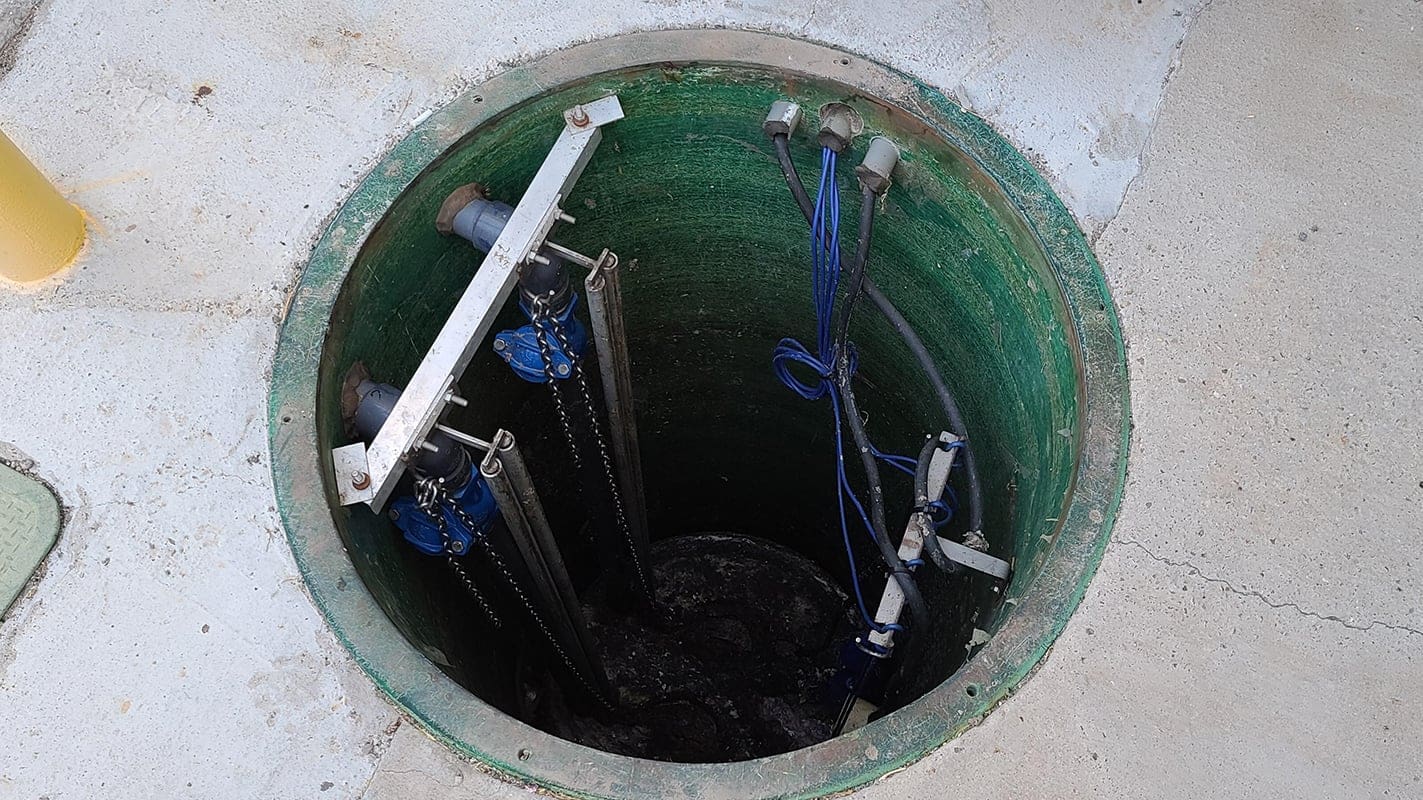
The goal of the Post-Construction Stormwater runoff and pollution control portion of a Stormwater approval is to protect public safety and public infrastructure, reduce Erosion on private properties and stream channels, and protect the quality of Waters of the U.S. to the maximum extent practicable. The goals are achieved by maintaining and/or restoring natural drainage patterns, minimizing grading and Disturbance, minimizing the extent of impervious cover, minimizing any increases in runoff volumes, and encouraging the use of a variety of BMPs for reducing the Pollutant loadings from newly developed and redeveloped sites. This will be accomplished by requirements to, among other things, reduce the magnitude and extent of impervious cover and site Disturbance, remove Pollutants from runoff prior to the introduction of Stormwater to the County SMS4s, and promote effective operation and Maintenance of all Stormwater facilities.
701.1 – Applicability
The Post-Construction requirements in this Chapter apply to permanent Stormwater management facilities, systems and/ or devices.
702.1 – Post-Construction Stormwater Management
Post-Construction runoff control is required for any land Disturbance equal to or greater than one acre within County SMS4s except as otherwise provided per Section 702.2 of this Ordinance. Land Disturbances within County SMS4s of less than 1 acre constituting a part of a larger development plan are also required to demonstrate that post-construction runoff water quality has been adequately protected. Activities for which Post-Construction runoff controls are required include: land development and redevelopment to include clearing or grubbing, leveling, construction of new or additional impervious or semi-pervious surfaces such as driveways, roadways, parking lots, recreation features; construction of new buildings or additions to existing buildings; and installation of permanent Stormwater management facilities or appurtenances thereto. The post-construction portion of a Stormwater approval requires:
- A SWPPP that includes a description of post-construction Stormwater management BMPs that will be installed during the construction process to control pollutants in Stormwater discharges after construction has been completed.
- If “temporary” sediment basins are to be used as/converted to retention or detention basins in the post-construction phase, the operator shall remove and properly dispose of all sediments accumulated in the basin during construction activities prior to filing an NOT.
- Post-construction structural BMPs shall be placed on upland soils to the degree attainable.
- New discharge connections or permanent Stormwater outfalls to unique waters are prohibited under this approval.
- Depending on the location, the installation of some permanent Stormwater management facilities, systems, and devices may also require a permit under section 404 of the Clean Water Act.
- This approval only authorizes and requires the operator to install and maintain Stormwater management measures up to and including final stabilization of the site, and does not require continued maintenance after Stormwater discharges associated with the construction activity have been eliminated from the site and a NOT has been filed.
- Post-construction Stormwater BMPs that discharge pollutants from point sources once construction is complete, may need to secure authorization under an AZPDES permit.
702.2 – Exemptions
The following activities may be exempted by the Director from on-site Post-Construction Stormwater runoff and pollution control requirements. An exemption shall apply only to the requirement for on-site permanent Post-Construction Stormwater management facilities, systems and/ or devices, in the application for a Stormwater approval. All other Stormwater management design elements, such as a storm sewer system, road culverts, Erosion and sedimentation control and runoff quality, shall be required. All exemption requests must be filed with the Department.
- Emergency exemption: Emergency Maintenance work performed for the protection of public health, safety and welfare. A written description of the scope and extent of any emergency work performed shall be submitted to the Department within two (2) calendar days of the commencement of the activity. If the Department finds that the work is not an emergency, then the work shall cease immediately and the requirements of this Ordinance shall be addressed as applicable.
- Maintenance exemption: Any Maintenance to an existing Stormwater management system made in accordance with plans and specifications approved by the Department.
- Gardening: Use of land for gardening for home consumption.
- Other agricultural and non-agricultural activities excluded by 40 CFR §122.3.
703 – General Requirements
The management of Stormwater on site, both during and upon completion of the land Disturbances described in Section 702.1 shall be accomplished in accordance with the standards and criteria of this Ordinance and the requirements of the Coconino County Engineering Design and Construction standards, Subdivision and Zoning Ordinances for Coconino County, the Floodplain Ordinance for Coconino County, and any other standards or criteria that are or may be adopted by the Coconino County Board of Supervisors. The design of any temporary or permanent facilities and structures and the utilization of any natural Drainage Systems shall be in full compliance with this Ordinance and any other applicable ordinance or regulation.
The intent of these design standards is to encourage environmentally sound Stormwater management practices that provide necessary drainage facilities while protecting the hydrologic characteristics and water quality of the site and watershed.
Applicants shall refer to the most recent version of the Coconino County Engineering Design and Construction Standards or other appropriate references for guidance in the design of Post-Construction Stormwater management facilities, system and/ or devices, most appropriate to individual site conditions. The objectives are to achieve water quality improvement at the source or during conveyance, prior to the introduction of Stormwater into the County SMS4s or any Storm Drainage System connected to the SMS4s.
The Stormwater management system shall not create an adverse impact on Stormwater quality in either upstream or downstream areas. Offsite areas, which drain to or across a site proposed for development, shall be addressed in the Post-Construction runoff and pollution control plan prepared as part of the SWPPP for the development. Post-Construction runoff and pollution control plans shall provide information sufficient to assure that the runoff from the project shall not adversely impact water quality in downstream areas.
Where deemed necessary by the Director, the applicant shall construct storm drains to handle on-site runoff to the maximum extent permitted under applicable County codes, provide on-site/off-site drainage easements, and provide for the conveyance of off-site runoff to an acceptable outlet in the same watershed.
Any Stormwater management facilities regulated by this Ordinance that would be located in or adjacent to Waters of the U.S. or wetlands shall continue to be subject to approval by the U.S, Army Corps of Engineers (USACOE) or other agencies through their permit processes. Proof of approval by the USACOE shall be provided by the applicant prior to the start of construction.
Any Stormwater Post-Construction management Facility or part thereof regulated by this Ordinance that will be located in Coconino County-owned rights-of-way or that will drain across or onto other rights-of-way shall be subject to written approval, licensing or permitting by the appropriate authority. Excluding the USACOE approval process detailed in paragraph 6 above, documentation of such aforementioned approval, licensing or permitting shall be provided by the applicant at the time of application.
At the time of application for a building permit or grading permit for any approved lot created by a subdivision and/or improved as a land development project, issuance of the permit shall be conditioned upon adherence to the terms of this Ordinance.
Stormwater drainage to impaired waters or unique waters may be subject to additional performance criteria or may need to utilize or restrict certain Stormwater Post-Construction management practices.
704 – Permanent Stormwater Management Design Standards
Design standards for Post-Construction design and maintenance are contained in the most recent version of the Coconino County Engineering Design and Construction Standards Manual as adopted by the Coconino County Board of Supervisors.
705 – “As Built” Plans
When construction is complete, the applicant shall submit to the Department an actual “as built” plan for all Post-Construction Stormwater facilities required per the post-construction Stormwater plan. The “as built” plan shall show all final design specifications for all permanent Stormwater facilities and if necessary shall be prepared and certified by an engineer registered in the State of Arizona. The “as built” plan shall be based on an actual field survey. The “as built” plan shall be submitted to the Department for review and final inspection by the Department. Any performance and/or financial securities established for the project by the Department shall include requirements for submittal of “as built” plans.
706 – Drainage Provisions and Flood Control Regulations
Provisions for on-site Stormwater retention/drainage and off-site Stormwater drainage both entering and leaving the property may be required by the Director. This Stormwater Ordinance and all amendments thereto shall be consistent with and subject to the regulations and provisions of the Coconino County Engineering Design and Construction standards, Planning and Zoning Ordinance and Floodplain Ordinance.
Erosion Control measures should be in conformance with BMPs identified in the most recent version of the Coconino County Engineering Design and Construction Standards Manual or other EPA, ADEQ or locally approved methods.
Excerpt- Coconino Post-Construction Stormwater Page
What is Post-Construction Runoff?
Post-construction runoff is runoff from areas that have just undergone construction and the new development has disturbed one acre or more of land within a regulated SM4 or SMS4. Regulation of runoff from post-construction is important for two reasons:
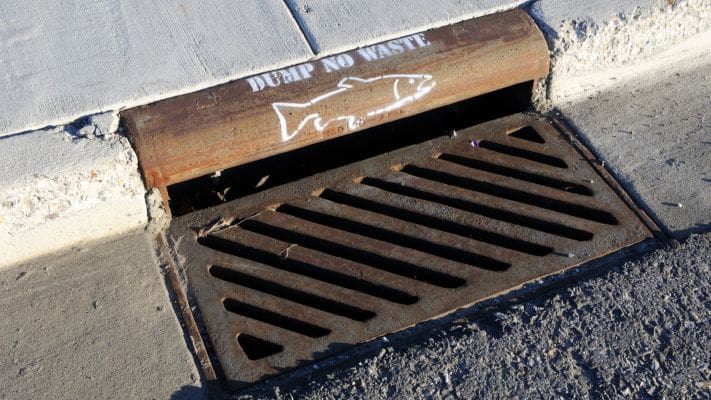
- Runoff from roofs, parking lots, streets and driveways can pick up oil and grease, metals, pesticides and nutrients.
- With the increase in impervious surfaces, the quantity of runoff and the peak discharges will measurably increase as the times to peak flow are reduced. This can lead to increased erosion on the parcels as well as within the receiving channels, loss of aquatic life, and increased flooding downstream.
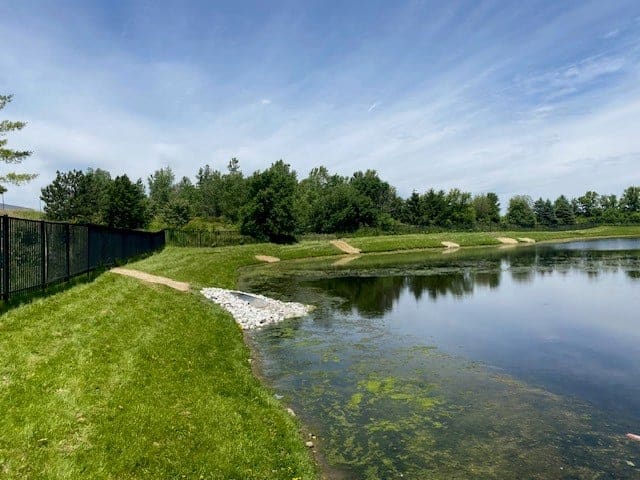
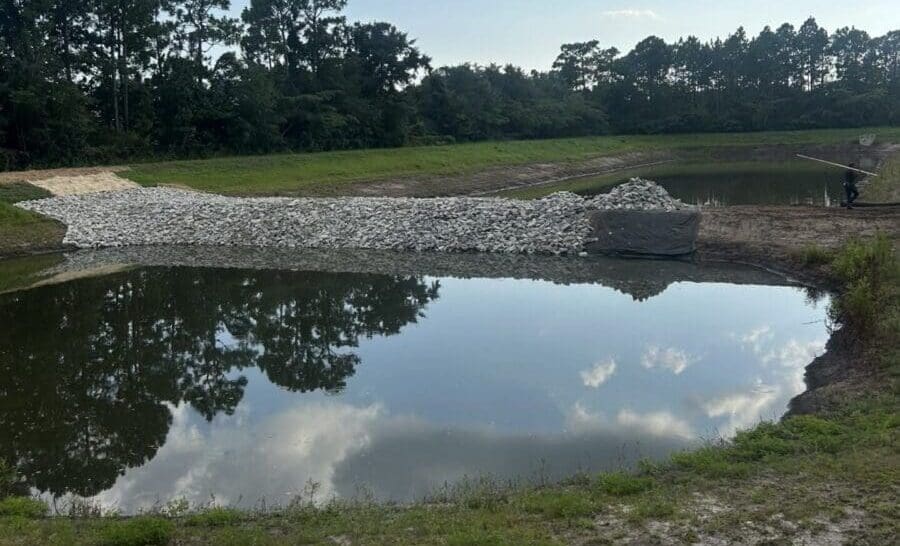
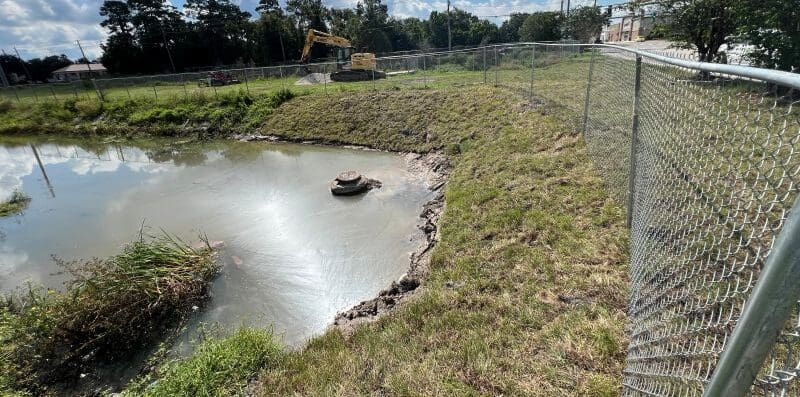
The County addresses this second concern by requiring the construction of detention ponds to lower the peak discharges to pre-construction rates. Detention ponds will alleviate some of the sediment transport and associated chemical load, and will attenuate the peak discharge, but they won’t treat the dissolved chemical load, oil and grease and that portion of the metals load that does get through on the sediment that isn’t trapped in the pond.
Best Management Practices
The County endorses best management practices (BMPs) that combine both structural and non-structural controls:
- Structural controls include:
- Storage or detention ponds such as wet ponds, dry basin, and multi-chamber basins
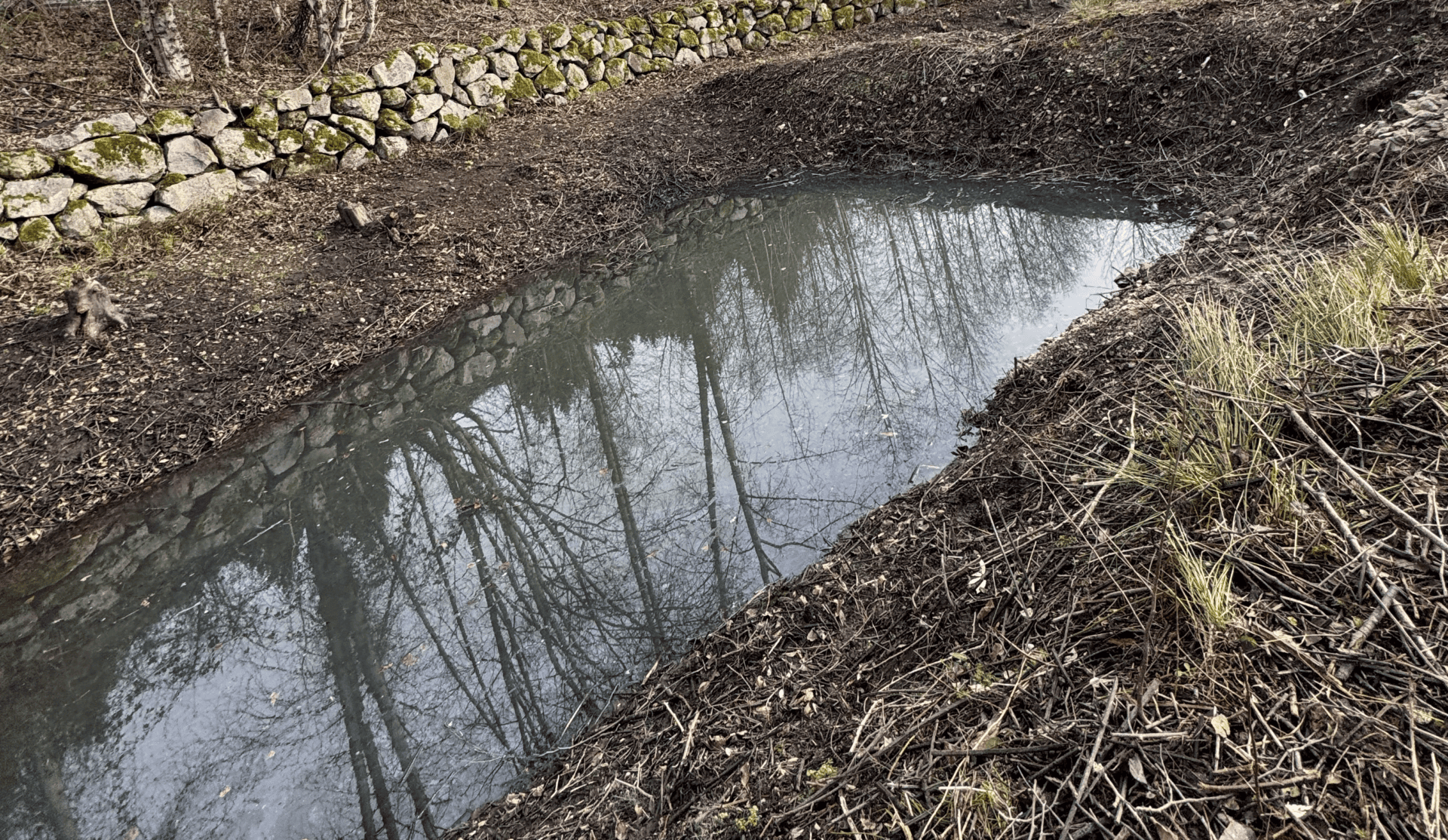
- Infiltration practices such as infiltration basins and trenches, dry wells, and porous pavement
- Vegetative practices such as grassy swales, vegetative filter strips, artificial wetlands, and rain gardens.
- Non-Structural controls include:
- Master plan and zoning ordinance controls that guide community growth away from sensitive areas
- Site based controls such as buffer strips, riparian zones, minimizing disturbance and impervious areas and maximizing open space.
Post-construction runoff and pollution control is one of the 3 program elements that require enforcement on the part of Coconino County.
View State Page
Frequently Asked Questions
Why is my property in Coconino County part of the small MS4 even though it's not in Flagstaff?
Certain areas outside Flagstaff city limits are designated as part of the county’s small municipal separate storm sewer system because they’re physically interconnected with Flagstaff’s urbanized area or measurably contribute pollutant loading to the same receiving streams. That designation follows the drainage network rather than jurisdictional boundaries, so a property doesn’t need to sit inside Flagstaff to fall under these requirements.
What size project triggers post-construction stormwater requirements in Coconino County?
Any land disturbance of one acre or more within the county’s small MS4 area. Smaller disturbances aren’t automatically exempt: if a project under one acre is part of a larger development plan, it still has to demonstrate that post-construction runoff water quality has been adequately protected.
Are there exemptions from Coconino County's post-construction stormwater requirements?
A few narrow ones, and they only apply to the on-site permanent facility requirement, not to erosion and sedimentation control or runoff quality generally. Exemptions cover emergency maintenance work performed for public health and safety, routine maintenance to an already-approved stormwater system, home gardening, and certain agricultural activities excluded under federal regulation. All exemption requests have to be filed with the county department directly.
Does a post-construction approval in Coconino County require ongoing maintenance forever?
Not indefinitely under this specific approval. It authorizes and requires the operator to maintain stormwater management measures through final site stabilization, but continued maintenance isn’t required under this approval once construction-related discharges have stopped and a Notice of Termination has been filed. Separately, any post-construction BMP that continues discharging pollutants from a point source may still need its own ongoing AZPDES permit coverage.
What is post-construction runoff, and why does Coconino County regulate it?
Post-construction runoff is stormwater leaving a site after new development has disturbed an acre or more of land. The county regulates it for two reasons: runoff from roofs, parking lots, and driveways picks up oil, grease, metals, and nutrients, and increased impervious surface raises both runoff volume and peak discharge speed, which drives erosion, flooding, and habitat loss downstream.
Do detention ponds fully solve stormwater pollution for a Coconino County property?
Not entirely. Detention ponds are effective at slowing peak discharge back down to pre-construction rates and capturing some sediment-bound pollutants, but they don’t treat dissolved chemicals, oil, grease, or the portion of metals that pass through without settling out in the pond. That’s part of why the county pairs detention with other structural and non-structural BMPs rather than relying on ponds alone.
Do I need to submit as-built plans after completing stormwater construction in Coconino County?
Yes. Once construction wraps up, you have to submit an as-built plan for all post-construction stormwater facilities, based on an actual field survey and, where necessary, certified by an Arizona-registered engineer. The county reviews it before final inspection, and any performance or financial security tied to the project includes a requirement to submit that plan.
Does building near a stream or wetland in Coconino County require additional approval?
Yes. Any stormwater facility located in or adjacent to waters of the U.S. or wetlands still requires separate approval from the U.S. Army Corps of Engineers, and proof of that approval has to be provided before construction starts. Facilities located in county-owned rights-of-way need their own separate written approval as well.
How can AQUALIS help my property stay compliant with Coconino County's stormwater ordinance?
AQUALIS helps Coconino County property owners design post-construction BMPs that meet the county’s design standards, prepare the as-built plans required at project completion, and determine whether a specific project qualifies for one of the ordinance’s narrow maintenance or emergency exemptions.
The information on this page is provided for general informational purposes only and is not legal advice. Regulations change frequently — AQUALIS makes no warranty as to the accuracy or completeness of this content, and any reliance on it is at your own risk. Consult a qualified professional or your local regulatory authority to confirm requirements applicable to your specific property.