
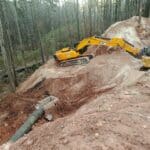

The Southwest United States, as defined by NOAA, spans Arizona, Colorado, New Mexico and Utah, presenting a distinct set of vegetation challenges for commercial and municipal property owners. Arid and semi-arid climates, monsoon-driven storm events, limited water availability and fragile riparian corridors create conditions where invasive plants can quickly consume scarce water resources, fuel wildfire risk and compromise stormwater infrastructure.
Effective vegetation management helps properties prevent permit violations, protect drainage infrastructure and reduce costly long-term risks. AQUALIS provides a complete guide to desert vegetation management strategies and common invasive species to help you maintain compliance and support long-term stormwater infrastructure health.
What Is the Best Way to Manage Vegetation in the Southwest?
The region’s arid climate, extended dry seasons and intense monsoon rains mean vegetation issues can flip quickly from dormant to hazardous. Sparse cover leaves soils vulnerable to erosion, while dense stands of dry, invasive grasses or riparian shrubs can accelerate wildfire spread and consume the limited water available for native ecosystems. A well-planned vegetation strategy protects land and waterways, reduces fire and flood risk, and lowers long-term operational costs.
Core objectives include:
- Protecting stormwater systems, dry channels and nearby waterways
- Meeting local and state permit requirements, including NPDES and MS4 obligations
- Limiting the spread of invasive plants into drainage corridors and detention areas
- Supporting healthy, drought-adapted native vegetation
- Reducing wildfire fuel loads and post-fire erosion risks
- Preserving long-term property and environmental value
Vegetation Management Services in the Desert
A complete vegetation management approach combines several service areas, each protecting infrastructure and supporting compliance in a different way.
Woody vegetation and riparian corridor management addresses the risks created by dense stands of tamarisk, Russian olive and other invasive shrubs and trees along washes, streams and pond banks. Overgrowth blocks access to detention basins, narrows channels and increases flash flood risk during monsoon events. Selective removal and thinning protect drainage systems, maintains inspection access and reduces fire risk.
Dry channel and arroyo vegetation control focuses on quick rain events and stormwater conveyance channels that define much of the region. These systems carry heavy rain flows only during monsoon or winter storm events. Unmanaged vegetation between rain events can obstruct flow, trap sediment and cause flooding when rain finally arrives. Work in these areas must follow state and federal guidelines, typically through selective mechanical removal, targeted herbicide application and seasonal timing that avoids nesting periods for protected wildlife.
Native species planting is foundational. Plants native to the Southwest are adapted to low rainfall, high temperatures and alkaline soils, making them ideal for stabilizing detention basin banks, swale corridors and bioretention cells without heavy irrigation. Native vegetation also supports compliance with Stormwater Pollution Prevention Plans (SWPPPs) and Operations and Maintenance (O&M) requirements set by local and state regulators, reduces the need for supplemental water and resists invasive encroachment.
Common Native Vegetation Species in the Southwest
The Southwest features a mix of drought-adapted trees, shrubs, grasses and groundcovers that thrive in stormwater management areas. These plants absorb monsoon rainfall, slow runoff in dry channels, filter sediment and stabilize soils prone to wind and water erosion.
Trees and Shrubs
- Velvet Mesquite (Prosopis velutina)
- Honey Mesquite (Prosopis glandulosa)
- Desert Willow (Chilopsis linearis)
- Arizona Sycamore (Platanus wrightii)
- Fremont Cottonwood (Populus fremontii)
- Goodding’s Willow (Salix gooddingii)
- Arizona Rosewood (Vauquelinia californica)
- Fourwing Saltbush (Atriplex canescens)
- Creosote Bush (Larrea tridentata)
- Apache Plume (Fallugia paradoxa)

Herbaceous Plants and Grasses
- Blue Grama (Bouteloua gracilis)
- Sideoats Grama (Bouteloua curtipendula)
- Deergrass (Muhlenbergia rigens)
- Alkali Sacaton (Sporobolus airoides)
- Sacred Datura (Datura wrightii)
- Desert Marigold (Baileya multiradiata)
- Globemallow (Sphaeralcea ambigua)

Invasive Species Removal in the Southwest
In the desert, invasive plants spread aggressively along waterways, disturbed sites and roadside corridors, exploiting the disturbance patterns of monsoon flooding and drought cycles. Once established in stormwater corridors or riparian zones, these species can consume enormous volumes of scarce water, fuel devastating wildfires, accelerate erosion and create persistent compliance challenges for property owners.
According to Executive Order 13112, an invasive species is any plant, animal or other organism outside its natural range that causes harm to the environment, economy or human health. In the Southwest, invasives spread through wind-carried seeds, water dispersal during flash flood events, human activity and wildlife movement, and they outcompete native plants for the region’s limited water and nutrients.
Common Invasive Plants in the Southwest
The following species are confirmed invasive across the region and documented by state natural resource agencies, the U.S. Geological Survey and the National Park Service.
Woody Shrubs and Trees
- Tamarisk / Salt Cedar (Tamarix spp.)
- Russian Olive (Elaeagnus angustifolia)
- Tree of Heaven (Ailanthus altissima)
- Siberian Elm (Ulmus pumila)

Herbaceous Plants and Grasses
- Medusahead (Taeniatherum caput-medusae)
- Cheatgrass (Bromus tectorum)
- Fountain Grass (Pennisetum setaceum)
- Giant Reed / Arundo (Arundo donax)
- Russian Thistle / Tumbleweed (Salsola tragus)
- Sahara Mustard (Brassica tournefortii)
Aquatic Invasives
- Eurasian Watermilfoil (Myriophyllum spicatum)
- Curly-Leaf Pondweed (Potamogeton crispus)
Tamarisk: The Southwest's Most Damaging Riparian Invader
Tamarisk, also known as salt cedar, is one of the most persistent and damaging invasives in the region. A mature tamarisk can consume more than 200 gallons of water per day, lowering groundwater levels and displacing native cottonwoods and willows along rivers, arroyos and detention pond edges. The plant excretes salt through its leaves, making surrounding soils increasingly hostile to native species over time.
For commercial and municipal properties, tamarisk encroachment can narrow drainage channels, restrict flow during monsoon events, deepen wildfire risk through heavy fuel accumulation and trigger compliance concerns under state riparian and stormwater regulations. Eradication is rarely a one-season effort. Tamarisk resprouts vigorously after cutting, so effective management combines cut-stump herbicide application, mechanical removal and long-term monitoring across multiple growing seasons. Biological control using the tamarisk leaf beetle has expanded in some areas, though its use requires coordination with state and federal agencies.
Medusahead and Cheatgrass: The Wildfire Multipliers
Not all invasives cause damage the same way. Medusahead and cheatgrass are among the most dangerous invasives in the Southwest because they fundamentally change fire behavior. Native plants across the region’s deserts and rangelands are widely spaced with bare soil between them, which historically limited fire spread. These invasive grasses fill in that space with continuous, dry fuel, allowing fires to move rapidly across landscapes that rarely burned before.
Both grasses establish quickly after disturbance, produce large seed banks and outcompete native grasses and wildflowers for early-season moisture. Once established, they create a cycle where fire kills native plants but favors invasive regrowth, converting diverse ecosystems into flammable grasslands.
Management focuses on early detection and rapid response. Small infestations can be hand-pulled before seed set, while larger areas require pre-emergent or targeted post-emergent herbicide application timed to the winter growing season. Prescribed grazing and mechanical mowing before seed maturity can reduce fuel loads on commercial properties, though sustained control almost always requires multiple treatment cycles.
Effective Invasive Species Removal Strategies
- Hand Pulling: Best for small infestations of annual invasives like Sahara mustard and young cheatgrass. Removal must occur before seed set to prevent replenishment of the seed bank.
- Mechanical Cutting and Mowing: Controls larger infestations of woody invasives and reduces fine fuel loads before fire season, most effective when paired with follow-up herbicide treatment.
- Cut-Stump Herbicide Application: Essential for tamarisk, Russian olive and tree of heaven, where cutting alone triggers aggressive resprouting. Herbicide is applied directly to the fresh cut surface.
- Targeted Foliar Herbicide Application: Used for grasses and herbaceous invasives, timed to the growing season when plants are actively taking up water and nutrients.
- Biological Control: Deployed in some regions for species like tamarisk, using approved insects that specifically target the invasive without harming native plants. Coordination with state agencies is required.
Choose AQUALIS for Vegetation Management and Invasive Species Removal in the Southwest
Vegetation management in the Southwest comes with unique climate challenges, water scarcity concerns and a complex regulatory landscape. AQUALIS provides comprehensive solutions tailored to the region, combining proactive maintenance with environmentally responsible practices to protect your property, reduce fire and flood risk and preserve limited water resources.
With AQUALIS, you get customized vegetation management plans designed for Southwest climate conditions, safe and effective invasive species removal, expertise in riparian corridors, dry channels, detention basins and sensitive desert environments, and a proactive approach that minimizes future risks and keeps your property in compliance.
From routine mowing and woody vegetation control to large-scale invasive species remediation, AQUALIS helps protect critical infrastructure and keeps your site safe, functional and sustainable year-round.
Contact us today to learn how AQUALIS can support your desert vegetation management and invasive species needs.
Because many desert invasives regenerate from root fragments, extensive seed banks or resprout aggressively after cutting, effective management combines immediate action with long-term prevention. Common methods include: